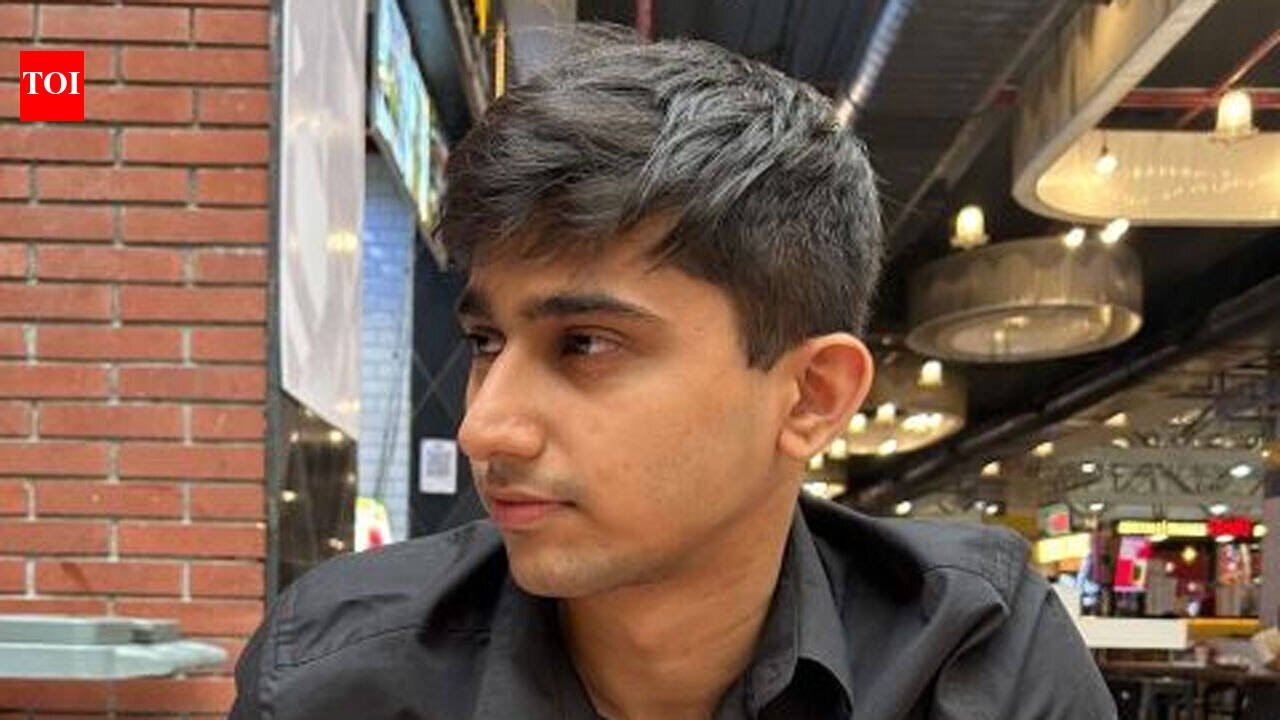
Microsoft’s Aditya Jamwal reveals how 80+ setbacks and one mantra helped him crack Microsoft twice. (Photo: LinkedIn) For engineering students, CGPA can sometimes feel like the ultimate measure of academic success.
But a LinkedIn post by Microsoft software engineer Aditya Jamwal presents a very different picture: a hypothetical 9.2 CGPA student earning 6 LPA, while a 6.8 CGPA student lands a 32 LPA package.The difference is Rs 26 lakh a year.Jamwal's larger point was that recruiters may not care about a marksheet once a candidate reaches the interview room.
What matters then is whether the student can solve problems, explain technical concepts and demonstrate the skills required for the job.Interestingly, Jamwal's own Microsoft journey offers a real-life example of another part of that lesson: persistence.80+ applications, four responses and two offers In a LinkedIn post shared around six months ago, Jamwal revealed that he had applied to more than 80 roles at Microsoft from September 2025 onwards.
Only four applications resulted in a response.Yet two of those responses turned into interviews scheduled in parallel.Microsoft engineer Aditya Jamwal explains how a 6.8 CGPA student landed 32 LPA over a 9.2 CGPA student. (Photo: LinkedIn One was for Microsoft's Azure team in Hyderabad, while the other was for the Xbox team in Noida.
Jamwal says he cleared the rounds for both and received offers from both teams.He eventually accepted one offer, while the other opportunity and his remaining applications were dropped after his decision.
For him, the experience came down to a simple mantra: not giving up.What the 6.8 CGPA example really means Jamwal's CGPA example is not an argument against academic performance.
A strong CGPA remains valuable, particularly when companies use academic cut-offs during campus recruitment.His point is that academic performance and interview performance are two different skills.In his example, the 6.8 CGPA candidate spent time developing capabilities that could directly influence technical interviews.
These included practising around 50 DSA patterns, building a project that could withstand detailed questioning and learning Low-Level Design and system design.The candidate also strengthened core Computer Science subjects such as Operating Systems, Database Management Systems and Computer Networks, while learning Generative AI fundamentals.Jamwal described DSA as the gate, rather than the complete preparation strategy.
In today's technology hiring environment, candidates may also need system design knowledge, strong Computer Science fundamentals, AI awareness and the ability to apply what they know.The lesson beyond CGPA and salary The striking contrast between 9.2 CGPA and 6 LPA and 6.8 CGPA and 32 LPA is ultimately about preparation, not marks.A high CGPA can open doors, but students still have to perform when those doors lead to an interview.
Similarly, a lower CGPA does not automatically prevent someone from competing for ambitious roles if they develop relevant skills and can demonstrate them effectively.Jamwal's own journey adds another dimension: even reaching Microsoft may require repeated attempts.
More than 80 applications produced only four responses, but two interviews were enough to produce two offers.For students preparing for technology careers, the message is therefore straightforward: do not optimise only for the college examination.