Abhishek Sharma The 30-ball ton was, oddly, the least surprising part of what Abhishek Sharma did at the Arun Jaitley Stadium.
It isn't even his fastest hundred.
What's odd about the innings is what it says about the number sitting next to that extraordinary strike rate: his average.Somewhere in Abhishek Sharma's memory, though, there's a faster century still.
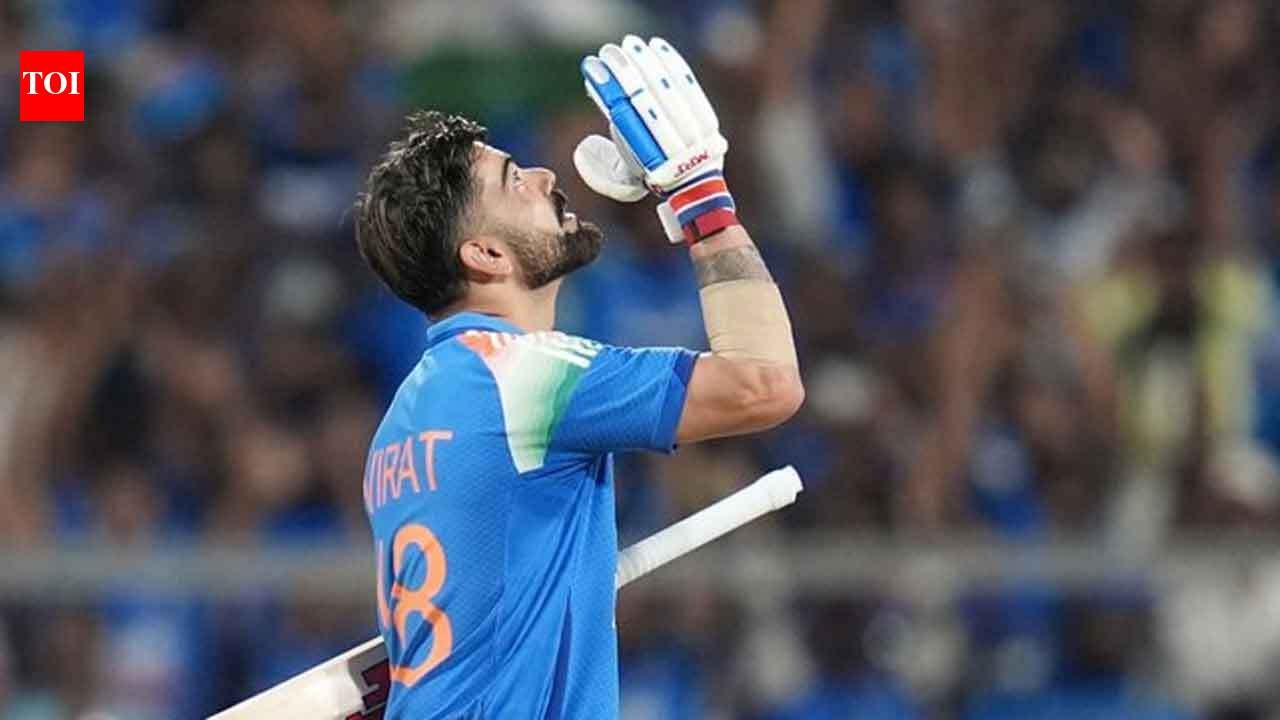
It came two years ago, for Punjab against Meghalaya in a Syed Mushtaq Ali Trophy fixture nobody outside domestic cricket was watching: 28 balls, no fanfare.So when he reached three figures in 30 deliveries against Afghanistan in New Delhi, becoming the fastest T20I centurion ever produced by a Full Member nation and only the third-fastest in the format's history overall, it wasn't a discovery.
It was a confirmation, delivered on a bigger stage, of something the data had already been saying for a while.Abhishek Sharma scores in the India vs Afghanistan T2OI series The ground has some history with him already.
Eight years earlier, on the same square when it was still called Feroz Shah Kotla, a 17-year-old Sharma walked out at number six for Delhi Daredevils against Royal Challengers Bangalore and top-scored on IPL debut — an unbeaten 46 off 19 balls.
It was the innings that first put his name into circulation.
None of that is really the story, though.
The story is what his average has been doing while all this has been going on.The average, not the strike rateAfter 58 T20I innings, Abhishek averages 33.18 at a strike rate of 194.55.
Among those who have batted at least 20 times in T20Is since Abhishek's debut in July 2024, nobody has struck as quickly as his 194.55 per 100 balls.Abhishek Sharma fast and consistent not fast or consistent Put that alongside the numbers of his closest opening peers and the combination starts to look strange.
Phil Salt, across almost the same number of innings, averages 34.34 at 165.89: a fraction higher on average, nearly thirty runs per hundred balls slower.
Finn Allen's numbers read 28.67 and 170.74; Travis Head's, 28.40 and 156.69.
Multiply strike rate by average and divide by 100 and you get a rough figure for scoring speed without giving up the average: Abhishek comes out at 64.56, against 56.97 for Salt, 48.95 for Allen and 44.50 for Head.The gap isn't really about six-hitting or bravado.
It's that T20 cricket generally punishes extreme aggression with a lower average, and in Abhishek's case, over more than fifty innings now, it hasn't.Where the runs actually come fromLook closer and the shape of his batting explains some of it.
Of his 1,858 T20I runs, 1,484 (79.9%) have come in boundaries.
In the Afghanistan innings that figure spiked to 94.44%, the highest boundary share recorded in any men's T20I century.A six every 7.58 balls He hits a six in T20Is every 7.58 balls, comfortably ahead of Allen (8.47), Salt (12.47) and Head (14.20).
Zoom out to his whole T20 career, across formats, and he reached his hundredth six faster, by balls faced, than anyone the format has seen, edging West Indies' Evin Lewis.
Among Indian batters with 50 or more T20 sixes, nobody has matched his rate of clearing the boundary.
He's the best of the lot, streets ahead of Sanju Samson, Shivam Dube, Suryakumar Yadav and Yuvraj Singh, the mentor whose fastest-fifty record he's now threatened on at least three occasions.Most sixes for India in a T2OI match The first six oversThe clearest expression of the method is the powerplay.
His strike rate in an innings' first ten balls, 176, is the joint-highest on record, level with Tim David: he isn't feeling out the pitch before he attacks.
His boundary percentage inside the powerplay, 33.48% according to CricViz, is the best among batters with 500-plus T20I runs.Abhishek owns India's big Powerplays This has happened before, too.
India have breached 90 in a T20I powerplay four times, and Abhishek has been the one doing the damage on every occasion: 59 not out off 21 against England at the Wankhede last year, 51 not out off 14 against New Zealand in Guwahati this year, 51 off 19 in the World Cup final in Ahmedabad, where he reached fifty in 18 balls under the most pressure he's likely ever faced.
His 76 not out off 22 balls is simply the largest number yet on that list.
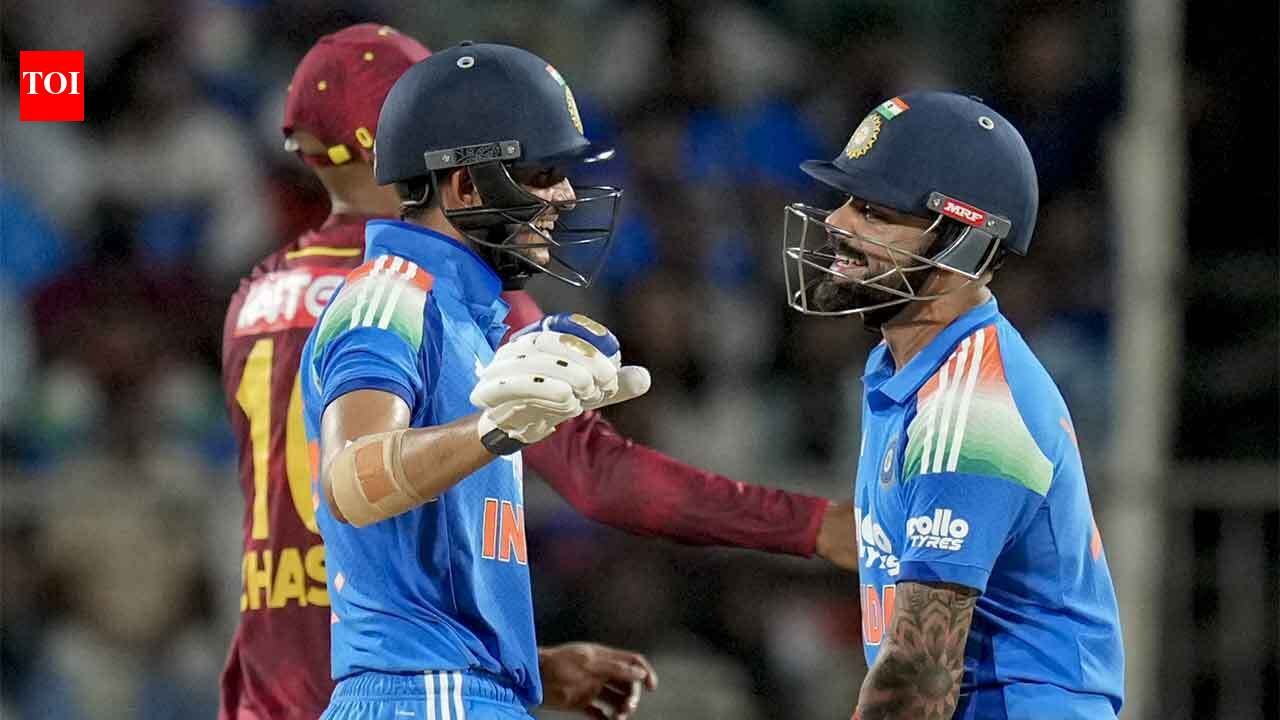
His opening stand with Samson, 142 off 59 balls, is now the fastest century opening partnership for India in T20Is by run rate, overtaking a stand between KL Rahul and Rohit Sharma from Indore in 2017.What it costs himNone of this comes free.
Abhishek walked into this year's T20 World Cup and made three consecutive ducks, followed that with 15, 10 and 9, and salvaged the campaign with two match-defining fifties, one in a must-win Super Eight game against Zimbabwe, the other in the final.
Eight innings, 141 runs, an average of 17.62.
"As a batter, as a cricketer, sometimes [my form is] going to go up and down," he said afterwards, and there's little sense he sees the ducks as a separate problem from the sixes.
They're the same bet, landing differently.What this approach costs Abhishek And 2026 has underlined that cost.
Abhishek has been dismissed for a duck 10 times in T20 cricket this calendar year, the most by any batter in a year, ahead of Rashid Khan's nine in 2019 and Shadab Khan's nine in 2024.
Five of those have come off the first ball, making him the joint-most prolific first-ball duck-maker in a calendar year in T20Is, alongside Rwanda's Kevin Irakoze in 2023 and Richard Ngarava in 2024.What's changed isn't the risk-taking.
It's how deliberately he manages it.
Against the Rashid Khan, Mohammad Nabi and Mujeeb Ur Rahman spin trio in the Afghanistan series, he made a conscious tactical switch, going only forward or down the pitch, never back, and scored 54 off 15 against them, including 4, 4, 6 off three straight Rashid deliveries in the last over of the powerplay.Join conversation Share your thoughts in the comments Be respectful · TOI community guidelines In the first two games, camped on the back foot against the same bowlers, he'd managed only 29 off 17.
"It's always about me backing my shots because I don't have a lot of shots," he said earlier this year, after an 85 off 34 against New Zealand, which sounds like modesty until you notice how precisely that limited toolkit is being aimed.Level with KohliMost T20 centuries by Indians This is now his tenth century in all forms of T20 cricket, level with Virat Kohli for the most by an Indian batter, and his third T20I hundred, level with Samson, and behind only Rohit Sharma and Suryakumar Yadav in India's own list.
The number worth sitting with isn't the 30 balls.