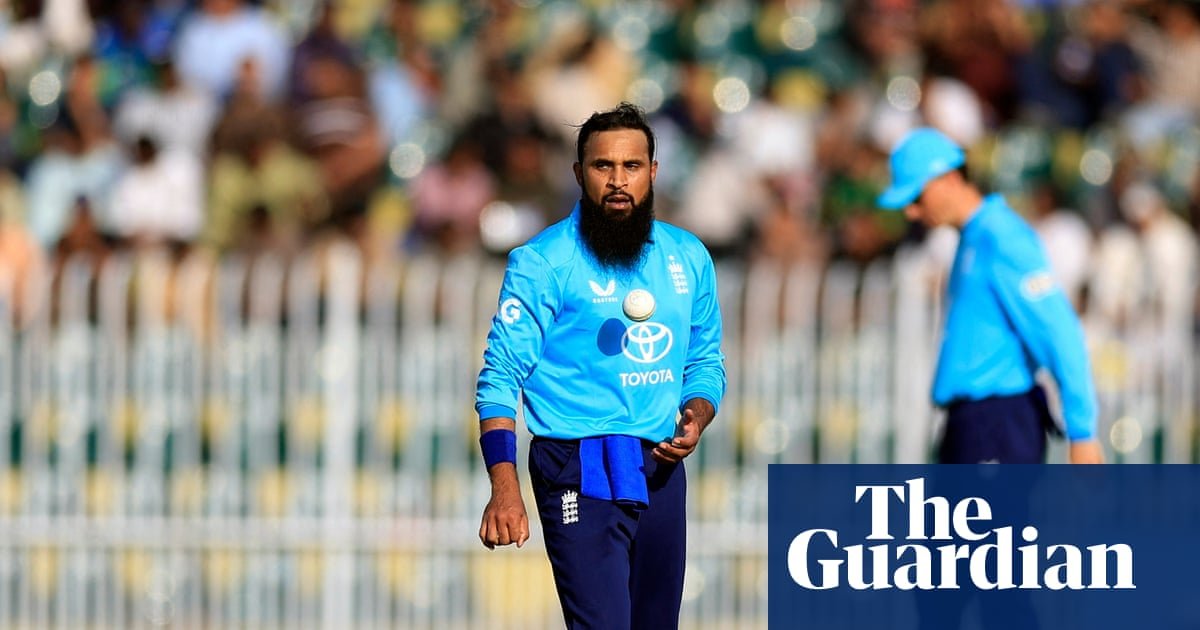
The leg-spinner’s absence in the final three games of their tri-series against Pakistan and Sri Lanka was puzzling but there’s no need to panic just yet
In the end, the beginning was just a little too perfect. When Gus Atkinson struck with the first ball of England’s tour, the rhythm appeared set. They intended to make it four ODI series wins in a row. Sri Lanka had been beaten home and away this year; Pakistan had been embarrassed with the Dukes ball in the summer. Harry Brook’s side were surely heading to the final, right? Alas, he won’t be anywhere near the snappily named KFC Presents Bank Alfalah ODI Tri-Series trophy on Saturday.
On two occasions England moved into positions from which games seemed unlosable, yet this thoroughly watchable tri-series refused to turn their way. In making 429 against Sri Lanka, England simply followed their usual formula: thrash their way to a gargantuan total and let scoreboard pressure do the rest. Even as Pavan Rathnayake and Dasun Shanaka swung away, it felt as if England would be fine as long as they produced a three-over period of quiet, forcing the pair to knock it around for ones and twos while the required rate climbed to something ungodly. But it never came as Brook became the first man to finish on the losing side after an ODI double hundred.
Three days later Pakistan were 154 for nine chasing 242, with England needing just one small piece of magic. Atkinson thought he had produced it with a yorker that struck Shadab Khan’s pad, with the batter unaware his blade had given the ball a faint tickle on the way. A squiggle on UltraEdge would resurrect the hosts and push the visitors to an ultimately fatal defeat.
What jarred, as it did against Sri Lanka, was Adil Rashid’s absence. No one has played more ODIs for England in the last decade than the leg-spinner, who missed the end of the summer with a hand injury. He twirled expensively in the opening game against Pakistan and was subsequently discarded for the next three. Brendon McCullum said that “conditions probably went against” the selection of Rashid, as England favoured the skiddier option of Liam Dawson’s left-arm spin, presumably hoping Dawson would replicate the success of Pakistan’s Arafat Minhas. Yet Rashid’s great value to England since 2015 has been his excellence across continents, conditions be damned. There’s the googly to use if the leg-break isn’t perfect; there are revs through the air if the pitch isn’t helping.
While Dawson’s selection did work, with seven wickets at 21.42 and a tight economy rate of five, could he not have played alongside Rashid? The pair have excelled together as the leading wicket-takers in the T20 side over the last 18 months, thriving under Brook’s captaincy, with that group topping the world rankings. It’s surely worth a go next month for three ODIs in Australia, where Rashid has a strong 50-over record and the happy memories of a T20 World Cup win.
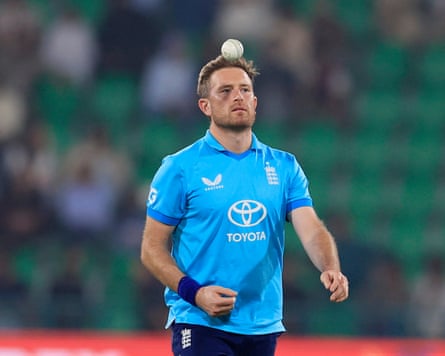
Sam Curran could also benefit from a trip to Australia, where he was player of the tournament in that World Cup triumph four years ago, taking 13 wickets at 11.38. The left-armer, returning after groin surgery, conceded 103 runs in the historic loss to Sri Lanka, and remains a bit of a mystery eight years after his international debut. Curran started his career as a bowler who could hit the ball sweetly, but he’s been playing in this ODI side as a middle-order batter who doesn’t have to bowl a full allocation, a role Ben Stokes once had. It’s with the bat where he has to really shine. While there were starts in Pakistan, he could do with a statement score, having failed to reach fifty since returning to the 50-over setup a year ago.
England shouldn’t get too down about their fortnight in Pakistan. Smashing 400 has become their party trick, the opening partnership has clicked and Brook is mesmerising. Their one chase on this trip crumbled a little too quickly, but the batting looks generally healthy and there is a welcome problem in how to fit Jacob Bethell back into the XI. Tom Banton taking the gloves and Bethell replacing Jordan Cox in the middle order is a potential option.
Jofra Archer will return in Australia after a period of rest, his importance growing with each passing game. It would be handy to see him pair up with Josh Tongue, who has had a tough start to his ODI career but still has a spark to him – the ability to open up a game when it seems done. He very nearly brought England back into it when Sri Lanka chased 430, hitting the stumps with back-to-back balls in the final over.
England have missed out on a final, which would have been a useful test and an extra game before next year’s World Cup, but upcoming series in Australia and South Africa should help with the homework. There’s no need to panic just yet.