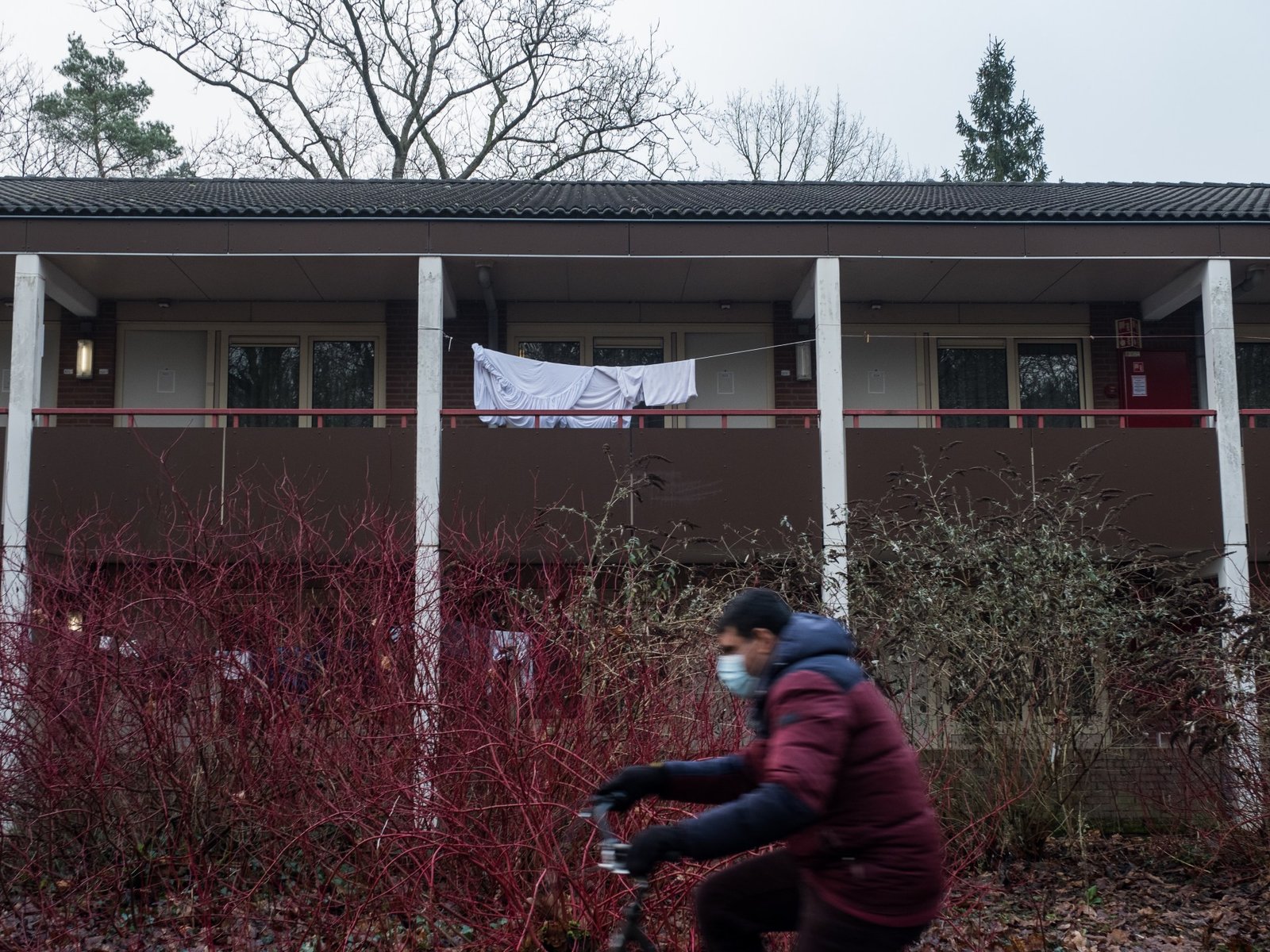
View of a housing complex at defence terrain Huis ter Heide that was equipped as emergency accommodations for 400 Afghan evacuees on January 12, 2022 in Huis ter Heide, Netherlands [Sanne Derks/Getty] By Step Vaessen Published On 15 Aug 202615 Aug 2026 Steenwijk, The Netherlands – Abdul Wali shows me a special coin and certificate he received in 2023 from the Dutch government for his services in Afghanistan.
To him, the items symbolise a promise the Netherlands made when about 4,500 Afghan staff – most working as interpreters, security guards and for the European Union’s police mission – and family members were evacuated from Afghanistan after the Taliban took over Kabul in August 2021.
Dramatic images of Afghans scrambling to enter Kabul airport as US aircraft took off went viral, highlighting the fear many in the country felt about the new powerholders in Afghanistan.
European governments, including the Netherlands, came under heavy criticism for the chaotic evacuation process that saw thousands of vulnerable Afghans, who worked for the former administration or foreign entities, left behind.
Abdul Wali arrived in the Netherlands in November 2021, after Dutch politicians and military personnel lobbied for his evacuation.
He had received threats from the Taliban due to his work for a Dutch NGO, Cordaid, and helping an interpreter associated with the Netherlands military.
“We are a targeted group of the Taliban; we are known to them,” he told Al Jazeera.
Five years later, he, his wife and four children were starting a new life in a quiet neighbourhood in Steenwijk, a small town in the north of the Netherlands.
They made friends with their Dutch neighbours and learned the language.
Their three daughters attend a local school, and Abdul Wali found work at a local factory.
Advertisement Last June, the family were able to apply for Dutch passports, but then the government suddenly changed the law and threatened the new life they had begun.
US Air Force loadmasters and pilots assigned to the 816th Expeditionary Airlift Squadron load passengers on board a US Air Force C-17 Globemaster III in support of the Afghanistan evacuation, at Hamid Karzai International Airport (HKIA) on August 24, 2021 in Kabul, Afghanistan [Master Sergeant Donald R Allen/US Air Forces Europe-Africa via Getty Images] Thousands, like Abdul Wali, who were given refugee status, now only have a temporary residency permit, leaving them in a state of limbo.
“We and all the other families are now uncertain about our future; we are worried and feel unsafe,” Abdul Wali told Al Jazeera.
He believes the Dutch government has a responsibility for former staff members in Afghanistan due to the risks they face from Taliban reprisals.
About half a million Afghans have applied for asylum in the EU since the Taliban took power in 2021, according to the EU Agency for Asylum.
Although the EU still does not recognise the new administration in Kabul, 15 European ambassadors held a meeting with a Taliban delegation in Brussels on June 23.
The main topic on the agenda was reportedly the possible return of Afghan refugees to Afghanistan.
With the rise of anti-immigration sentiment and far-right parties in Europe, EU governments have been eager to show that they are willing to implement stricter refugee policies, even if it means working with the Taliban to see Afghans deported there.
Germany was the first EU country to work with Taliban-appointed diplomats at Afghan missions in Berlin and Bonn.
In 2024, Germany decided to lift a de facto ban on deporting Afghans back to Kabul.
It came after a Syrian and Afghan man were jailed for two separate stabbing incidents in Germany that year.
In the past two years, about 200 people – mainly with criminal records – have been deported to Afghanistan.
In late July, Germany for the first time deported an Afghan man who had not committed a criminal offence.
A Swiss document obtained by Dutch newspaper NRC shows countries like the Netherlands, Germany, Denmark, and Norway are planning to deport many more refugees to Afghanistan.
As Al Jazeera has previously reported, Greece also hopes to deport people.
Former Dutch Deputy Ambassador Cees Roels was based in Kabul when the Taliban made its way into the Afghan capital in August 2021.
He told Al Jazeera that he was shocked when EU governments decided to improve relations with the Taliban, as seen with the June meeting in Brussels.
Advertisement “What the EU wants to do is create a system where the Taliban is the gatekeeper of European migration policies, and what people underestimate is that it is the Taliban that creates a situation that people want to move,” Roels said.
In his house in the east of the Netherlands, Fridoon, using his first name due to safety concerns about his family back in Afghanistan, spends most of his free time learning Dutch.
Fridoon, a trained lawyer, had worked for EUPOL Afghanistan and as a political assistant for the EU mission in Afghanistan.
He was among 1,800 Afghan refugees who signed a letter to the Dutch government and parliament last year, asking for clarity about their precarious future.
“We didn’t choose to come here; we didn’t have a choice then to leave our country because of the work we did,” he told Al Jazeera.
“They have protected us [for the past] five years … and now we request that they will protect us still, especially our children.
When we return, death will be waiting for us.” Fears that he and his family could be deported at any time to Afghanistan keep him awake at night.
In Steenwijk, Abdul Wali’s sons and daughters ride around their neighbourhood on their bikes, unsure of what the future holds for them.
“They can’t wait to go back to school.
I can’t even start to imagine what it would mean if, back in Afghanistan, our daughters can’t get an education any more,” he said.