Chair of National Gallery’s First Nations advisory group says the technology is undermining artists’ agency and the authenticity of their work
Get our breaking news email, free app or daily news podcast
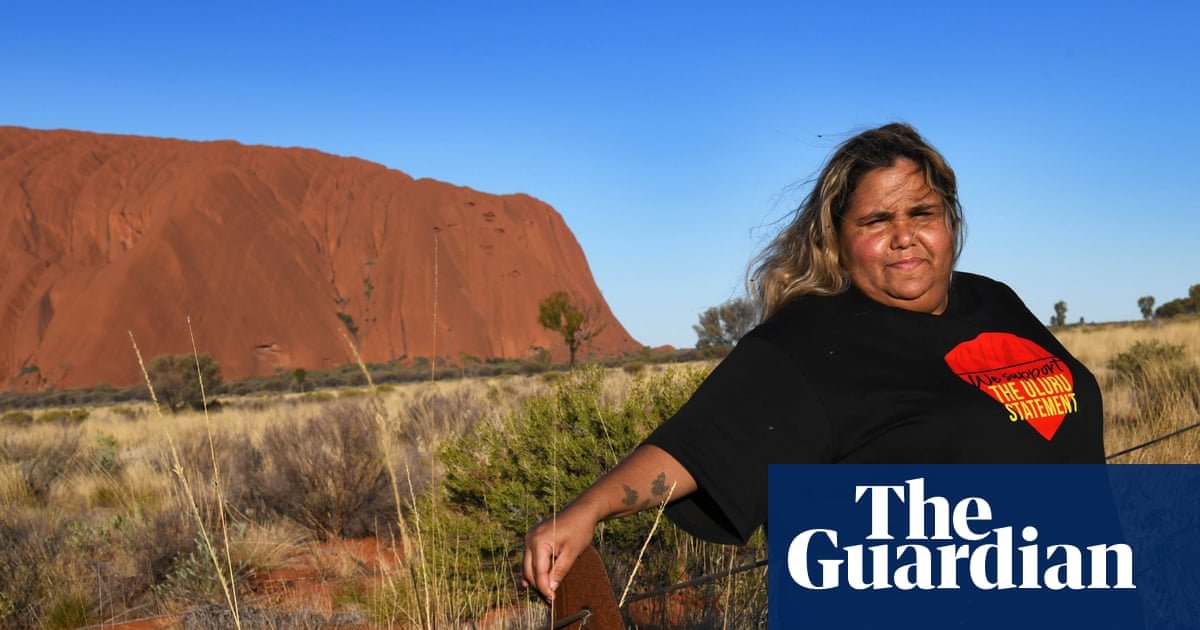
AI is taking First Nations art and turning it into “Temu slop”, the Pitjantjatjara artist Sally Scales has said.
Scales, the chair of the National Gallery of Australia’s First Nations advisory group, said the technology is undermining the agency of First Nations artists and the authenticity of their work and represents a “a theft” of cultural knowledge.
But experts are particularly worried about the risks to Indigenous cultural and intellectual property (ICIP) and in a world where AI companies can hoover up anything that may be found online, including songs and paintings that include sacred and cultural knowledge. AI has altered work, removed names and then been sold, an act the peak body for Australian visual artists said was causing “cultural and economic harm”.
Searches on sites including Temu, Shein and Amazon reveal countless works described as Aboriginal paintings, as well as items such as coasters and stubby holders bearing Aboriginal-style designs, mostly without attribution to any artist.
“It’s in the name, it’s artificial,” Scales said.
“I’ve seen some works where I look at it and wonder if they’ve gone through a First Nations community or a person, or if it’s something generic that they’ve whipped up.
“It’s a theft of the agency of the artist. It rips the authenticity out of it, because it’s not been made by anyone who has the connection … the artist’s family lineage is not there, the lived experience is not there.”
She gave an example of an organisation paying to use artwork or images of Aboriginal people themselves, then later using AI to “update” or repurpose those images without permission.
“The corporate client can pay you once and then make unauthorised Aboriginal derivative work and use the faces of the artists without consent,” she said.
“Not only do [the artists] not get the repeat business, but when they go to make new work they’re competing against an AI.”
The National Association for the Visual Arts (Nava) said Indigenous data sovereignty “recognises the right of First Nations peoples to exercise authority over their data, cultural material and knowledge”.
In a submission to the joint select committee inquiry on artificial intelligence, Nava pointed to work by the Wuthathi and Meriam lawyer Terri Janke, an international authority on Indigenous cultural and intellectual property, who has “documented AI scraping Indigenous art centre websites, removing artists’ names and altering their work”.
Janke has also warned of the broader risk of AI reproducing cultural knowledge without regard to its accuracy or appropriate use.
“Nava members have also raised concerns about AI-generated ‘Aboriginal-style’ images and designs that imitate community-specific techniques, stories, motifs and mark-making,” the submission said. “These images can be presented and sold as Indigenous or Indigenous-inspired work, spreading misinformation, causing cultural and economic harm and competing with work by First Nations artists.”
Bowrey said they wrote the draft policy based on the parameters of what the government has said so far.
A spokesperson for the attorney general said Australian creatives were “world class” and that the government was committed to supporting them.