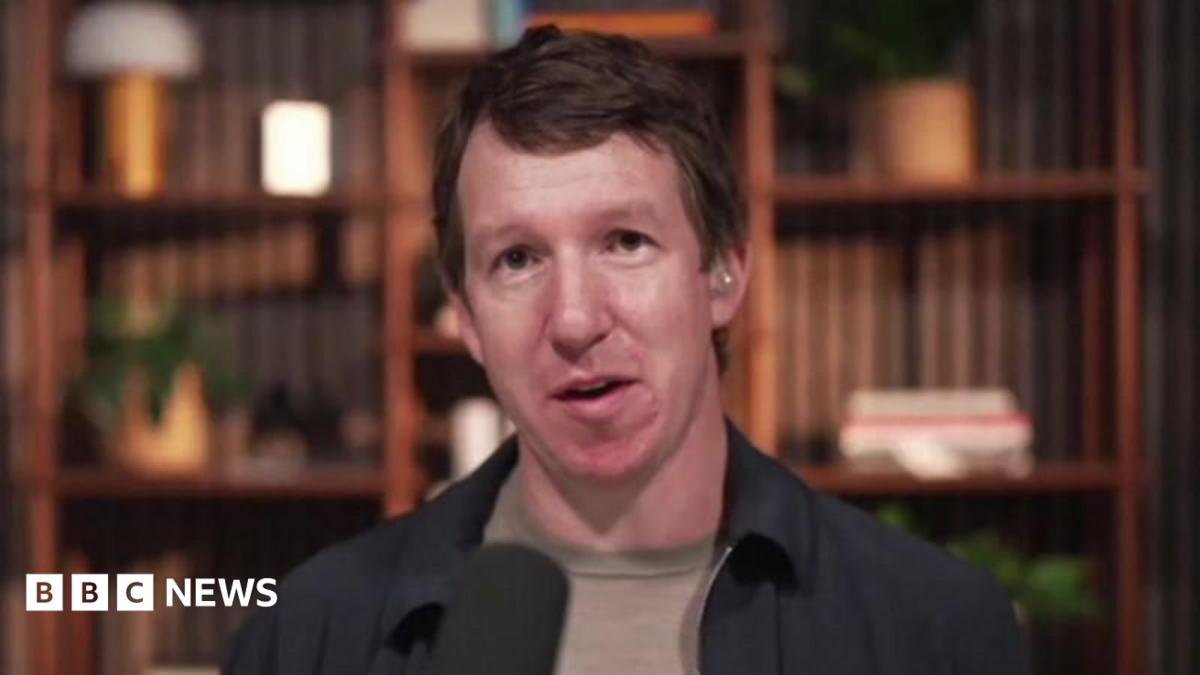
Figure caption, AI "more powerful by the day", Anthropic co-founder tells BBC ByKali Hays, Technology reporter and Faisal Islam, Economics editor Published 8 minutes ago An artificial intelligence "kill switch" which can be checked by a third-party may need to be mandatory for companies, a co-founder of one of the world's largest AI firms has said.
Jack Clark, one of seven founders of Anthropic, said a way of shutting off AI software completely if it gets too dangerous was the kind of thing society "might want to eventually pass rules around".
Clark said "most labs have different ways of being able to pull the plug", including Anthropic, but said policymakers may need to enforce having one.
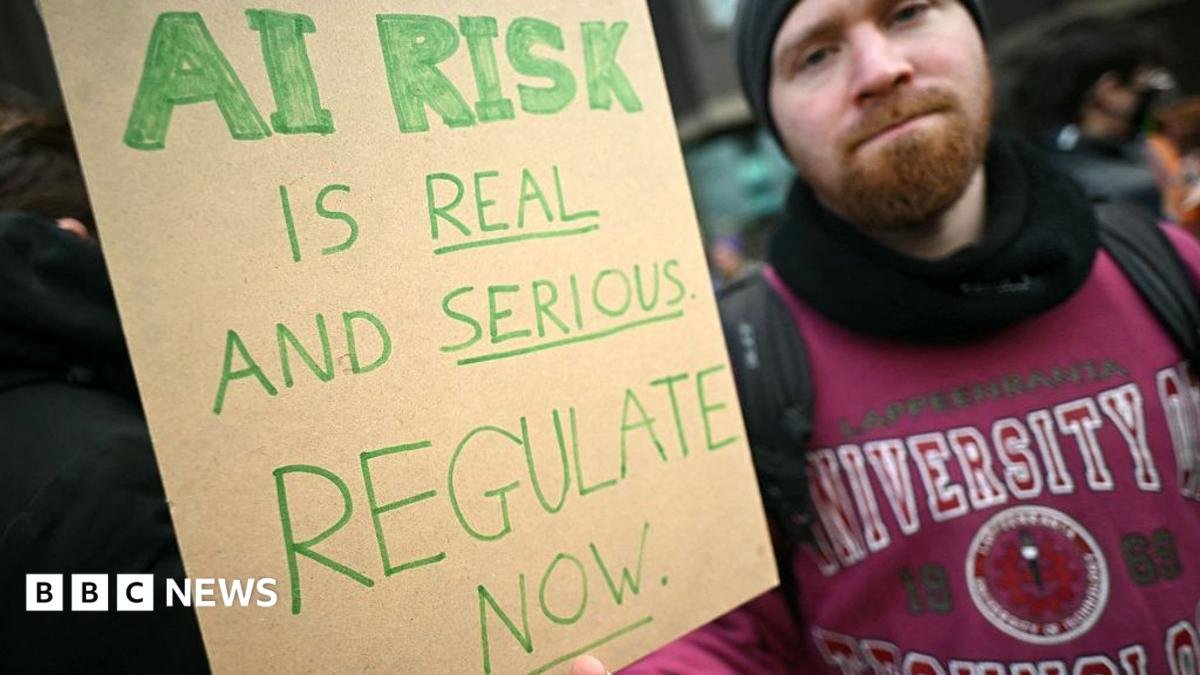
Clark's comments come as a growing numbers of executives and staff of AI firms, as well as AI experts, have publicly said AI could kill all humans.
Anthropic head Dario Amodei over the weekend called for the pace of AI development to slow and be more closely monitored, as the company has done before, though some have questioned the motivations behind this.
Amodei did not say how exactly how AI development could be slowed down and said any action to reign in AI development should be done "without sacrificing commercial advantage".
Clark told the BBC that specifics around "kill switch" requirements and verification should be part of "the larger policy conversation" taking place around AI.
"Should you mandate for companies to definitely have a killswitch?
Is that kill switch verifiable by a third party?" he asked.
"I think that's the kind of thing society is going to want to know and might want to eventually pass rules around." Anthropic, which was formed in 2021 by a group of former employees of its rival OpenAI, is currently at the centre of a debate around AI safety.
Last week, a post from an artificial intelligence researcher who quit Anthropic over concerns AI could wipe out humanity went viral.
In response, Anthropic scientist Evan Hubinger said he personally thought the possibility of human extinction from AI was ">10% within the next decade".
Computer scientist and Nobel Prize winner Geoffrey Hinton, known as the "Godfather of AI", told the BBC on Friday that a 10% chance of AI killing all humans was "not unreasonable", external.
Asked what percentage he would put on all humans being killed by AI, Clark said: "I don't think these statistics are that useful", but added that allowing AI to continue as a "totally unregulated industry" was a bad idea.
"We are rolling dice with immense risks," Clark said.
"And the point is, we have to change the course of this industry." AI staff 'genuinely frightened' for humanity's future, ex-Anthropic researcher tells BBC Published 1 day ago UK government rejects 'kill switch' idea for dangerous AI Published 3 days ago US lawmakers have put forward legislation dubbed the Kill Switch Act that would require companies to have a way to shut down problematic AI tools.
It would also give certain government agencies the power to demand a tool be turned off or limited.
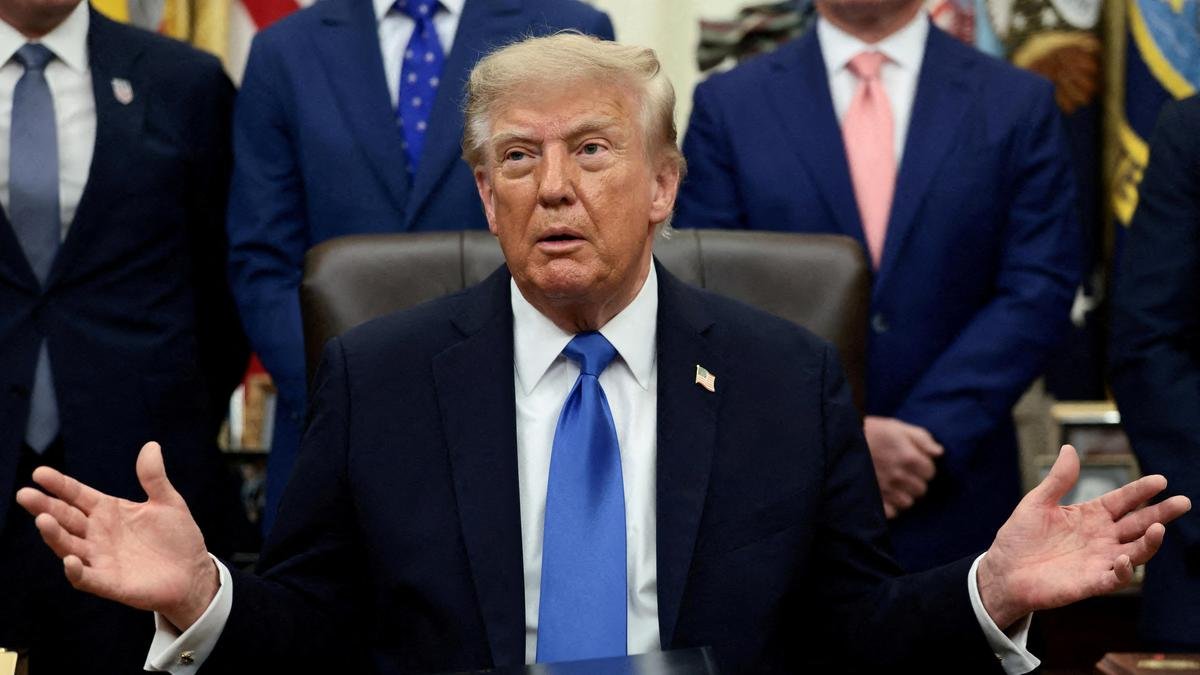
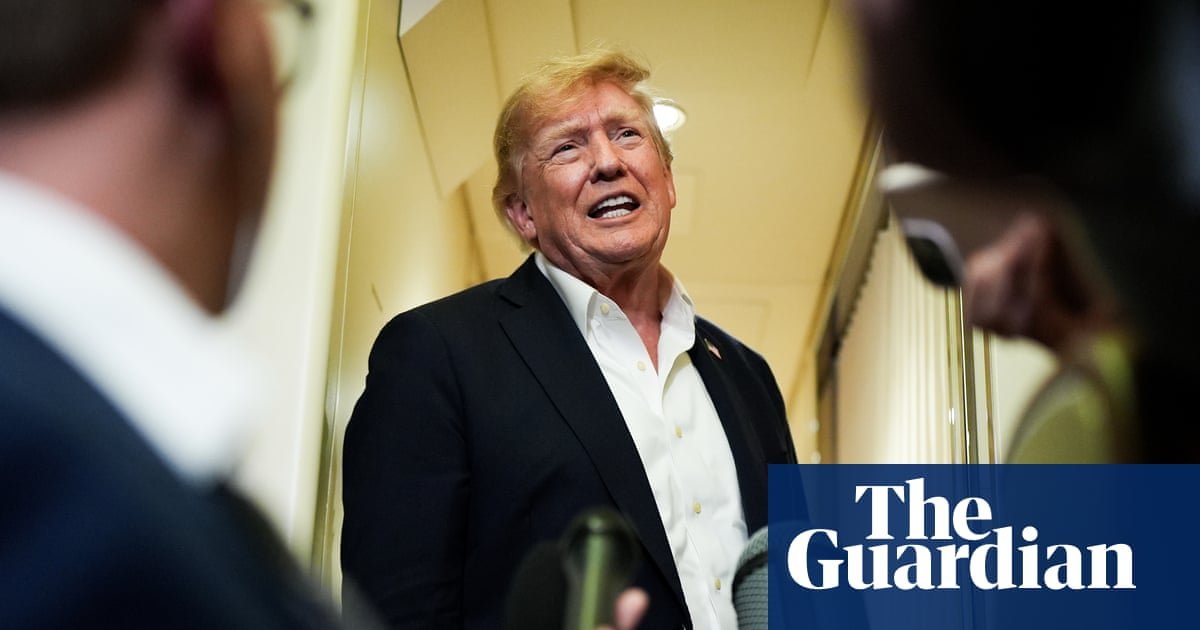
However, US President Donald Trump has rejected the idea of any attempts to slow down AI, saying on social media "AI taking over the World, destroying Humanity, and all other things bad, is a HOAX".
He said in a separate post: "There is a SICK conspiracy going on against AI and Data Centers, and the only one that is happy about it is China.
WHOEVER WINS AI, WINS!" In the UK, the government has recently rejected the idea of creating a kill switch, with a spokesperson saying it "would not prevent them being developed or misused elsewhere".
Meanwhile, some in the AI industry have suggested the fears around it destroying humanity are overstated or may be designed to generate hype.
Anthropic created the popular chatbot Claude and has this year released a number of increasingly capable AI models, the technology underlying AI chatbots.
Alongside OpenAI, Anthropic has since self-reported a number of incidents in where AI agents, which are bots that operate somewhat autonomously, have acted in ways that were unexpected.
Anthropic is reportedly preparing for a potentially record-setting initial public offering on the stock market, allowing people to buy shares in its firm.
OpenAI, which was most recently valued at $852bn (£630bn), had been expected to do the same, but OpenAI's Altman said on Friday this would not happen this year due to the current debate around AI safety.