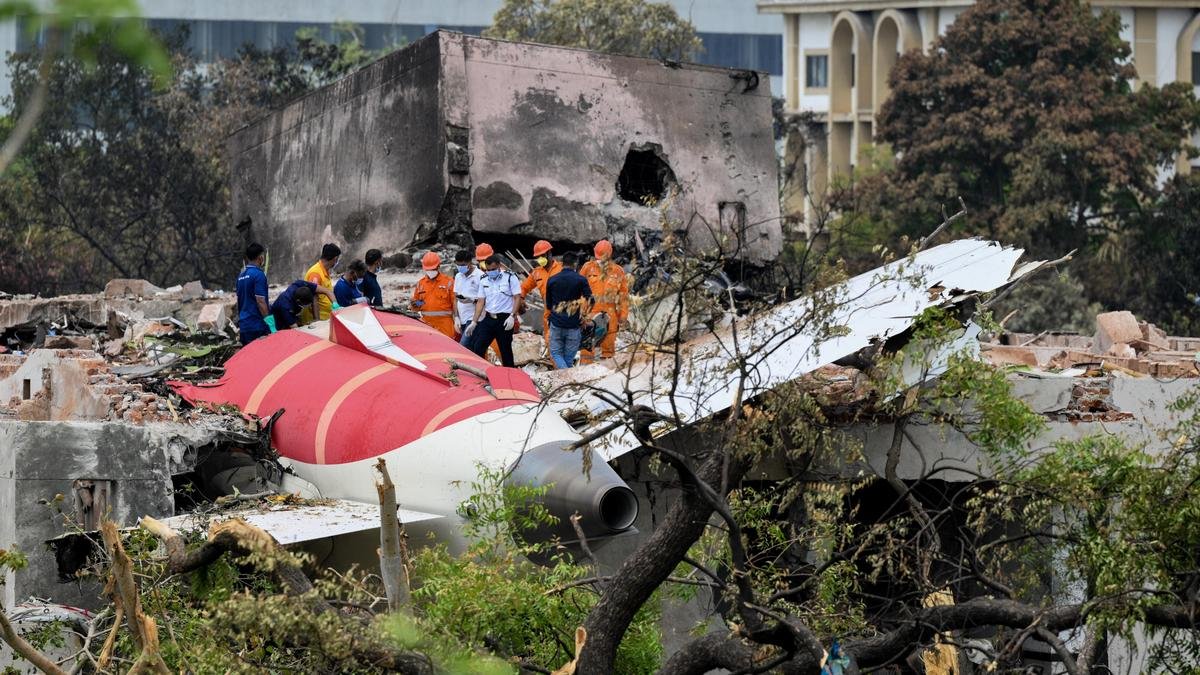
More than a year after an Air India Boeing 787 Dreamliner crashed shortly following take-off from Ahmedabad on June 12, 2025, killing 260 people, the Aircraft Accident Investigation Bureau (AAIB) has informed the Supreme Court that it expects to complete its investigation within six weeks, with a “draft final report” likely to be ready by October.
“In view of the nature, scale and complexity of the present accident, the AAIB has carefully assessed the timeline for completion of the investigation.
In all probability, the investigative activities, subject to the resolution of pending external dependencies, are expected to be completed within six weeks,” states an affidavit filed by the AAIB Director General ahead of a July 17 hearing in a batch of petitions seeking an independent investigation into the crash.
The forgotten copilot of Air India flight 171 As required under the rules of the International Civil Aviation Organisation (ICAO), the “draft final report” will first be shared with the National Transportation Safety Board (NTSB), the United States agency representing the State of Design and Manufacture, for its comments.
According to the Bureau, the consultation process could take between 30 and 60 days, depending on the nature and complexity of the responses received.
The AAIB Director General stated that the investigation was presently at the “evidence collection, technical examination and forensic examination”, which he described as the core fact-finding stage.
At this stage, investigators are empowered to access and examine the aircraft involved in the accident and all its components.
‘Pilot-blame narrative’ affecting witnesses The court was further informed that the investigation team has interviewed several witnesses, including Air India and Boeing 787 pilots, crew members who had previously flown with the pilots of the accident aircraft, air traffic control personnel, and specialists in human factors and crew resource management.
The Bureau, however, acknowledged that “media speculation” and the “narrative attributing blameworthiness to the pilots” had made some witnesses “restrictive and non-responsive” during the course of the investigation.
It also pointed out that experienced pilots, aeronautical engineers, aviation medicine specialists, aviation psychologists and flight recorder experts have been engaged to assist the probe.
‘No scope for parallel probe’ The affidavit also opposed the petitioners’ plea for a court-monitored or independent inquiry, contending that the investigation was being conducted in accordance with international standards and the applicable legal framework, leaving no scope for judicial oversight or a parallel probe.
Why is Dreamliner’s fuel system under watch? | Explained “It is thus respectfully submitted that the statutory and treaty framework governing aircraft accident investigation constitutes a carefully layered legal regime...
This constitutes a complete code, leaving no lacuna that could justify the creation of a parallel investigative body,” it stated.
The Bureau further informed the court that it had completed 49 of the 66 procedural steps prescribed for the investigation of a serious aircraft accident.
According to the affidavit, every safeguard—including preservation of evidence, recovery and analysis of the flight recorders, participation of accredited representatives, technical examination of aircraft systems, stakeholder consultation, and circulation of the draft report—is being “scrupulously followed”.
Disclosure of cockpit recordings prohibited Vehemently opposing the petitioners’ demand for disclosure of the cockpit voice recorder (CVR) and airborne image recordings, the AAIB stated that Rule 17(5) of the Aircraft (Investigation of Accidents and Incidents) Rules, 2025, places “an absolute statutory prohibition” on making such material public.
The preliminary report on the AI 171 crash is notably brief and lacking in technical transparency, says aviation expert “If witnesses and persons involved in aircraft operation know that their statements may be disclosed in aircraft accident or public proceedings, they will become guarded or unwilling to cooperate, thereby defeating the very purpose of safety investigation,” the affidavit states.
The Bureau further clarified that the sole purpose of the investigation is to improve aviation safety and prevent future accidents, and not to “apportion blame or determine civil or criminal liability.” It added that, in accordance with Rule 17(3) of the 2025 Rules, the identities of persons involved in the accident or incident cannot be disclosed in the final report.
Air India Flight AI171, a Boeing 787 Dreamliner aircraft, crashed within moments of taking off from Ahmedabad on June 12, 2025.
The accident claimed the lives of all but one of the 241 persons on board and also killed 19 people on the ground.
Among those seeking an independent investigation is the father of Captain Sumeet Sabharwal, one of the pilots of the ill-fated flight.
He has challenged the AAIB’s preliminary report, contending that it has fuelled speculation of possible pilot error.
Separately, the NGO Safety Matters Foundation has also sought the constitution of a formal inquiry committee to probe the accident.
Earlier, the apex court had asked the Union government to place on record the procedural protocol governing the AAIB probe, observing that proceedings should not become a “blame game”.
“There is a lot of anxiety and queries in the minds of pilots, close relatives [of those who died]...
We are also eagerly waiting for the findings of the investigation.
We also want to see what they have to say,” Chief Justice of India Surya Kant had said.