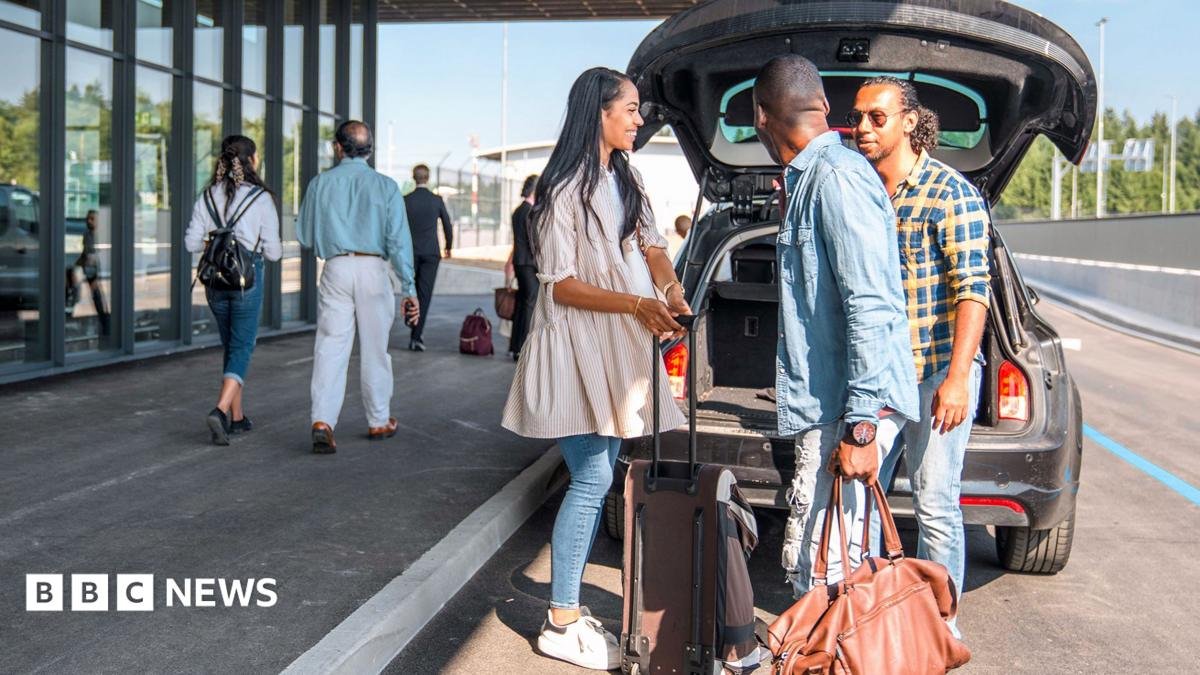
Image caption, Gatwick and Stansted airports have been found to charge the highest drop-off fees among major airports in the UK ByKaty Austin Transport correspondent Published 4 hours ago Drop-off fees at the UK's major airports have risen by a third on average since last summer, new analysis has found.
The RAC looked at the cost of pulling up at the closest point to terminals at the 20 busiest airports - 16 had put up their fees since last year.
Two London airports, Gatwick and Stansted, topped the price table at £10.
Trade body Airports UK said free drop-offs were available and fees were part of airports' business models and climate change objectives.
London Gatwick's is the highest "farewell fee", charging £10 for 10 minutes on the forecourt outside either of its terminals.
At Stansted, £10 buys a more generous 15 minutes, at "Express Set Down" outside departures.
London City Airport, which only started making people pay this year, is the most expensive on a per-minute basis.
Its £8 charge for five minutes works out at £1.60 per minute.
In contrast, none of the top 10 airports in the EU charge for drop-offs, according to RAC research.
The RAC acknowledged UK airports generally offered other options for dropping people off at locations further from the terminal, sometimes with free shuttle buses.
But the motoring organisation's senior policy officer Rod Dennis said "having a captive audience should be no excuse for these 'farewell fees' – especially when they're completely at odds with how major airports around the world operate." He said drivers needed to be especially careful of barrierless 'park now, pay later' drop-off zones, as they could face a parking charge notice if they failed to pay online or by phone within a certain period of time.
Image caption, Parking directly in front of the terminal at Aalborg airport in Denmark is free for the first hour Gatwick's price hike comes as the airport tries to get more people arriving by trains and buses.
When the Transport Secretary approved the airport's plans for a second runway, one of the requirements was to have 54% of passengers using public transport.
Heathrow may also have to act to try and put people off driving to get a third runway.
A London Gatwick spokesperson said drop-off charges were aimed at disincentivising 'kiss and fly' trips and data indicated it was "influencing passengers to seek alternative options".
The airport links to 120 train stations across London and the South East, with eight local bus routes running 24/7, they said.
Passengers can still be dropped off for free at long-stay car parks, with a free shuttle bus to the terminal and Blue Badge holders are exempt from the charge, they said.
A spokesperson for Airports UK said where drop off fees are charged they are "necessary to manage congestion, and the traffic and air pollution concerns of our local communities, as well as our climate change objectives".
"These are issues that airports are mandated to manage by the government and local authorities," they said.
But Clive Wratten, CEO of the Business Travel Association, said fees were adding to businesses' costs.
"First it was environmental [reasons].
Then congestion management.
Then funding new routes.
Now apparently it is about offsetting tax rises," he said.
"The goalposts have moved so many times now that the credibility of any justification has long since gone." How to avoid unexpected charges Check fees and how to pay them before setting off.
Blue Badge holders are sometimes exempt.
Look for cheaper or free alternatives, for example car parks slightly further away which have shuttle buses to the terminal.
Research possible public transport alternatives.
Keep an eye on the time; make your goodbyes quick to avoid over-staying the limit.
Check where a taxi will drop you and whether they include the fee in their fare.