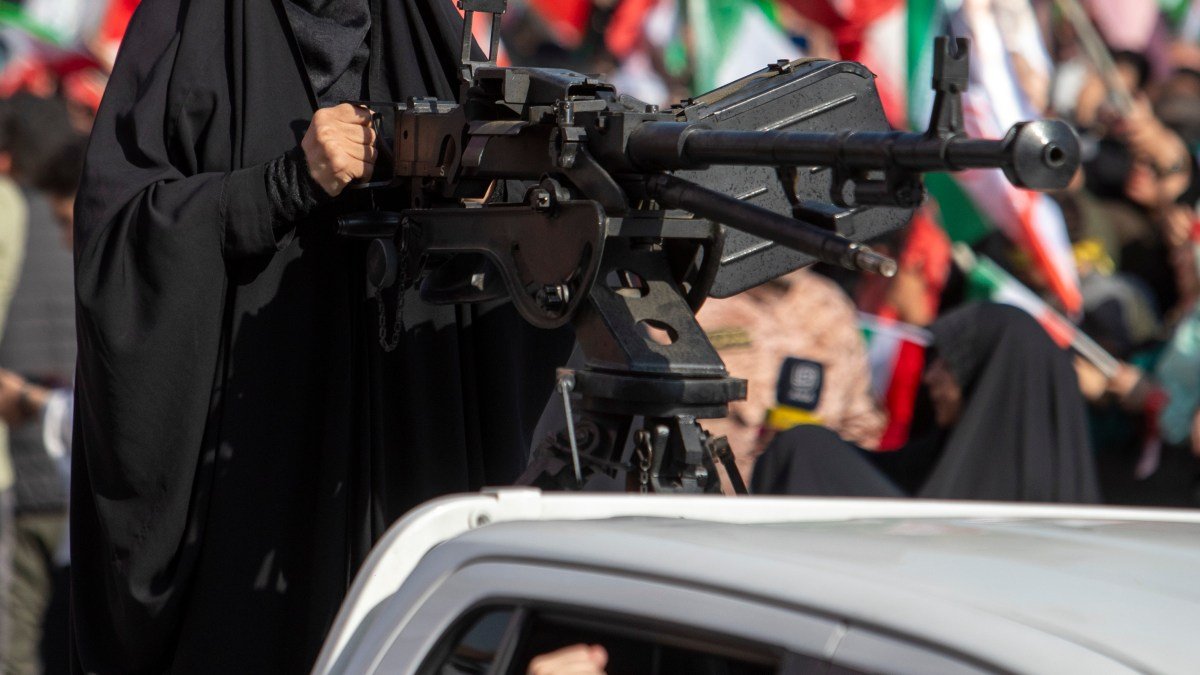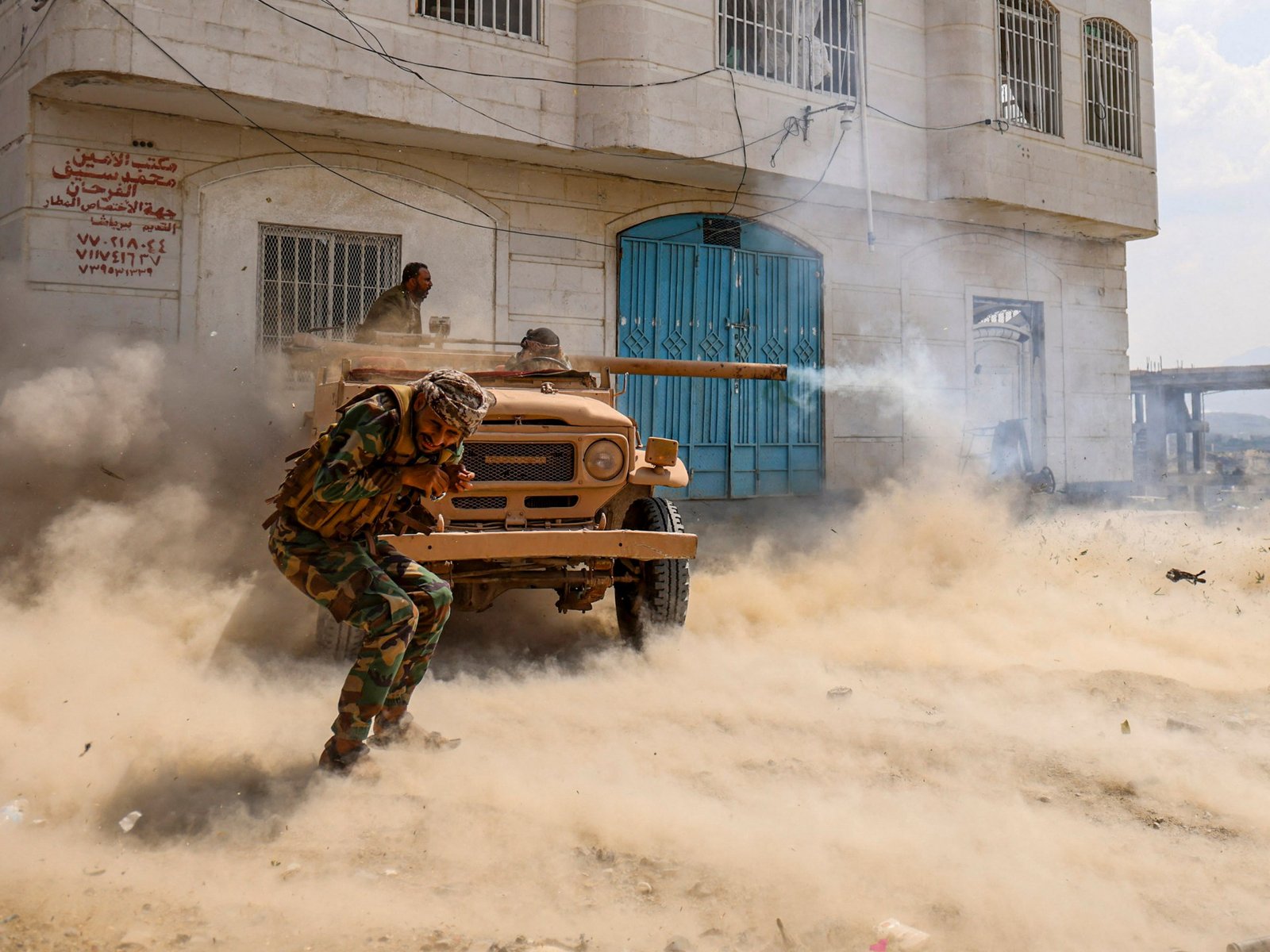
Yemeni government forces fire a truck-mounted rifle during battles against the Houthis on the Jabal Han front west of the city of Taiz, October 21, 2026 [Ahmad al-Basha/AFP] By Al Jazeera Staff Published On 2 Nov 20262 Nov 2026 Al-Jawf has become a new focal point in the conflict between forces aligned with Yemen’s internationally recognised government and the Houthis, highlighting the strategic importance of the northern governorate.
A major counteroffensive has been launched by the Yemeni government army and forces loyal to it to capture the strategic heights east of the provincial capital, al-Hazm, from the Houthis.
The operations are part of Operation Dawn of Yemen, launched by the government last month to reverse Houthi territorial gains and restore state control in the country.
Al-Hazm has become a central part of this operation, with the city a potential launchpad for government forces against the Houthis.
They have controlled the capital Sanaa and most of northern Yemen since the war broke out in September 2014.
Strategic defence lines During the 12 years of war in Yemen, control over al-Hazm has shifted several times, with the Houthis seizing the city in March 2020.
The governorate remains highly coveted due to its expansive border with Saudi Arabia and its direct geographic links to five pivotal governorates: Hadramout, Saada, Sanaa, Amran and oil-rich Marib and close to the capital, Sanaa.
Al-Jawf also acts as a vital defensive shield for Marib, controlled by government forces, preventing the Houthis from advancing into the eastern regions.
It is also a gateway to major Houthi strongholds in northern Yemen.
Video screengrab is said to show Houthi fighters attacking Saudi-backed forces in Al-Jawf governorate, September 15, 2026 [Houthi Military Handout via Reuters] Field Commander Colonel Rabie Al-Qurashi said government forces have been able to win complete control over the strategic Huwaishan mountain range, east of al-Hazm city.
He said it is the first line of defence for the Houthis in the eastern axis and control over the rugged region would give government forces the ability to disrupt rebel supply routes.
Advertisement “Government forces succeeded in breaking that defensive format with partial control over the Al-Alam front road,” Al-Qurashi said.
“The government advance represents a beginning to tighten the noose on the Houthis in the upper al-Labanat camp,” which is regarded as a vital eastern gateway to Sanaa.
Ali Al-Dahab, a military and strategic affairs researcher, said there are immense tactical benefits from holding this elevated terrain.
“The recent advances of government forces in Al-Jawf are a military transformation that serves the course of future operations for their arrival to al-Hazm city,” Al-Dahab told Al Jazeera.
“The government forces’ recovery of a number of heights there provides a military and psychological morale advantage and confuses the Houthis’ decisions, in addition to granting government forces monitoring, movement, and observation of Houthi supply lines and securing their own lines.” Military spokesman Majed Abdullah Al-Nuzaili said on X that recent military operations against Houthi positions in al-Jawf were “inflicting losses on the militia’s capabilities”.
Desert battleground dynamics The government dominates the vast eastern desert district of Khabb wa ash Sha’af, representing 82 percent of the governorate’s total area.
The Houthis control the provincial capital, al-Hazm, and 10 other districts.
Security and political affairs researcher Brigadier General Ahmed Al-Awadhi stressed the importance of “continuous but not rapid” government advances in the area.
“The advances of government forces in Al-Jawf cannot be ignored or their importance underestimated,” Al-Awadhi told Al Jazeera.
“Control over heights or mountain ranges in the desert Al-Jawf governorate represents points of military strength regardless of their proximity to or distance from the governorate capital.” The government forces advances in al-Jawf highlight a historical vulnerability for the Houthis, having suffered repeated defeats in battles in desert and open areas, he added.
The developments coincide with the Presidential Council’s appointment of Major General Amin Ali Al-Akimi as governor and military commander of al-Jawf.
“[His] reappointment… comes within the context of restructuring the theatre of operations and unifying the front,” Ibrahim Jalal, a Yemen-focused analyst told Al Jazeera.
“Hailing from Dhu Hussein, a branch of the Daham Bakil tribe, Al-Akimi possesses tribal and military influence that could help mobilise tribes, overcome divisions and bolster momentum on the ground.
However, translating this influence into sustainable gains remains contingent upon unifying command and control, coordinating operations across all battlefronts, securing military and logistical support and strengthening anti-corruption efforts to improve the efficient management of military resources.” Advertisement The Houthis say they have thwarted advances by government forces in al-Jawf and Marib.
Escalating nationwide hostilities Fighting has continued in other parts of Yemen as Houthi-affiliated media reported air strikes on an oil company facility in the Bajil district of Hodeidah, which coincide with fierce fighting further south.
Government forces repelled Houthi attacks in al-Aqroudh and on the Tur al-Baha front in Lahij governorate.
Intense fighting continues in Taiz governorate.
The siege of Taiz City continues to strain medical infrastructure, with deliveries of food and fuel severely restricted.
Civilians remain at risk from sniper fire from surrounding hillsides, authorities have warned.
Governor Nabil Shamsan said that hospitals are working at only 20 percent capacity, with 120 health centres entirely shut due to the siege.
“We urge the international community to secure at least one safe route between Taiz and Aden to enable citizen movement and the smooth entry of services, essential materials and goods,” Shamsan appealed to Al Jazeera.
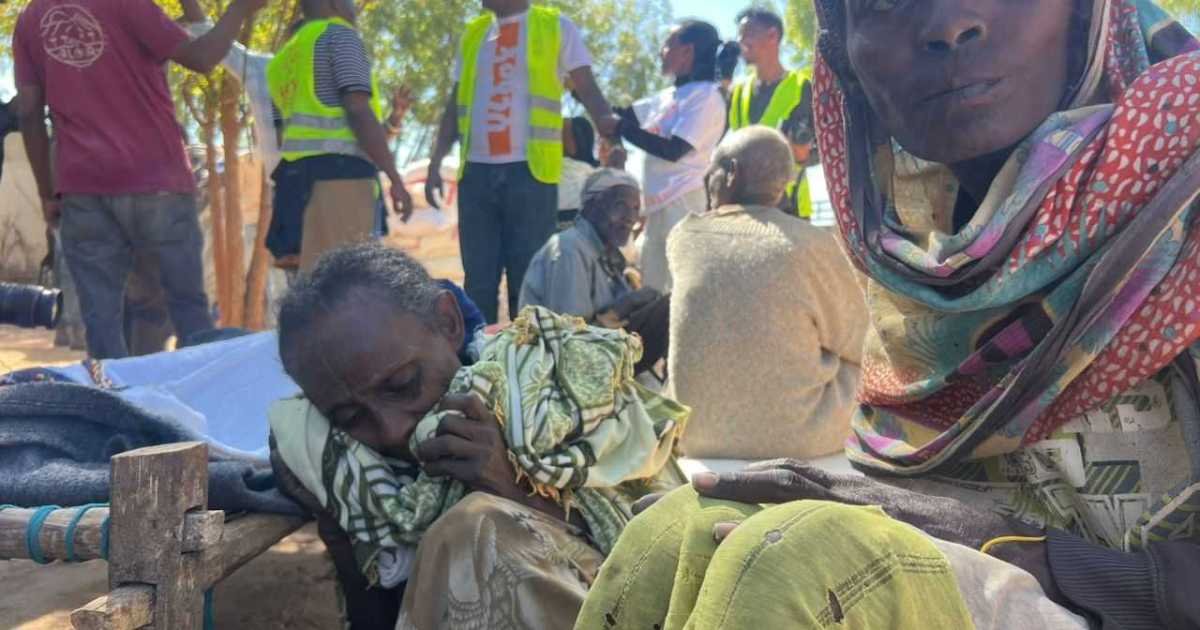
More than 300,000 people have fled their homes in western Yemen due to the escalating fighting, leaving civilians highly vulnerable.