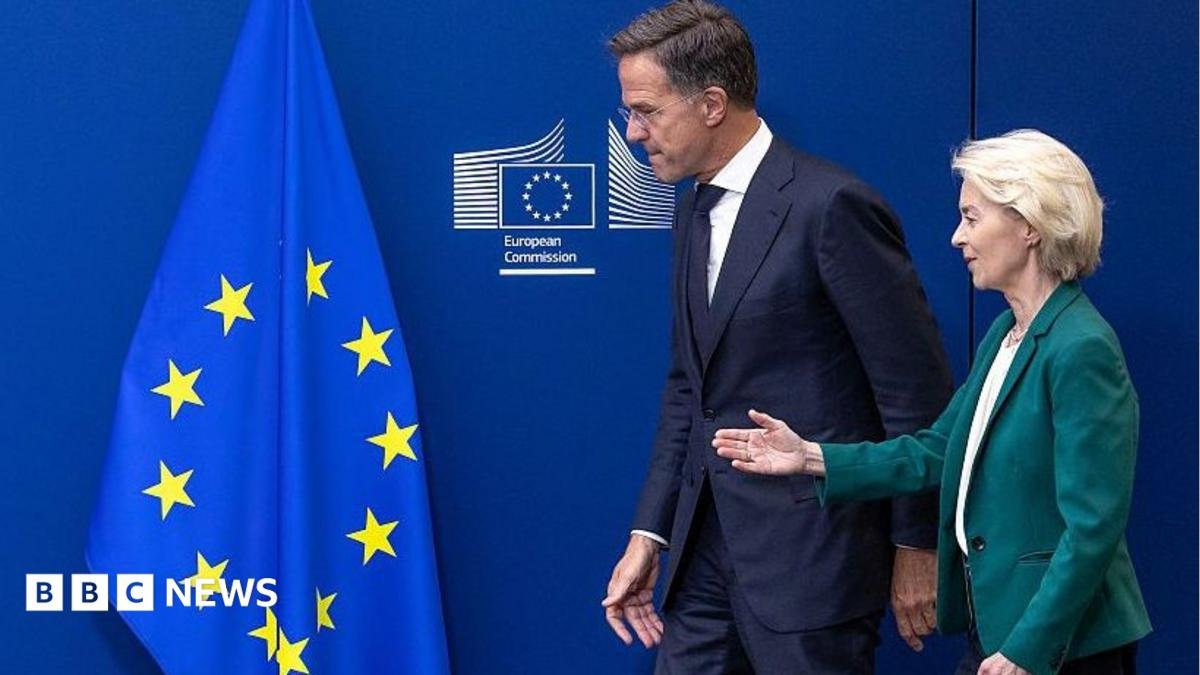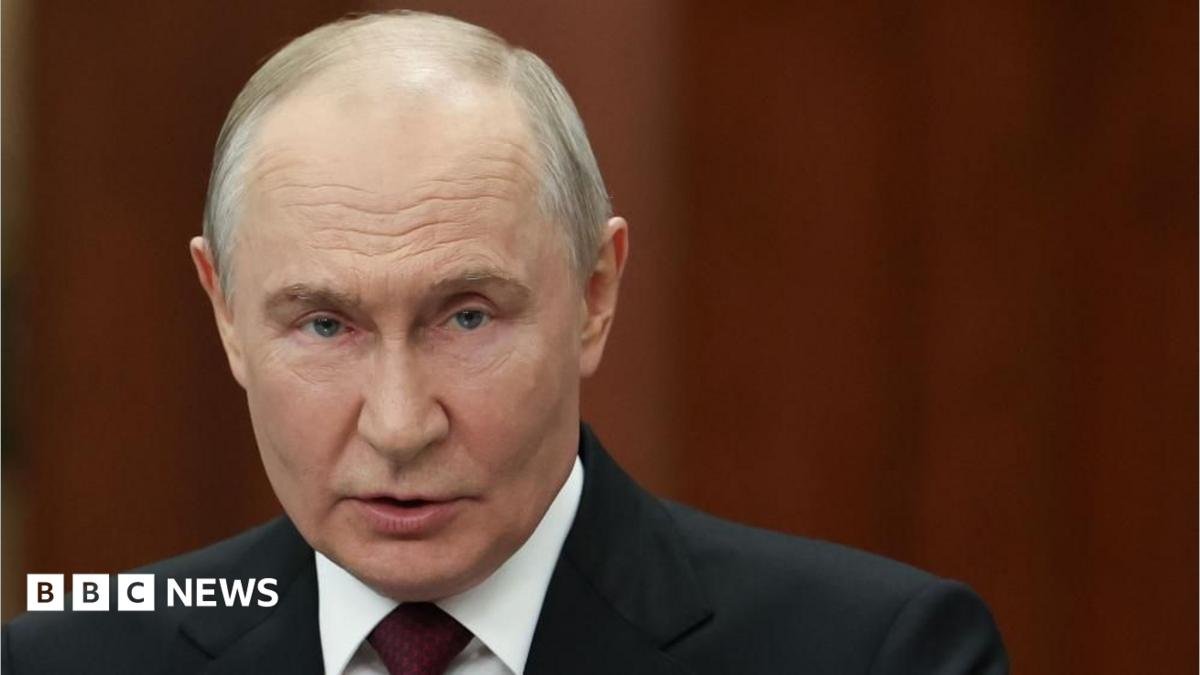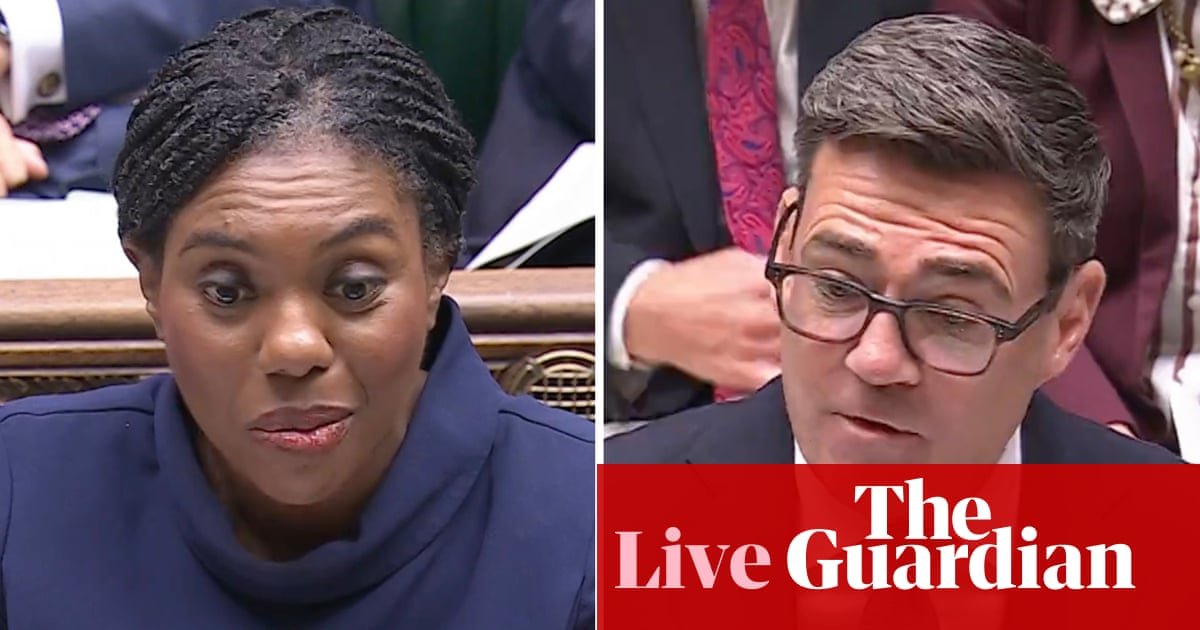
Burnham faced questions from Kemi Badenoch and other MPs amid speculation over budget
49m agoFarage says Reform UK's bank account has suspended several times, claiming this shows money laundering rules too strict
2h agoSwinney says NHS Scotland health boards reorganisation won't involve compulsory redundancies
3h agoBurnham blames Tory legacy for leaving UK economy vulnerable
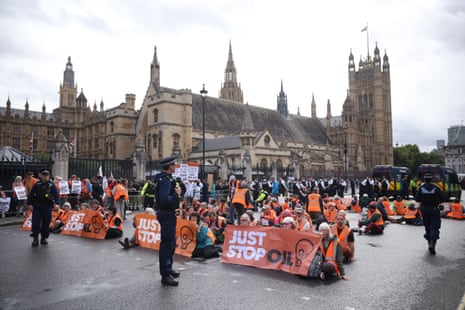
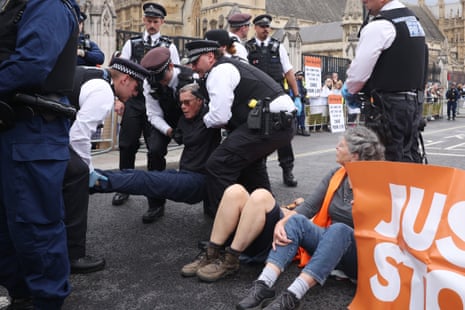
3h agoJust Stop Oil protesters block road outside parliament
3h agoBurnham told 'vibes alone' not enough for UK security, as Labour's Tan Dhesi says defence spending should rise faster
4h agoBurnham suggests he is open to devolving power over policing to Welsh government
4h agoBurnham says he wants closer relationship with EU - but ducks Lib Dem challenge to back joining single market
4h agoBadenoch accuses Burnham of being 'people pleaser', not a leader
4h agoBurnham offers to work with Tories on getting welfare spending down
4h agoBurnham faces Badenoch at PMQs
4h agoPolanski marks first anniversary of his election as Green leader by highlighing achievements
5h agoFirst minister Rhun ap Iorwerth says Wales faces 'very challenging' budget situation
5h agoCan Burnham change PMQs?
6h agoPolanski says Greens will make Holborn and St Pancras byelection 'referendum on ending rip-off Britain'
6h agoScottish government accused of 'slash and burn' approach to health boards
6h agoCabinet Office minister Sally Jameson rejects suggestions government does not have firm control of spending
6h agoFormer bank chief Howard Davies joins O'Neill in urging Burnham to scrap pensions triple lock
7h agoBurnham's Commons speech 'last thing' bond market wanted to hear because it implied more spending, Jim O'Neill says
7h agoBurnham to take PMQs as borrowing costs rise, and thinktank says higher defence spending not 'realistic' without tax rise
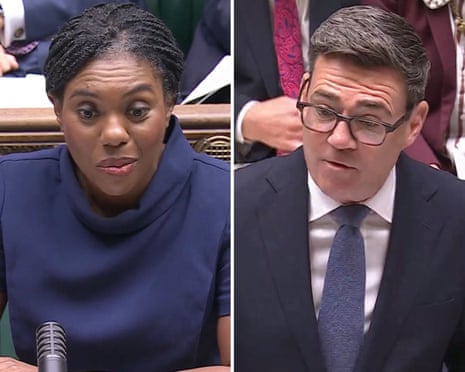
So much for the talk of a new-look PMQs. (See 11.12am.) Although Andy Burnham and his team have spoken about adopting a new approach to the traditional Commons joust with the leader of the opposition, in the end this felt much like business as usual. Burnham was more willing to engage with Kemi Badenoch’s questions than Keir Starmer was (certainly in the late Starmer phase), and he did make a point of stressing several times his desire to work with opposition parties. But, although he has made “problem-solving, not point-scoring” his mantra, Burnham was quite happy to resort to point-scoring. His main blast was directed at Andrew Griffith, the new shadow chancellor, and his role in the Liz Truss mini-budget.
Burnham may not have been particularly innovative, but he was good; confident, plausible, quite funny. In the exchanges with Badenoch, there was no obvious winner, but he had the best single put-down. That came when Badenoch asked:
The prime minister told the house that his summer of promises would be paid for by reprioritising within government. So what exactly has he cut?
Burnham replied: “In terms of what has he cut? Tax is the simple answer.” This was a reference to the point he made yesterday about how his early announcements included two tax cuts in his first week.
While Burnham and Badenoch will both be fairly happy with how the exchanges went, one person less pleased will be the PM’s diary secretary. Burnham did seem to agree to a lot of meetings with MPs wanting to discuss this, that or the other. (Starmer would have fobbed them off with a meeting with a minister, which is what Burnham himself will probably be doing before too long.) And this did seem to confirm Badenoch’s point about Burnham being a people pleaser. (See 12.09pm.) She claimed that, in response to 125 questions yesterday, Burnham did not once say no to a spending request. It is a fair line of attack, although probably not one that will be available for long because Burnham will soon discover that he cannot do this job without having to disappoint.
According to Jason Groves from the Daily Mail, government sources are indicating that Andy Burnham mis-spoke at PMQs when he told Tan Dhesi that he was committed to spending 3% of GDP on defence by 2030. That is not a big surprise because the context implied that, when Burnham said “I’ve made that commitment”, he was actually thinking of 3.5% by 2035 – not the question he had been asked.
Government source confirms Burnham has *not* committed to hit 3% defence spending by 2030, despite appearing to do so at PMQs, saying: ‘His position is unchanged’
The Conservative party has now released a full list of shadow ministers, following Kemi Badenoch’s reshuffle. James Heale from the Spectator has posted the full list on social media.
And this is from Tim Shipman, the Spectator’s political editor, on the list.
Kemi Badenoch has just completed her reshuffle. The press release tells us the Conservative Party now has TWENTY members of the Commons whips office. The Conservative Party currently has 118 MPs (6 each). This seems like overkill. Or is she expecting trouble? (Labour has 16 whips for 403 MPs - 25 each)
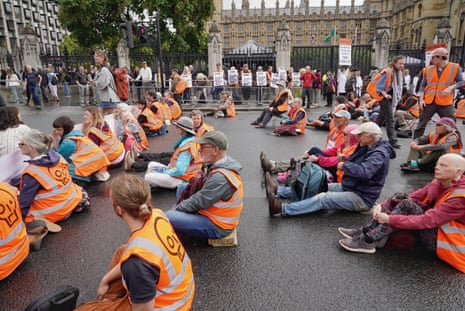
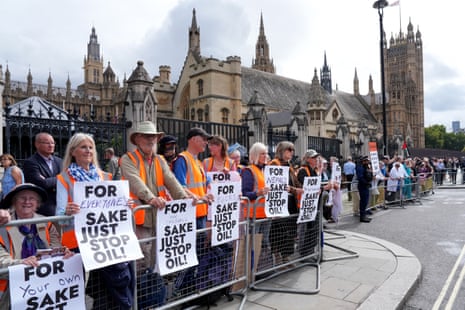
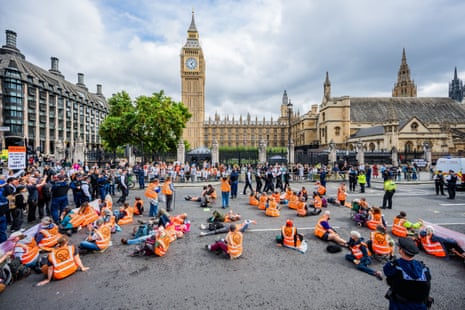
Here are more pictures of the Just Stop Oil process outside parliament today.

Nigel Farage, the Reform UK leader, has revealed that his party’s bank account has been frozen several times.
In an interview with the BBC’s political editor, Chris Mason, Farage said this was evidence Britain has become a “complainant society” where too much time is spent in investigating unfounded allegations.
Farage was responding to a question about why – as the Sunday Times revealed in July – Reform UK had its bank account frozen for two weeks ahead of the 2024 general election over concerns about potentially illegal donations.
Asked why the account was frozen, Farage replied:
That’s very common. It’s about the fifth time it’s happened to us. It happened to us all the time. It happened to us in Ukip [the party Farage led before Brexit]. Happened to us in the Brexit party.
Asked again why this was happening, Farage said:
Because complaints get made! We’re living in a complainant society. You know, if I contact your bank and you’ve got a big transaction going to your account, and I say I think Chris is money laundering, they will sustain your account, pending an investigation. That’s the world we live in.
Because complaints get made! We’re living in a complainant society.
You know, if I contact your bank and you’ve got a big transaction going to your account, and I say I think Chris is money laundering, they will sustain your account, pending an investigation. That’s the world we live in.
Some payments to Reform UK are being investigated by the police. Asked in the interview about some specific payments, Farage insisted that they were legitimate.
But he also claimed that rules to counter money laundering were excessive. “A series of European Union directives on money laundering have literally clogged up much of our banking system”, he said.
And he argued that Reform UK was subject to particular scrutiny because it was a threat to the establishment.
Asked about the separate investigation by the parliamentary commissioner for standards into claims that he broke Commons rules by not declaring the £5m donation he received before the 2024 general election, Farage indicated that he expected to be interviewed by the commissioner, Daniel Greenberg, in connection with this soon.
Farage indicated that he expected Greenberg to deal with the case fairly. But he implied the Commons standards committee, which will take the final decision about any punishment for breaking Commons rules, was biased against him. “I think we know the outcome already,” he said.
When pressed on why he was saying this, he said Reform UK did not have any MPs on the committee, and so all the MP members were political opponents.
The committee does have lay members. But Farage said all members making these sorts of decisions should be “apolitical” – implying he would like the committee to be composed wholly of lay members.
At Westminster it is expected that the committee will rule that Farage did break Commons rules by not declaring the £5m donation and that this was serious enough to merit a suspension of at least 10 days. This would allow a recall byelection to be held in Clacton.
Scotland’s first minister has insisted there is “no question” of workers facing compulsory redundancy as he embarks on a programme of major reforms to the public sector, the Press Association reports. PA says:
John Swinney announced plans in his programme for government that would see the number of area health boards in Scotland cut from 14 at present to just two. Unions have raised concerns the changes will result in thousands of job losses, with Unite insisting that “all options will be on the table” if needed. [See 10.24am.] The threat came as the union’s general secretary Sharon Graham hit out at the “slash and burn programme for the NHS” that Swinney proposed. “The proposals will inevitably result in swingeing cuts and thousands of job losses across the public sector,” she added. Swinney however insisted the Scottish government would “work very closely” with unions as it embarks on the changes. When he announced the changes to MSPs on Tuesday, the first minister said they were “the most radical reshaping of public services” in Holyrood’s history. And speaking today he insisted the country needs to not only “change the way in which we deliver public services to make sure they are sustainable”, but also needs to reduce the public sector workforce. With the Scottish government facing a budget black hole of almost £5bn by the end of the decade, the SNP leader said: “I have said that for all the time I have been first minister there will be a need for public sector employment to fall.” Stressing that the government has to “live in the realities of the financial situation that we face” he told BBC Radio Scotland’s breakfast programme that “it is likely over the next few years that there will be a reduction in public sector employment”. He refused to estimate how many jobs could go as a result of the changes – which will also see a new structure set up for Scotland’s councils. Swinney was clear he was not going to “put particular numbers on this” with regard to job losses. But he insisted that ministers would “work collaboratively” with the unions as the country moves “toward the two-board approach”. The first minister also insisted the government’s policy of no compulsory redundancies within the public sector would be maintained.
John Swinney announced plans in his programme for government that would see the number of area health boards in Scotland cut from 14 at present to just two.
Unions have raised concerns the changes will result in thousands of job losses, with Unite insisting that “all options will be on the table” if needed. [See 10.24am.]
The threat came as the union’s general secretary Sharon Graham hit out at the “slash and burn programme for the NHS” that Swinney proposed.
“The proposals will inevitably result in swingeing cuts and thousands of job losses across the public sector,” she added.
Swinney however insisted the Scottish government would “work very closely” with unions as it embarks on the changes.
When he announced the changes to MSPs on Tuesday, the first minister said they were “the most radical reshaping of public services” in Holyrood’s history.
And speaking today he insisted the country needs to not only “change the way in which we deliver public services to make sure they are sustainable”, but also needs to reduce the public sector workforce.
With the Scottish government facing a budget black hole of almost £5bn by the end of the decade, the SNP leader said: “I have said that for all the time I have been first minister there will be a need for public sector employment to fall.”
Stressing that the government has to “live in the realities of the financial situation that we face” he told BBC Radio Scotland’s breakfast programme that “it is likely over the next few years that there will be a reduction in public sector employment”.
He refused to estimate how many jobs could go as a result of the changes – which will also see a new structure set up for Scotland’s councils.
Swinney was clear he was not going to “put particular numbers on this” with regard to job losses.
But he insisted that ministers would “work collaboratively” with the unions as the country moves “toward the two-board approach”.
The first minister also insisted the government’s policy of no compulsory redundancies within the public sector would be maintained.
Here is Jessica Elgot’s story from PMQs.
Just Stop Oil protesters are blockading the road outside parliament, Kate Ferguson from the Sun on Sunday reports.
During PMQs Tan Dhesi, the Labour chair of the Commons defence committee, asked Burnham if he would commit to raising defence spending to 3% of GDP by 2030.
It is imperative that we invest in our armed forces in the here and now, rather than be sorry later. Indeed, defence is definitely one area where vibes alone just isn’t going to be enough. So rather than kick the can down the road waiting for a fiscal event in the future, will the prime minister urgently commit to charting a pathway to reach 3% of GDP spend on defence by 2030, which, as his chancellor rightly noted, is critical to keep our country safe.
It is imperative that we invest in our armed forces in the here and now, rather than be sorry later. Indeed, defence is definitely one area where vibes alone just isn’t going to be enough.
So rather than kick the can down the road waiting for a fiscal event in the future, will the prime minister urgently commit to charting a pathway to reach 3% of GDP spend on defence by 2030, which, as his chancellor rightly noted, is critical to keep our country safe.
John Healey resigned as defence secretary when Keir Starmer was PM because Starmer would not commit to raising defence spending to 3% of GDP by 2030. He is now chancellor, but has not publicly committed to reaching the 3% target he insisted was essential by 2030.
I’ve made that commitment, made it very clear, and I have done for a considerable period of time. And I was in Ukraine last week for a very specific reason to repeat it on the world stage. There [Dhesi] can be absolutely sure of that.
This sounded like a clear commitment to 3% by 2030.
But there was some doubt about his intention because earlier during the exchanges, when Kemi Badenoch said that the armed forces needed a plan to hit 3% now, Burnham in reply just repeated the commitment to get defence spending up to 3.5% by 2035. (See 12.18pm.)
UPDATE: According to Jason Groves from the Daily Mail, government sources are indicating that Andy Burnham mis-spoke at PMQs when he told Tan Dhesi that he was committed to spending 3% of GDP on defence by 2030. That is not a big surprise because the context implied that, when Burnham said “I’ve made that commitment”, he was actually thinking of 3.5% by 2035 – not the question he had been asked.
Samantha Niblett (Lab) tells Burnham that this is her first question at a PMQs too. Niblett is the MP who made headlines with her “summer of sex” campaign, and she says he has had a tremendous response to it. She says:
I have discovered that shame, guilt and embarrassment around talking about sex and body parts like penis and vagina is even leading to late diagnosis of health conditions and illnesses such as cancer.
She asks if Burnham will meet her to discuss her campaign.
Burnham says he will. He says Niblett has been raising important issues, and he jokes that her summer sounds as if it was more exciting than his.
And that is the end of Burnham’s first PMQs.
Jack Rankin, who has just been appointed as Kemi Badenoch’s PPS, says Burnham did not answer any of Badenoch’s questions. He asks if Burnham can say what the fiscal rules are, and categorically say he will stick to them.
No borrowing to fund day to day spending, debt falling as a percentage of GDP by the end of the parliament. And yes, we will.
Politics live with Andrew Sparrow