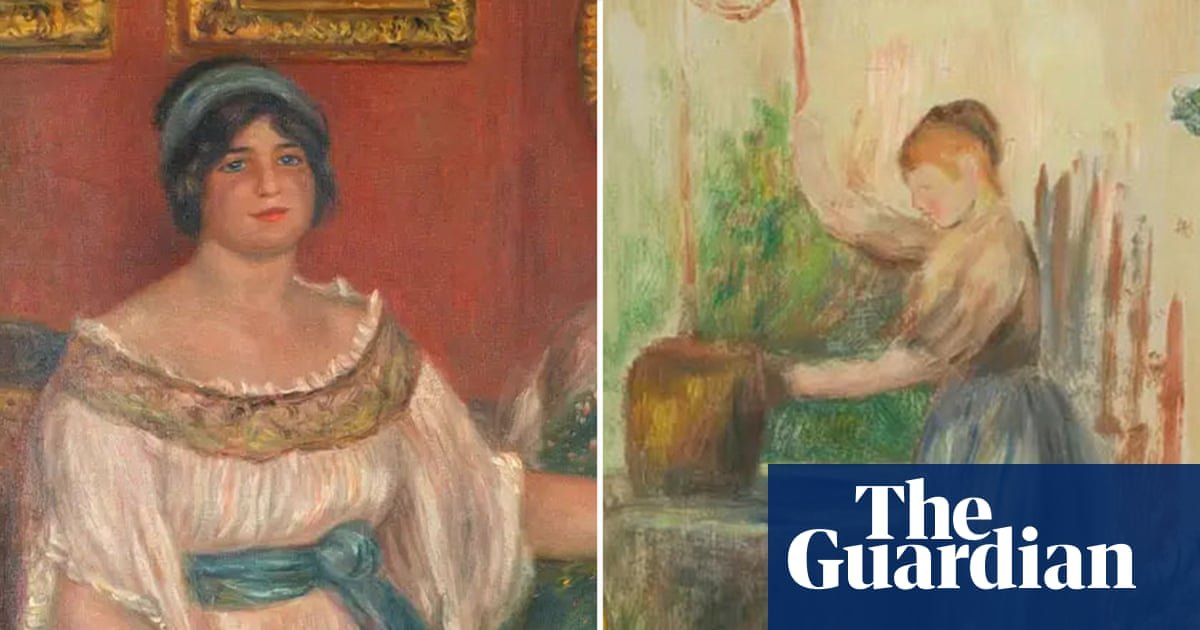
A composite of stolen the Renoirs: Young Woman at the Well and Madame Colonna Romano.
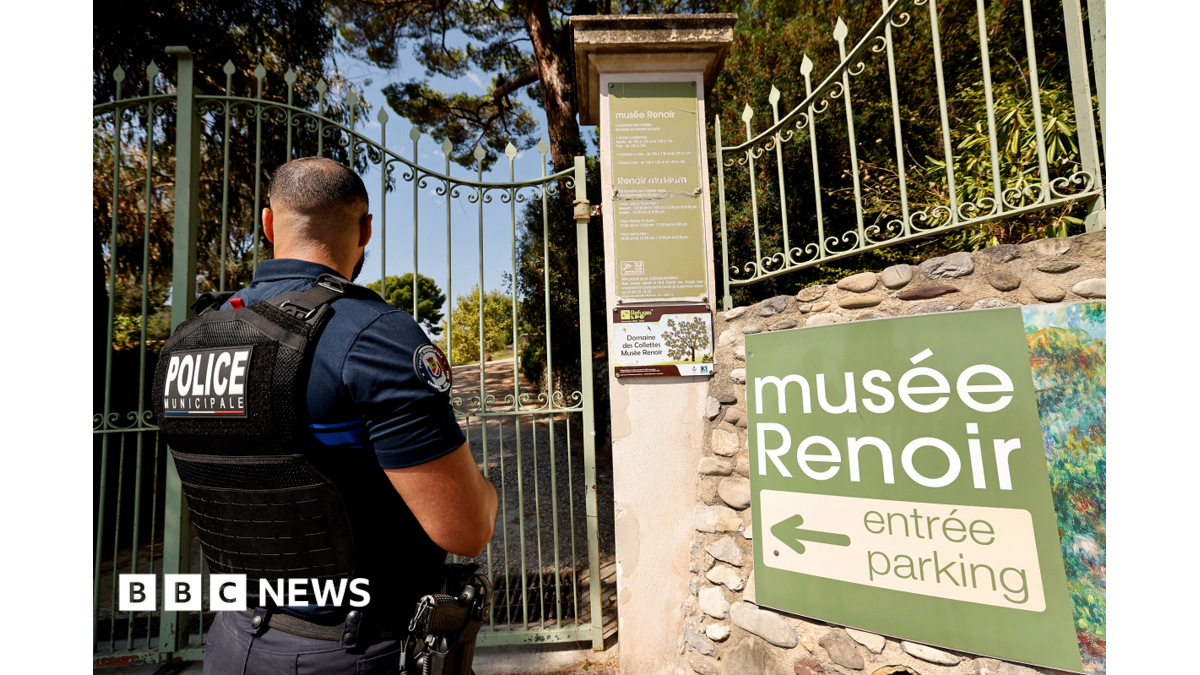
Photograph: Musée Renoir Artworks stolen from Renoir Museum on French Riviera in latest heist Thieves took four artworks but it is thought they dropped two in museum garden as they fled French police are hunting two thieves who escaped with two Renoir paintings from a museum on the French Riviera after breaking in through a hole cut in its garden fence.
Bryan Masson, the mayor of Cagnes-sur-Mer, about 10 miles west of Nice, said the pair appeared to have been “well equipped and well informed” about the museum, which houses works by the French impressionist Pierre-Auguste Renoir in his former home.
The theft early on Tuesday is the latest in a string of recent museum heists in France and across Europe, including the brazen break-in at the Louvre in Paris last October, when thieves stole crown jewellery worth €88m (£75m), including tiaras, a brooch, necklaces and earrings.
Masson told the local broadcaster Ici Azur that the two thieves sliced through the museum garden fence with an electric knife or metal saw, entered the building through the ground floor, and then cut the clips securing the artwork frames.
The mayor of Cagnes-sur-Mer, Bryan Masson, said his office estimated the stolen art was worth €9m.
48am, Masson said, which “forced the burglars to flee in haste and helped limit the scale of the theft”.
Two of the four works taken were abandoned in the museum gardens during the getaway, the mayor, a member of the far-right National Rally (RN), said.
His office estimated the value of the stolen works at €9m.
The two stolen paintings were Young Woman at the Well and Portrait of Madame Colonna Romano.
Both were on loan from the Musée d’Orsay, in Paris.
“They’re Renoirs … you cannot sell them like that,” Masson said.
The paintings the thieves abandoned were both portraits: Portrait of Madame Pichon, and Coco Reading, a portrayal of Renoir’s young son Claude.
The Renoir Museum was established in 1960 in the mansion where the painter died aged 78 in 1919.
It houses about a dozen of his paintings and about 40 sculptures, as well as photos, furniture and objects including his easel and wheelchair.
Renoir’s study at the museum in Cagnes-sur-Mer.
“This incident should serve as a warning about the protection of our museums, which now face a new form of organised crime targeting works of art,” the mayor said.
An art theft expert, James Ratcliffe of the Art Loss Register, said thieves were increasingly targeting valuable artefacts.
“Sadly, without further funding to improve museum security, we are likely to see an increase in the number of museum thefts,” he said.
“Each time thefts occur, it draws yet more attention to the perception of these museums as relatively easy targets.
That can only encourage some criminals to consider them as straightforward places to steal from,” he told the Associated Press.
Europol, the pan-European police organisation, said last month robberies at European museums were becoming increasingly violent, with some thieves brandishing guns, assaulting staff and using sledgehammers, axes and even explosives.
The Europol report suggested specialist property crime or art theft gangs, who usually avoid violence, were being replaced by “individuals who often have histories of involvement in other types of crime”, who were recruited through social media.
The four suspected Louvre robbers have been arrested, but the jewels they allegedly grabbed in the seven-minute heist have not been found.
Two of the suspects have reportedly told police the mastermind behind the heist was disappointed by the haul and thought “they could have taken more”.
Italian police recently recovered paintings by Renoir, Cézanne and Matisse worth more than $10.4m stolen from a museum in March.
However, last month four of the most important works by the Renaissance master Antonello da Messina were stolen from a museum in the Sicilian port city of Messina.
Explore more on these topicsArt theft France Art Pierre-Auguste Renoir Europe news Share Reuse this content