Follow the day’s news live
21m agoNew NSW laws targeting organised crime introduced
1h agoNext election a referendum on super, treasurer says
2h agoButler says he’s not thinking about party leadership
2h agoButler says One Nation’s super plan is ‘terrible’
3h agoOne Nation propose divert super payments to pay packet
3h agoGood morning from Tory
3h agoLabor calls on Coalition and the Greens to support social media fines
3h agoMore Australians head to Nepal to help
3h agoBipartisan 'Dads Caucus' to launch in Canberra
3h agoLabor under pressure to toughen lobbying rules
3h agoParents of Australian surfers killed in Mexico fly in for trial
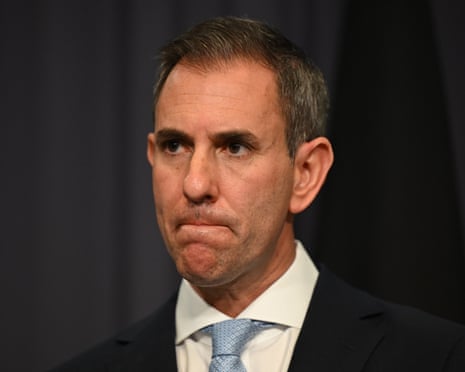
One Nation’s proposal for people to be able to divert some of their super into their pay packet is a “full-frontal attack” that will “make Australian workers tens of thousands of dollars worse off in retirement”, the treasurer, Jim Chalmers, said this morning.
One Nation is “anti-worker” and they “vote the way that [billionaire backer] Gina Rinehart tells them to”, he said, adding that the next election will be a “referendum on super”:
Every time One Nation is asked to support the financial interests of Australian workers, they oppose the financial interests of Australian workers. By ending super as we know it, by making Australian workers poorer as a consequence, One Nation is showing once again: this is exactly why One Nation poses an unacceptable and dangerous risk to Australian workers.
Every time One Nation is asked to support the financial interests of Australian workers, they oppose the financial interests of Australian workers.
By ending super as we know it, by making Australian workers poorer as a consequence, One Nation is showing once again: this is exactly why One Nation poses an unacceptable and dangerous risk to Australian workers.
New laws being introduced in NSW aim to tackle organised crime by giving police more power and creating a new aggravated offence for conspiracy to commit gang-related murder. The maximum penalty will be increased to life imprisonment.
Police would also be able to use new interim serious crime prevention orders to restrict people suspected of serious and organised crime. Those would be applied while the supreme court considers the full order.
Children’s indictable offences would include activities linked to organised crime, and public shootings and firebombings would be added to the scheme.
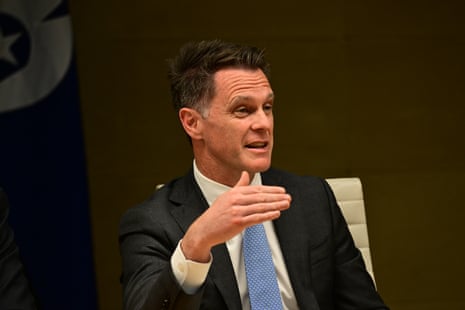
Police would also have more access to encrypted devices. The NSW premier, Chris Minns, said:
Organised crime doesn’t stand still, and neither can the laws and powers we give police to fight it. We want to hit these criminal networks at every point – the people who organise the violence, the people who facilitate it online and the people who ultimately carry it out. If you conspire to arrange a gangland murder, you should face the prospect of spending the rest of your life behind bars.
Organised crime doesn’t stand still, and neither can the laws and powers we give police to fight it.
We want to hit these criminal networks at every point – the people who organise the violence, the people who facilitate it online and the people who ultimately carry it out.
If you conspire to arrange a gangland murder, you should face the prospect of spending the rest of your life behind bars.
US access to Australian military bases
This is an extraordinary story from Ben Doherty, Andy Ball and Nick Evershed about the extent of the United States’ access to military bases across Australia.
Defence minister Richard Marles said in June that the “hugely significant American presence” in the region was a balance to China’s “very significant military buildup”.
Ryan to reintroduce lobbyist register bill
Kooyong MP Monique Ryan will re-introduce her “clean up politics” bill to crack down on lobbyists and increase transparency. She argues gambling, tobacco, fossil fuel and mining representatives have too much access to politicians.
Her bill would create a register for all lobbyists; stop ministers and senior public officials going straight from the government into the private sector; make ministerial diaries publicly available; and ban political donations for industries including gambling and tobacco.
There are already plans to shake up the parliamentary pass system, while Ryan argues the government hasn’t done enough.
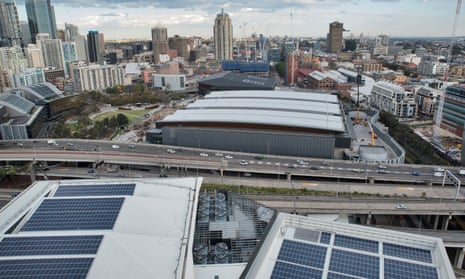
Biggest urban solar farm in hemisphere set for Sydney’s ICC
An 18,400 square metre solar farm that can generate 2.6GWh – enough to power up to 400 homes for a year – will be expanded across Sydney’s International Convention Centre (ICC).
The state planning minister, Paul Scully, says it will be the biggest in any CBD in the southern hemisphere and will allow ICC Sydney to be 100% powered be renewables (through both the solar farm and through buying renewable energy):
This is a great example of how we can unlock greater renewable energy generation and use in urban areas and power a vibrant city by taking advantage of building rooftops. Hosting the largest solar farm of any CBD in the southern hemisphere will help the ICC to reduce emissions and energy costs while also strengthening Sydney’s competitiveness in attracting major international conventions and events.
This is a great example of how we can unlock greater renewable energy generation and use in urban areas and power a vibrant city by taking advantage of building rooftops.
Hosting the largest solar farm of any CBD in the southern hemisphere will help the ICC to reduce emissions and energy costs while also strengthening Sydney’s competitiveness in attracting major international conventions and events.
One Nation super plan ‘no more than a headline’
Deputy opposition leader Jane Hume has some questions about One Nation’s proposal to divert superannuation contributions into people’s pockets. On ABC News Breakfast, she said:
Well, this so far is nothing more than a headline. It hasn’t really been explained. Does the tax status of your superannuation, your discounted tax status, does that remain? Do you get a tax discount for paying your rent? How does it affect your concessional caps? How does it affect your bring–forward provisions, carry–back provisions? How does it affect your superannuation balance at the end of the day? Are we turning our superannuation funds into banks? None of these questions have been answered.
Well, this so far is nothing more than a headline. It hasn’t really been explained.
Does the tax status of your superannuation, your discounted tax status, does that remain? Do you get a tax discount for paying your rent? How does it affect your concessional caps? How does it affect your bring–forward provisions, carry–back provisions?
How does it affect your superannuation balance at the end of the day? Are we turning our superannuation funds into banks? None of these questions have been answered.
Social media plans to give Australians ‘more choice’: Wells
Labor will reveal draft rules that will give Australians “more choice” over what they see on their social media feeds, Anika Wells says.
Speaking to ABC News Breakfast, the communications minister said the government’s draft digital duty of care bill will propose significant penalties for social media giants:
We want them to observe the same basic safety standards, particularly for our children. If you walk down the toy aisle in Big W and you see plastic toys and electronic toys and iPads – you want all of those manufacturers to have abided by basic safety standards when selling something to our kids. And that’s what big tech should have to do.
We want them to observe the same basic safety standards, particularly for our children. If you walk down the toy aisle in Big W and you see plastic toys and electronic toys and iPads – you want all of those manufacturers to have abided by basic safety standards when selling something to our kids.
And that’s what big tech should have to do.
Butler brushes off abortion moves
And finally, Butler declines to go into detail on Labor’s yet-to-be-released migration policy, and is then asked whether he’s concerned about various pushes to reduce abortion access.
He wants to “improve choice and control and access and affordability” for women’s health needs, he says:
These are debates largely happening at state level. They’ve crept into the federal parliament once or twice over the last few years, not with any particularly good effect. We’ve provided more support for women in their reproductive health, and we’ve got more to do in women’s health. I’m very proud of what we’ve done over the last few years.
These are debates largely happening at state level.
They’ve crept into the federal parliament once or twice over the last few years, not with any particularly good effect.
We’ve provided more support for women in their reproductive health, and we’ve got more to do in women’s health. I’m very proud of what we’ve done over the last few years.
The health minister, Mark Butler, is canvassing a wide range of topics this morning on RN.
Asked about speculation that he is “Labor’s leader in waiting”, he says the media always runs these sorts of stories and that he doesn’t think anyone in Labor is entertaining the notion:
The only thing I think about in the morning when I’m getting ready for work … is what I can do to better support Australians in their health needs, or with disability, and with ageing. And that’s a big job. It’s a job I love.
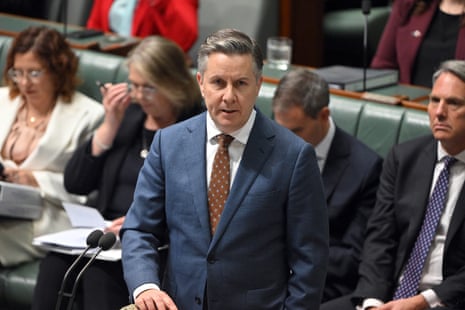
Butler says One Nation’s superannuation plan – for a portion of employer’s mandatory super contribution to be redirected to pay packets – is “absolutely terrible”:
Occupational superannuation is one of the great reforms of our country over the last few decades. It will provide security in retirement to millions and millions of Australians who otherwise would not have it.
Occupational superannuation is one of the great reforms of our country over the last few decades.
It will provide security in retirement to millions and millions of Australians who otherwise would not have it.
Veterans’ anxiety understandable, Butler says
Veterans are protesting at Parliament House today, angry about a proposed cap on allied health treatments. Butler says he knows how important the services are, and understands their concern and anxiety but that there is a consultation process over that change and other proposed reforms:
These changes aren’t scheduled to take place until mid next year, and we want to make sure that the changes operate in the best interests of veterans.
Scale of illegal cigarette market changes dynamics of pricing, Butler says
Butler is asked about the ongoing barney over tobacco – the opposition and One Nation are proposing big drops in excise rates to make legal cigarettes more affordable. He says the price of cigarettes is a proven disincentive to smoking but that the scale of the illegal market has “changed the dynamics of that”:
There’s there’s no question we have a very serious challenge on our hands as a country with the scale of the illegal market. Every country has illegal cigarettes. The scale of the illegal market here has exploded over the last three or four years, and that’s a huge law enforcement challenge for us.
There’s there’s no question we have a very serious challenge on our hands as a country with the scale of the illegal market.
Every country has illegal cigarettes. The scale of the illegal market here has exploded over the last three or four years, and that’s a huge law enforcement challenge for us.
‘Unremarkable’ to make big tech responsible: Butler
The health minister, Mark Butler, is up on ABC Radio National (RN). He dismisses the opposition’s claims that the government’s digital duty of care legislation amounts to censorship:
It’s pretty unremarkable, really, to expect that big companies have a duty of care not to harm Australian citizens, particularly, frankly, young Australians.
He likens it to the introduction of seatbelts in the 1970s, which people at the time saw as an infringement on civil liberties.
Further details on what constitutes harmful content will be announced this week, he says. Asked whether there’s a threat social media companies could withdraw their platforms, he says:
Well, they always make that threat, don’t they.