Roayl commission on antisemitism and social cohesion starts fifth block of hearings in Melbourne this week. Follow today’s news live
Get our breaking news email, free app or daily news podcast
1h agoFirst arrivals for state funeral of broadcaster Derryn Hinch
2h agoDreyfus tells royal commission of ‘breach of sense of safety’ for Jewish Australians
3h agoOne Nation doesn’t support White Australia policy, Joyce claims
5h agoLee Hanson says her mother's comments about the White Australia policy were misinterpreted
5h agoPrivate schools pitch for more government money
6h agoHanson ‘talking Australia down’ on rightwing tour: Albanese
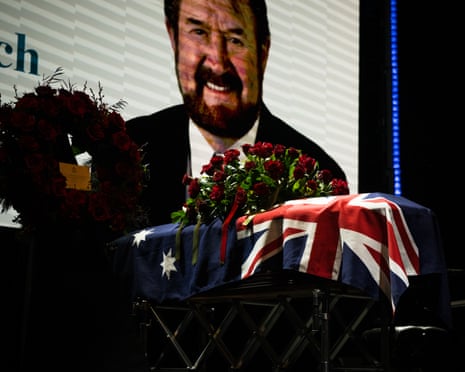
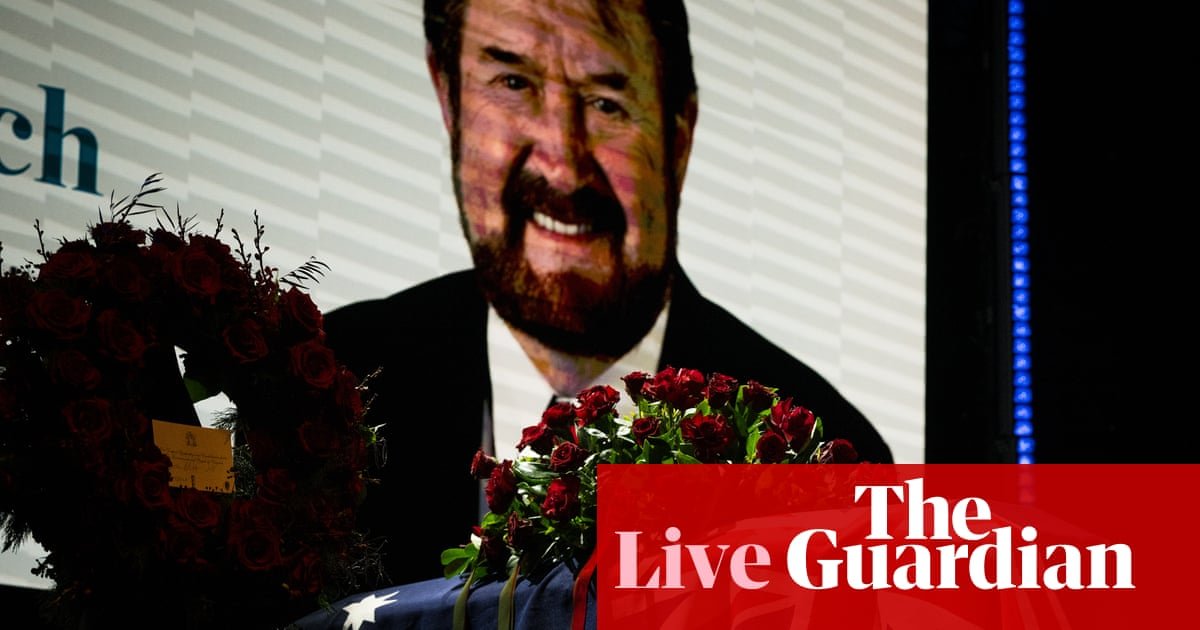
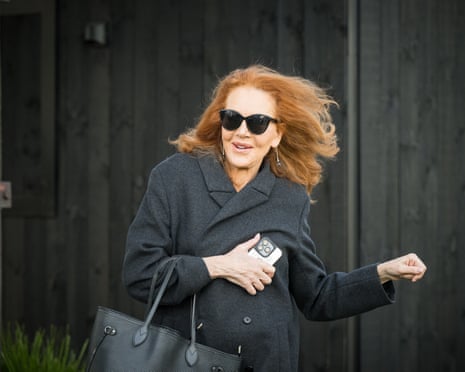
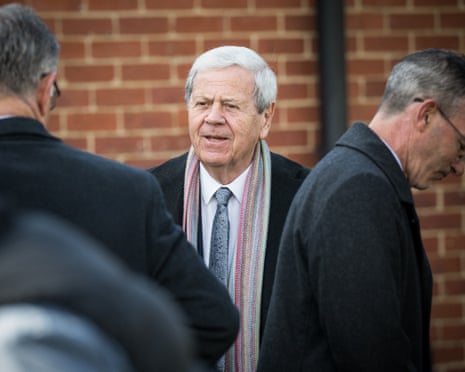
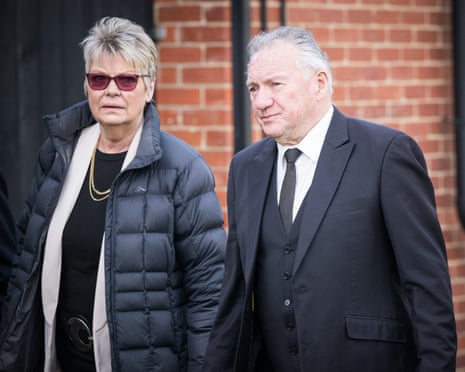
Former colleagues, friends and associates of the late Derryn Hinch have begun arriving at the state funeral service for the former journalist and senator.
The media personality died earlier this month after a long battle with poor health.
Greg Evans, Ray Martin and Denis Walter have been spotted arriving at the Timber Yard in Melbourne for the midday service.
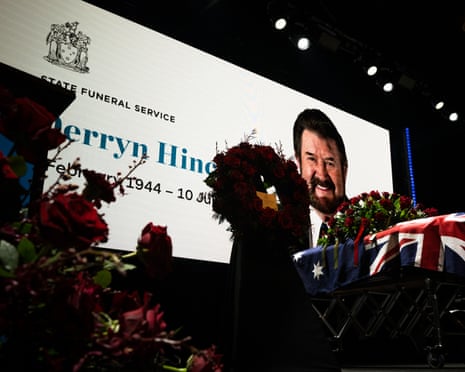
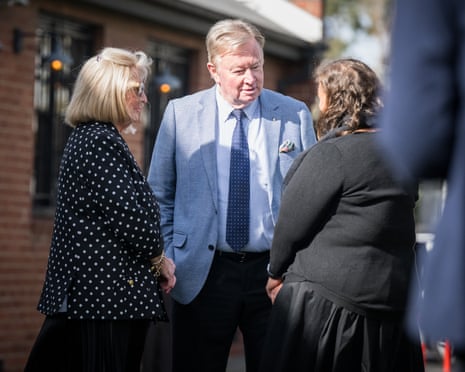
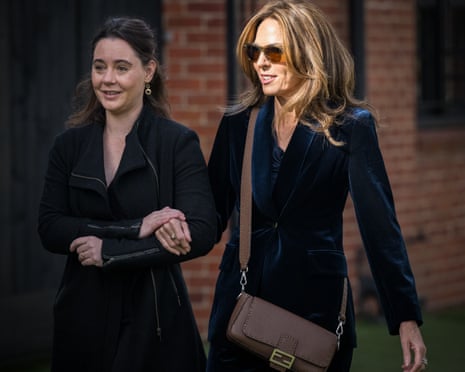
More mourners arrive at Derryn Hinch’s state funeral
3AW presenter Denis Walter, the master of ceremonies for broadcaster Derryn Hinch’s state funeral, has arrived at the Timber Yard in Melbourne, as has 10 News journalist and presenter Jennifer Keyte.
South Australian electorate renamed after Lowitja O’Donoghue
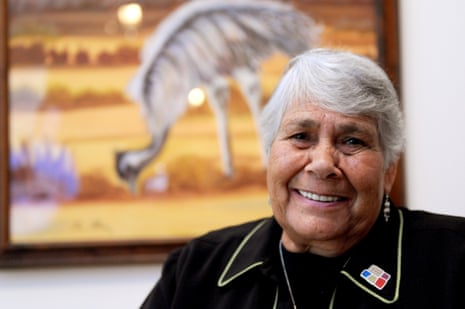
Lowitja O’Donoghue, a trailblazing Aboriginal nurse turned Indigenous rights advocate, has been honoured with the renaming of a federal electorate, AAP reports.
The vast division of Grey, which covers the majority of South Australia, is being renamed as O’Donoghue, the Australian Electoral Commission announced on Monday.
O’Donoghue, a member of the Stolen Generations, was the first Aboriginal woman to be trained as a nurse and served as the founding chairperson of both the National Aboriginal Conference and the Aboriginal and Torres Strait Islander Commission. Her advocacy was pivotal to Australia’s native title legislation.
O’Donoghue was a Yankunytjatjara woman, with the electorate of Grey taking in most of the Anangu Pitjantjatjara Yankunytjatjara lands.
The AEC determined the name change despite 235 of the 310 community submissions arguing to retain Grey, named for Sir George Grey. The AEC found the arguments for change were “well detailed, informative, convincing and ultimately persuasive. This contrasted with most of the submissions objecting to the renaming of the electorate.”
The commission noted Sir George spent “a comparatively small part of his life” in Australia, with longer service to the British empire in South Africa and New Zealand, and the AEC decided “the time had come to recognise the outstanding contribution to Australia and its people made by a distinguished Australian”.
The decision comes after an AEC proposal last week to rename the southern Tasmanian seat of Franklin to Tongerlongeter, after an Indigenous warrior who fought colonisation, then took on a leadership role for Aboriginal Tasmanians exiled to Flinders Island.
The AEC has opened consultations on the Franklin switch, which comes after a radical re-drawing of the electorate’s boundaries.
Dreyfus says he feels ‘freer as an MP’ to support Jewish community after leaving cabinet
Mark Dreyfus has described feeling “freer as an MP” to represent the Jewish community after he was replaced as attorney general by Michelle Rowland.
He said one of the reasons he had given evidence to the commission was the “unique position” his role as a Jewish member of the federal cabinet had put him in after the start of the conflict in Gaza. He said:
I wasn’t in a position to respond fully, or perhaps at all, to the attacks and demands that have been made of me by some Jewish Australians, simply because I was a cabinet minister and the constraints of the office meant that I was not in a position to respond or comment.
Dreyfus said since leaving the cabinet in a reshuffle after the 2025 federal election, “I’ve been much freer as an MP”.
I was able to respond after the Bondi attack … able to respond publicly, able to appear in the media, able to give speeches, able to make representations to cabinet ministers about what the government might be able to do, and it’s certainly, to some extent, been liberating compared to what I experienced, the constraints I experienced as a cabinet minister.
Dreyfus also described an incident in May 2024 in which his office was covered with red paint and “Who does AG Mark Dreyfus serve?” written on the front pavement as a “deeply wounding attack”.
No one ever should make that suggestion about a member of the Australian parliament, let alone someone who had been sworn to administer a portfolio as the attorney general of the commonwealth, but it invokes all of those old antisemitic tropes about dual loyalties and treachery to Australia, all of which are false. It’s a deeply wounding attack … and probably intended to be.
Andrew Charlton says he was part of class action after book scraped by AI company
More on AI from Andrew Charlton. He told Sky earlier this morning that he was part of a class action in the United States after a book he wrote was scraped by a major AI company.
You know, I wrote a book nearly 10 years ago. That book was scraped by an AI giant from a pirated website. My book was the subject of a piece of litigation, and that litigation was found in favour of me and the other authors. But that occurred in the United States and that litigation happened in the United States. And the award is occurring in the United States … It was a class action. My book was part of that class action.
The prime minister has been very clear that [AI] training that occurs in Australia will support Australian artists. That is what we have control over.
The federal MP for Isaacs and former attorney general, Mark Dreyfus, has told the royal commission on antisemitism and social cohesion about the “breach of that sense of safety” experienced by Jewish Australians since 7 October.
The fifth block of hearings, starting in Melbourne this week, is examining security arrangements for the Jewish community, including the role of Jewish community security groups (CSGs) and their coordination with law enforcement agencies.
At the start of this morning’s hearing, counsel assisting Richard Lancaster SC said evidence to the commission would show “a substantial and ongoing threat to the safety and security of the Jewish community in Australia”.
Dreyfus, today’s first witness, has told the commission about his father, who arrived in Australia from Nazi Germany 1939 as an 11-year-old, later followed by Dreyfus’ grandparents. He said:
It’s a great thing that that refuge was provided in Australia, and I think that’s a knowledge shared by Jewish Australians that Australia did that, and it’s it informs in part the shock that I have tried to relate in my witness statement to the commission about the breach of that sense of safety that was created by the providing of refuge.
Dreyfus told the commission that antisemitism in Australia had not “come out of nowhere” but said he had been shocked by an upsurge in antisemitism since Hamas’ 7 October attack, including an incident in which a man approached him outside Victoria’s state library in April 2024 and called him a “genocidal Zionist”.
No one had ever hurled abuse at me because I am Jewish. This was a new development in my engagement in Australian politics and I know I’m not alone.
Parents were told asbestos in play sand was low risk unless ‘pulverised’. But regulators hadn’t tested it themselves
Schools, retailers and government agencies assured parents that asbestos-contaminated play sand posed a low risk to their children’s health based on a supplier’s own assessment which was not independently verified, the Guardian can reveal.
The now-contested public messaging spread quickly after a range of Educational Colours children’s sand products were pulled from shelves in November 2025 after samples were found to contain asbestos, which was followed by more than 20 similar recalls across different brands and retailers.
Consumers were sold tens of thousands of boxes of potentially contaminated sand over a period of at least five years and the products were used in hundreds of schools and childcare centres in Australia and New Zealand.
Until this month, the Australian Competition and Consumer Commission (ACCC) advised toxic asbestos fibres were “unlikely” to be released into the air unless the sand was “processed by mechanical means such as crushing or pulverising”.
This advice originated from a risk assessment that Educational Colours itself commissioned, which did not involve any additional testing or even a visual inspection of the contaminated products, and was never made public.
The supplier’s safety claim became the official position of the Australian and New Zealand governments even though they had no additional evidence to support it.
Read the full exclusive story here:
Tanya Plibersek says Pauline Hanson ‘very clearly’ said problems began after White Australia policy ended
Just back on that Sunrise interview, Tanya Plibersek, who was also appearing alongside Barnaby Joyce, also made some comments about Hanson’s interview.
Plibersek said she had seen the Spotlight interview, and continued:
[Hanson] very clearly said that the problems started after we got rid of the white Australia policy and she also backed in “mass deportation” and said that all of her members of parliament support her in that call for mass deportation. I think it’s extraordinary that whenever she gets challenged on what she’s actually said, that we’ve all seen and we’ve all heard, she says ‘nah, nah, never said it’ … Go figure.
[Hanson] very clearly said that the problems started after we got rid of the white Australia policy and she also backed in “mass deportation” and said that all of her members of parliament support her in that call for mass deportation.
I think it’s extraordinary that whenever she gets challenged on what she’s actually said, that we’ve all seen and we’ve all heard, she says ‘nah, nah, never said it’ … Go figure.
Joyce suggests details of ‘mass deportation’ policy
In Barnaby Joyce’s interview on Sunrise, he didn’t distance himself from Hanson’s comments about “mass deportations” of illegal immigrants to Australia.
As it becomes apparent that they’re not supposed to be here, they’ll be put on a plane and sent back to where they’re supposed to.
Appearing alongside Joyce on a panel segment, Labor minister Tanya Plibersek claimed “literally everybody agrees” with deporting people who were in Australia illegally but asked how One Nation planned to carry out “mass deportations”.
We’ve got to make sure, as people present themselves for medical issues or other things, they’re removed from the country. I mean, obviously you’re going to come across them from time to time. They should be removed.
Plibersek agreed with deporting people in Australia illegally, saying Labor is “absolutely focused on removing people when we find them”.
And we’ll continue to do that. We’ll continue to do that because everybody agrees, when people are illegal, they should be removed as quickly as possible.
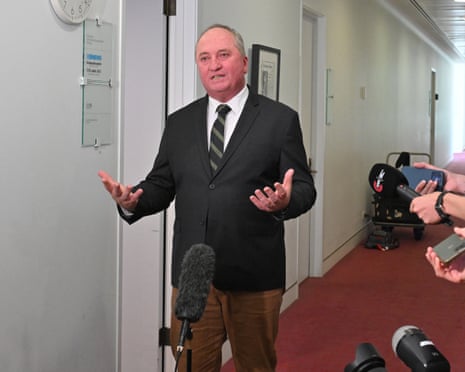
One Nation MP Barnaby Joyce claims Pauline Hanson’s party does not support the White Australia policy but has backed the idea of “mass deportations”, including people seeking medical appointments after overstaying their visas.
On Sunrise this morning, Joyce said “we don’t support the White Australia policy” but claimed there was a “chain of events” from its abolition that he said had led to bad outcomes.
It’s a statement of fact, and Pauline herself said that at the start, it started from [Harold] Holt, actually the wind-down of the White Australia policy, a very good thing. And at the start there was really no issues with it. But over time we got a section of people who didn’t want to really assimilate with Australia, didn’t work within the guardrails of Australia and therefore we started moving away from Australian culture to having to encompass a whole range of views, some of which just are not conducive to an egalitarian, easygoing society.
It’s a statement of fact, and Pauline herself said that at the start, it started from [Harold] Holt, actually the wind-down of the White Australia policy, a very good thing. And at the start there was really no issues with it.
But over time we got a section of people who didn’t want to really assimilate with Australia, didn’t work within the guardrails of Australia and therefore we started moving away from Australian culture to having to encompass a whole range of views, some of which just are not conducive to an egalitarian, easygoing society.
One Nation has had to issue multiple clarifications over the weekend after Hanson’s interview with far-right British activist Tommy Robinson, where she blamed the end of the White Australia policy for creating what she sees as problems with migration.
Asked by Robinson about “the changing face of Australia due to Islamic immigration”, Hanson replied:
They opened up and got rid of the White Australian policy, then they started bringing in the different migrants.
Andrew Charlton says Labor does not want robodebt-type situation due to AI use
We brought you news earlier about the federal government’s plan to subject the use of AI in automated decision-making by government departments to new rules.
Andrew Charlton, the federal assistant minister for science, technology and the digital economy, has said this morning that the government’s priority is to ensure “we have humans in the loop”, suggesting that the public can expect AI integration into government services, albeit subject to “transparency and accountability”.
Speaking to ABC Sydney, Charlton said:
When it comes to the use of automated decision-making, which is using technology in government services, the government’s priority is to make sure that we are fair, that we have humans in the loop, that we have transparency and accountability. We do not want to go back to the type of situation that we had in robodebt. We think that these tools, if they have the right governance around them, the right transparency around them, the right oversight around them, humans in the loop, can improve services for citizens, make those services better, fairer, quicker. The attorney general has been doing a lot of work on this and the purpose of that work is to give Australians confidence that, as these types of automated technologies are introduced into government, they will be delivering them benefits, not delivering them risks.
When it comes to the use of automated decision-making, which is using technology in government services, the government’s priority is to make sure that we are fair, that we have humans in the loop, that we have transparency and accountability.
We do not want to go back to the type of situation that we had in robodebt. We think that these tools, if they have the right governance around them, the right transparency around them, the right oversight around them, humans in the loop, can improve services for citizens, make those services better, fairer, quicker.
The attorney general has been doing a lot of work on this and the purpose of that work is to give Australians confidence that, as these types of automated technologies are introduced into government, they will be delivering them benefits, not delivering them risks.
Nearly 2.2 million Australians 15 years and older are living below the wellbeing poverty line, with the share of people reporting very low life satisfaction doubling over the past decade.
In 2025, 9.7%, or about one in 10 Australians, rated their general satisfaction with life at four or below out of 10, according to Guardian Australia’s analysis of the Australian Bureau of Statistics’s (ABS) general social survey.
That compares with one in 20, or 4.8%, reporting very low overall life satisfaction in 2014.
The initial surge of Australians reporting dissatisfaction with their lives came during 2020’s Covid lockdowns and has persisted over the intervening years amid soaring cost of living.
The ABS data echoes other surveys, such as Westpac’s consumer confidence index, which has languished at around 50-year lows since failing to recover from the pandemic blow.
Amid an explosion of support for far-right and populist politics, those reporting life satisfaction scores of four or below are more likely to feel alienated and disempowered in their community, and express lower support for multiculturalism, the ABS figures show.