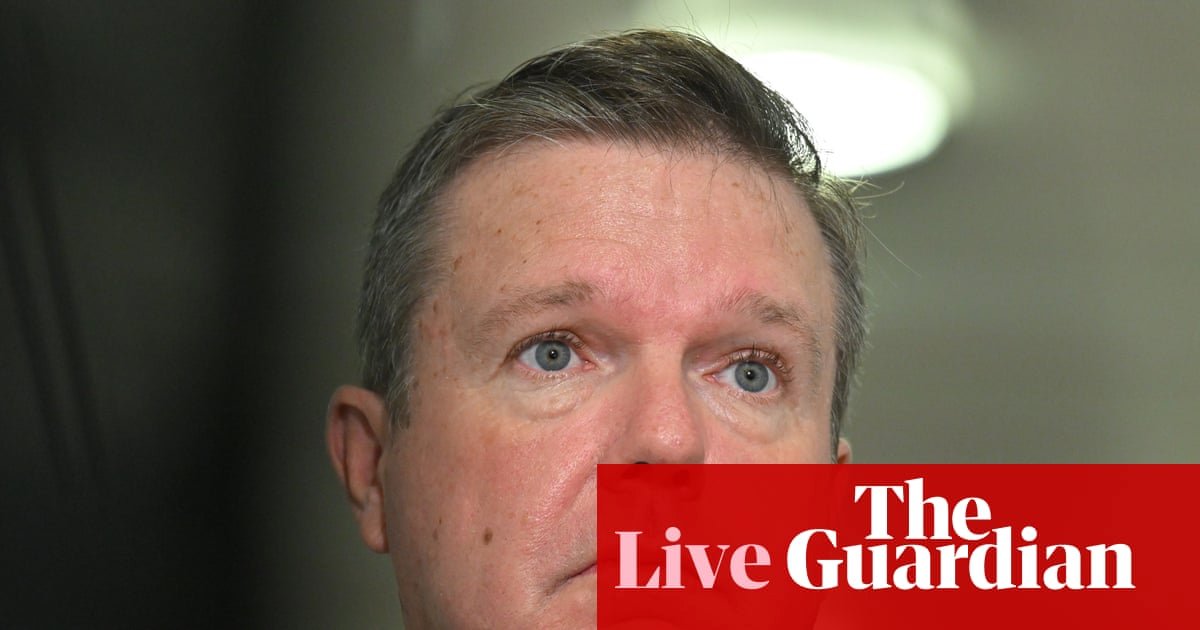
‘With One Nation, you get 60% solid policy and a bit of cray cray thrown in’, senator says. Follow today’s news live.
Get our breaking news email, free app or daily news podcast
26m agoAnton Enus to retire from SBS World News after 27 years
40m ago‘Telstra let Australians down’: CEO’s Senate grilling begins
1h agoCity of Sydney investigating new space for LGBTQ+ arts venue following closure
2h ago‘You don’t legislate your way out of social discord,’ royal commission hears
2h agoOne Nation policy has ‘a bit of cray-cray’, Nationals senator says
3h agoSon charged with murder after father found dead outside burning house in western Sydney
3h agoTelstra blames system change and lack of software update for outage
3h agoPenny Wong says Australia ‘bitterly disappointed’ in Laos poisoning charges as ambassador called in
4h agoPauline Hanson complains about immigration on far-right podcast
5h agoAustralian government advocating for charges ‘with teeth’ over Laos methanol poisonings
5h agoGreens senator says Hanson is 'unAustralian' and calls for apology over podcast appearance
5h agoMark Butler ridicules Pauline Hanson’s NDIS claims on far-right activist’s podcast
5h agoSpike in illicit tobacco ‘a law and order disaster’, health minister says
6h agoFather of methanol-poisoned backpacker ‘devastated’ as charges set to be laid
6h agoMeta to alert parents when teens discuss self-harm with Instagram’s AI
7h agoTelstra CEO to face parliamentary inquiry over national outage
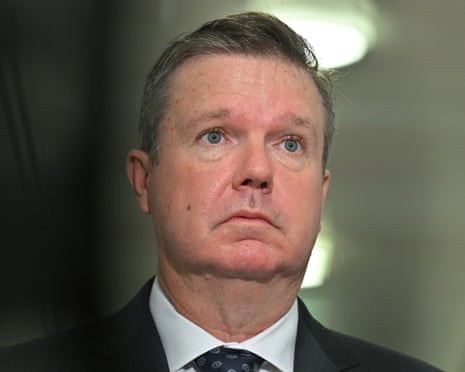
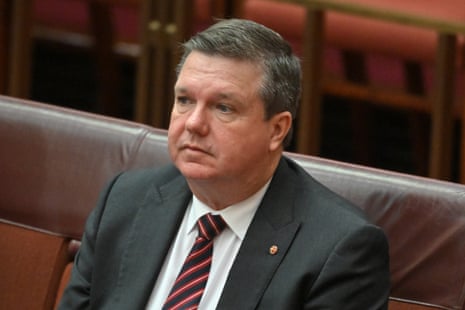
The Nationals senator Ross Cadell has offered a mathematical analysis of Australia’s political parties to Sky News.
With One Nation, you get 60% solid policy and a bit of cray-cray thrown in. With us, you get a bit more moderate-centre stuff that I don’t really like in the Senate, where there’s some Labor-lite stuff that we do. [So] with the Nats, you get a mix of maths: you get 80% good stuff, you get 10% cray-cray and 10% Labor-lite. There’s mixes on what you want to trade off with, but I just think we need less government in the world, in Australia, telling people what to do.
With One Nation, you get 60% solid policy and a bit of cray-cray thrown in.
With us, you get a bit more moderate-centre stuff that I don’t really like in the Senate, where there’s some Labor-lite stuff that we do.
[So] with the Nats, you get a mix of maths: you get 80% good stuff, you get 10% cray-cray and 10% Labor-lite.
There’s mixes on what you want to trade off with, but I just think we need less government in the world, in Australia, telling people what to do.
Telstra’s $30,000, 15-year-old server that wasn’t updated caused outage, execs say
Telstra’s chief executive, Vicki Brady, tells the Senate inquiry on triple zero that the server that brought down the mobile network on Wednesday last week is a $30,000 server called SSU 2000.
It was manufactured in 2011, and costs $30,000 to replace, but execs said the issue was not hardware, but that the company had not applied a software update that could have potentially avoided the outage when maintenance workers reset the server in order to replace faulty backup power and it reset the time in the network back to 2006.
Contrary to earlier reports from the Nine newspapers, Telstra executives said this model was still under support by Scientific Devices, which supplies the technology from Microchip.
However, the executives revealed in both 2022 and in January this year, the company was alerted by the manufacturer that it needed to apply a software update to the server that wasn’t implemented.
And the company’s executive for end-to-end resilience, Gerard Tracey, conceded that had Telstra invested in a new piece of hardware operating in the same design it was intended to the outage may not have occurred.
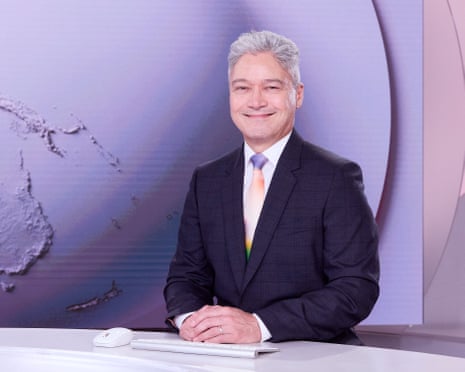
SBS’s long-serving news presenter Anton Enus will present his final SBS World News bulletin in September after 27 years with the multicultural broadcaster.
The SBS managing director, Jane Palfreyman, said:
Anton has been a trusted face for SBS’s audience for over a quarter of a century and is a much-loved and valued member of the SBS newsroom and studio. We will miss him as much as our audience will.
The South African-born journalist covered the transition to democracy in 1994 before moving to Australia. He said:
It seems extraordinary that the time has passed so quickly. It feels like just the other day that I walked into the newsroom for the first time, a newly arrived migrant from South Africa, looking for a job – any job. I was given a professional home and embraced by this family of broadcasters in a way that for me epitomised what multicultural Australia is all about. We are many but we’re also one. I will enjoy following SBS World News from afar.
Enus’s final SBS World News bulletin will be on Friday 11 September.
The chief executive of Telstra, Vicki Brady, has fronted federal parliament as senators begin interrogating the telco over last week’s outage.
She opened with an apology to the Australian people.
Last week, Telstra let Australians down, we let our customers down, we let the community down, and we fell short of what people rightly expect from us. For this, I am deeply sorry. Telstra has a critical role in that system, and we take that responsibility extremely seriously. No one should be left wondering, whether a call for emergency help will get through.
Last week, Telstra let Australians down, we let our customers down, we let the community down, and we fell short of what people rightly expect from us.
For this, I am deeply sorry.
Telstra has a critical role in that system, and we take that responsibility extremely seriously.
No one should be left wondering, whether a call for emergency help will get through.
Telstra blamed the lack of a software update for a key time-keeping system for outage that caused nationwide chaos last week.
Its maintenance teams were also unaware of a design change that affected how it would reset.
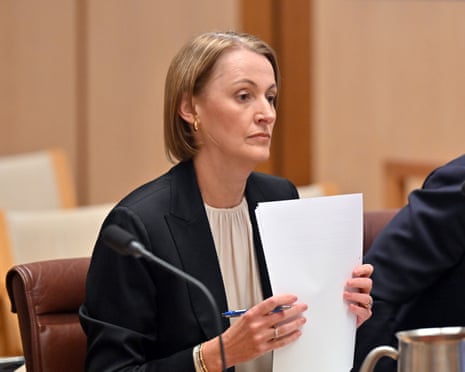
Victorian Liberals to decide whether to ditch Moira Deeming as candidate
A Liberal MP is facing disendorsement ahead of an upcoming state election despite dropping an eleventh-hour legal bid against her own party, AAP reports. The Victorian Liberal party called a meeting for Friday afternoon where they will vote on whether to remove upper house MP Moira Deeming as a candidate for the November election. Deeming announced on Wednesday she had withdrawn her supreme court challenge against the party president, Brian Loughnane, which was initially sought to prevent the party from moving against her following an incident in May. The MP, who sits in the upper house for the Western Metropolitan region, had accused colleague Matthew Guy of grabbing her “violently” in a headlock, but since said she misunderstood the meaning of headlock.
Vision obtained by AAP from a function in May showed Guy placing his hand on Deeming’s upper back as they leant in to talk to one another. Guy told reporters in June that Deeming owed him a public apology, adding he vehemently denied that anything untoward took place and police found no offence had been committed.
The Victorian Liberal party state executive will meet at 5.30pm on Friday, with a vote to disendorse Deeming expected to be easily reached.
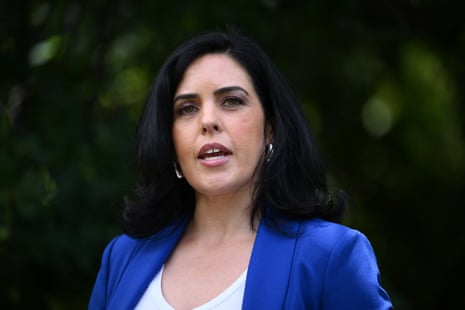
The city of Sydney council is investigating whether Divine Playhouse could operate in another building after the queer-inclusive pop-up was forced to close following protests from religious groups.
Divine Playhouse’s landlords ordered the space to stop engaging in “offensive trade”, prompting the venue to close its doors and cancel all events.
Members of the arts, hospitality and LGBTQ+ communities have since banded behind the pop-up, with more than $30,000 raised for its legal fees and almost 15,000 people signing a petition to keep it open.
The Sydney lord mayor, Clover Moore, has asked her staff to investigate whether another space could be made available if the landlord does not allow the Divine Playhouse project to proceed.
In a statement, she said:
Sydney’s queer communities deserve places to create, perform, laugh, dance and belong. That is why the closure of the Divine Playhouse is such a disappointing and concerning outcome. If we want to be a truly global city, we must stand with those who invest in culture, support independent venues, and defend both freedom of belief and freedom of creative expression.
Sydney’s queer communities deserve places to create, perform, laugh, dance and belong.
That is why the closure of the Divine Playhouse is such a disappointing and concerning outcome.
If we want to be a truly global city, we must stand with those who invest in culture, support independent venues, and defend both freedom of belief and freedom of creative expression.
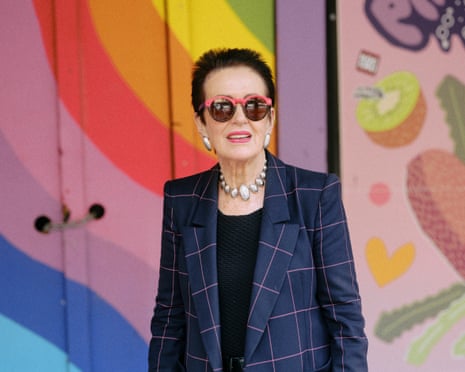
Monash University professor David Slucki has told the royal commission that current university policies on antisemitism are “pretty adequate” and “you don’t legislate your way out of social discord”.
Discussing how to combat growing division on university campuses, he said there were “gaps” in policies and procedures but most universities “have antisemitism policies, discrimination policies. They have things that are built in”.
He said “all or nothing” thinking was pervading public discourse, whereby “when we disagree with someone, we see them as wrong and as bad or evil.”
You don’t legislate your way out of social discord. We actually need to find a way to change the cultures in our institutions … What is antisemitism a symptom of? It’s polarisation. It’s the impact of social media. It’s a broader threat to our democracy … Criticising states is a vital part of our democracy … Some of the stories we’ve heard this week point to the fact that sometimes we’re talking about harassment and bullying and conduct that’s unbecoming … We have to be clearcut in our mind when we are talking about what is criticism, what is debate, what is effective pedagogy in a classroom, rather than putting a blanket idea of what’s acceptable and not acceptable.
You don’t legislate your way out of social discord. We actually need to find a way to change the cultures in our institutions … What is antisemitism a symptom of? It’s polarisation. It’s the impact of social media. It’s a broader threat to our democracy …
Criticising states is a vital part of our democracy … Some of the stories we’ve heard this week point to the fact that sometimes we’re talking about harassment and bullying and conduct that’s unbecoming … We have to be clearcut in our mind when we are talking about what is criticism, what is debate, what is effective pedagogy in a classroom, rather than putting a blanket idea of what’s acceptable and not acceptable.
‘Most Australian Jews’ want to see a two-state solution in Israel and Palestine, royal commission hears
Monash University professor David Slucki has told the royal commission into antisemitism that “most Australian Jews” want to see a two-state solution in Israel and Palestine.
Slucki is director of the Australian Centre for Jewish Civilisation at Monash and established the Monash Initiative for Rapid Research into Antisemitism (Mira) in 2024, which was tasked with delivering a training program on antisemitism in higher education and a definition of antisemitism.
He said even people who identified as Zionists had a “wide range of views about what it means to be attached to that”, and there had been “concern” in recent years about whether Israel held up its promise for liberalism among the Jewish community.
Many people are very conflicted, because they are attached to the state of Israel, but they have a vision of what the state should look like. Most people don’t want violence. They don’t want to see endless conflict, they want to see peace in the region … My sense is most Australian Jews want to see a two-state solution in Israel.
Slucki said there was a distinction between criticising the Israeli government and supporting a strong Jewish state, and believing Israel ought not to exist, but it had become “increasingly hard” to say “yes, I criticise Israel and I think Israel should exist”.
A man has been charged with murder after his father was found dead outside a burning house in a suburban driveway. Emergency services were called to the western Sydney home in the early hours of Thursday morning, where they found the body of a man, believed to be aged 64, partially on fire.Superintendent Trent King believed an accelerant was used in the fire, which was allegedly started by the man’s 36-year-old son in Glenmore Park. Police arrested the 36-year-old man in a car on Parkes Avenue at Werrington about 6.45am, five hours after the alleged altercation. The man was treated by paramedics for minor injuries before he was taken to hospital under police guard. King said while the victim is yet to be formally identified, the pair were father and son.
There appears to have been an altercation between the two parties there following a break and enter into the premises, the front door was forced.
Hardware and network redundancy not the cause of Telstra outage, company says
Telstra’s submission to the triple zero inquiry also states that because there are three Network Time Protocol (NTP) servers, when the Melbourne one disconnected for maintenance, the other two worked as redundancy and backup as expected.
The failure mode here was not inherently related to hardware, levels of redundancy, or the architecture of our network.
Telstra said the Melbourne server supplied an incorrect date once switched back on.
Downstream systems used that date in security, authentication, session and policy-control processes. The issue was therefore not simply the loss of one NTP server or redundancy in the design of the configuration of the three NTP servers, but the propagation and acceptance of erroneous date information by interconnected systems that rely on timing as a trust and ordering reference.
Downstream systems used that date in security, authentication, session and policy-control processes.
The issue was therefore not simply the loss of one NTP server or redundancy in the design of the configuration of the three NTP servers, but the propagation and acceptance of erroneous date information by interconnected systems that rely on timing as a trust and ordering reference.