West Australian newspaper uses moniker on front page. Follow today’s news live
Get our breaking news email, free app or daily news podcast
25m agoExplainer: why is Albanese ‘WA’s daddy’ this week?
38m agoFacial recognition to be mandatory in NSW gaming rooms under new gambling reforms
2h agoAustralia needs 5,700 new donors of O-type blood
3h agoColes blames Ooshies for hurting its sales as it reports $1.09bn profit
4h agoAria bars ‘wholly AI-generated tracks’ from music charts, but allows tech in ‘supporting role’
5h agoJackson Pollock masterpiece Blue Poles to visit Perth
5h agoSydney trains fix expected to be hours away

Coles reported growing profit from its supermarkets despite a slump in alcohol sales and a delayed hit from Woolworths’ Disney “Ooshie” giveaways.
The company today said it grown supermarket sales by 3.7% and gained market share over the year to June. Growth had continued into July but slumped amid a “competitor’s collectibles campaign” – a reference to the “Ooshie” plastic figurines.
Coles said its digital sales boomed 26.4%, to $5.6bn, helped by a partnership with Uber Eats and improved wait times for store-based click and collect orders. Its own-brand product sales grew 6.1%, with the company singling out its cleaning, baby and ready meal range.
The company said the prices of its supermarket products rose just 1.5% through the year. Supermarkets’ own calculation methods for inflation are not necessarily intuitive.
Its net profit bumped up 1% to $1.09bn as a result. Profit would have been $1.25bn if not for a penalty from a federal court ruling over its payment of managers.
But liquor sales fell 3.3% from the prior year. The company said “subdued consumer sentiment” and cost of living pressures were to blame. Its competitor Endeavour, owner of Dan Murphy’s and BWS, reported a steep fall in annual profit yesterday.
Major home builder Bathla Group collapses, leaving buyers in limbo
Embattled home builder Bathla Group has been placed into voluntary administration, leaving customers in limbo in what it says is a “perfect storm” of circumstances, AAP reports.
Founder and director Bhart Bhushan described the move to voluntary administration as an “orderly restructure of business”.
“Our first thoughts are with our employees and the customers who have put their faith in us to deliver their dream of home ownership,” Bhushan said in a statement on Tuesday.
It is my sincere hope this process can allow that to happen by working collaboratively with the administrators, our suppliers, contractors and lending partners.
Bhushan said the group had confronted a perfect storm of circumstances that contributed to its struggles. These include a significant softening in sales, impacts from the changes made in the federal government’s May budget and falling confidence in key markets.
He also said significant increases in construction costs absorbed by his company played a part.
With all the federal focus on Western Australia in recent days, humble readers not living on the west coast may be thinking: “… why?”
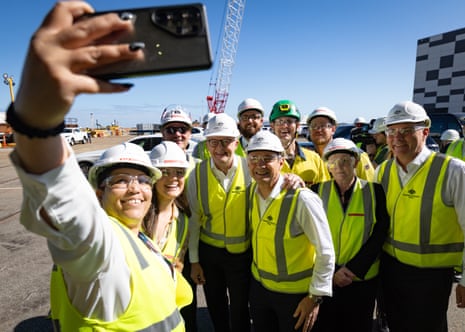
Over the last week we’ve had Anthony Albanese inventing ever-more elaborate ways to promise that the federal government won’t be changing WA’s generous GST payments, bringing a full federal ministry meeting to the west again, a clutch of new agreements and funding, federal ministers tripping over themselves to lavish praise on the mining-rich state, and now even the famous Blue Poles painting being sent to Perth for a visit.
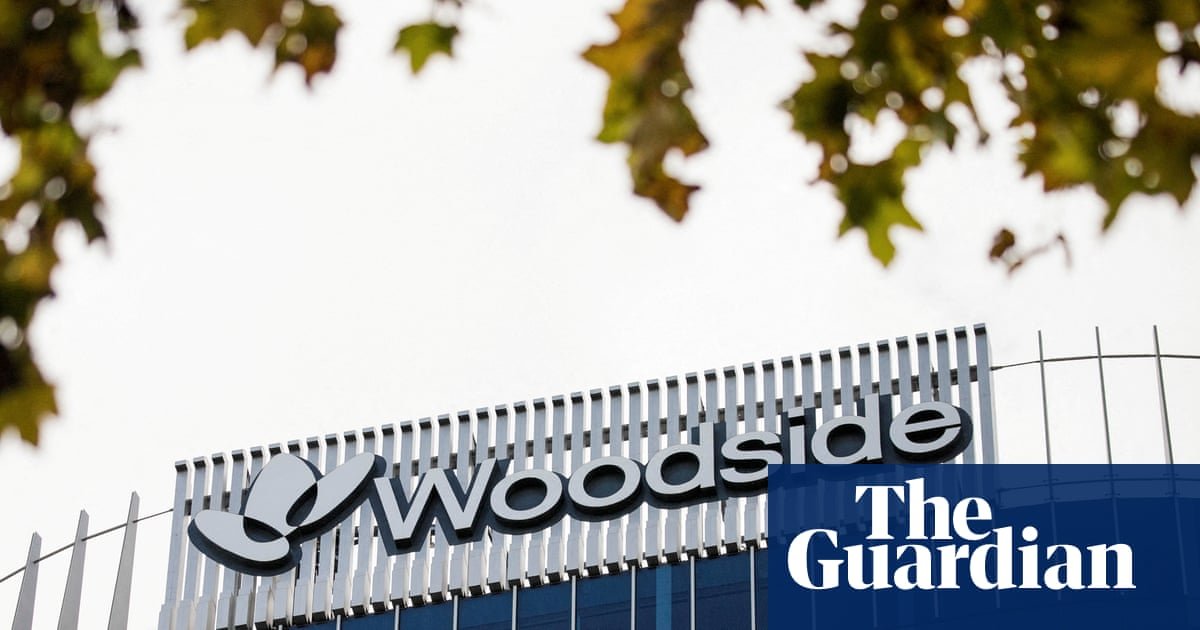
Even the always parochial West Australian newspaper was pleased with the largesse from Canberra, branding the prime minister “WA’S DADDY” in a satisfied front page today.
Of course, there are five other states and two other territories in Australia besides WA. So why the focus on Perth?
First and most obviously, West Australians are pretty proud of their state and economy. The mining state is, as Albanese and his team regularly boast, “the engine room of the Australian economy”, and they like being reminded of that fact.
But Albanese, of course, has history with WA. Students of recent political history may remember that it was an unexpectedly strong showing in WA’s seats which got Albanese’s Labor over the line in the 2022 election, flipping a few more seats than they planned and essentially winning power for the ALP. That included launching the national campaign in Perth (a decision repeated in 2025) and a special ad campaign just for the west coast.
Some Labor people believe WA remains a key to their grip on power, and that heaping lavish praise on the west can help keeps the Liberals out of power; Albanese famously begins most of his media appearances in the west by keeping a tally of how many times he’s visited (this is his 45th visit as PM, he said on Monday)
WA also still remains a Labor fortress at the state level, with former premier Mark McGowan (referred to for a time as “state daddy” in the west) winning a landslide victory in 2021 then handing over to current leader Roger Cook. It doesn’t hurt for federal Labor to cosy up to an already-popular state government.
NSW gaming rooms will be required to introduce facial-recognition technology when a statewide exclusion register is introduced in 2028 under new gambling reforms announced on Tuesday.
The raft of reforms will also include a third-party exclusion scheme in hotels and clubs, an increased forfeiture rate for the state’s 87,000 poker machines and an end to gambling VIP programs.

A crackdown on gambling advertising will include a ban on ads on all NSW government and council-owned assets, as well as a ban on unsolicited direct marketing to potential customers.
The government said it will also establish a state-based strategy to reduce online gambling harm. Announcing the package, the gaming and racing minister, David Harris, said:
These are common sense reforms that have been developed alongside industry, harm minimisation groups, stakeholders and privacy experts to address gambling harm while supporting the industry and protecting the livelihoods of the many people it employs. By combining new technology, stronger exclusion tools, strengthened regulation and increased funding for harm reduction, we are building a safer system for the future.
These are common sense reforms that have been developed alongside industry, harm minimisation groups, stakeholders and privacy experts to address gambling harm while supporting the industry and protecting the livelihoods of the many people it employs.
By combining new technology, stronger exclusion tools, strengthened regulation and increased funding for harm reduction, we are building a safer system for the future.
Women’s Legal Centre calls for reform to help survivors of sexual assault come forward
Elena Rosenman, CEO of Women’s Legal Centre ACT, has said the greatest motivation for people coming forward is wanting to prevent other people from experiencing the same thing.
The barriers to reporting are structural: the lack of control and of agency in the process, lengthy timeframes that put people’s whole lives on hold often for years, and anxiety about court processes that can retraumatise with no promise of accountability. We have seen quantifiable increases in requests for assistance in the wake of high-profile cases. Here in Canberra, we began advocating for the establishment of the Sexual Violence Legal Service after tracking the rise in requests for assistance following the advocacy of Brittany Higgins and Grace Tame. High-profile cases can cut both ways. They give people the confidence to come forward, but as these processes extend and become more public, they also show just how gruelling that scrutiny can be, and that’s part of what people weigh up before deciding to report.
The barriers to reporting are structural: the lack of control and of agency in the process, lengthy timeframes that put people’s whole lives on hold often for years, and anxiety about court processes that can retraumatise with no promise of accountability.
We have seen quantifiable increases in requests for assistance in the wake of high-profile cases. Here in Canberra, we began advocating for the establishment of the Sexual Violence Legal Service after tracking the rise in requests for assistance following the advocacy of Brittany Higgins and Grace Tame. High-profile cases can cut both ways. They give people the confidence to come forward, but as these processes extend and become more public, they also show just how gruelling that scrutiny can be, and that’s part of what people weigh up before deciding to report.
Women’s Legal Services has estimated they turn away about 1,000 women every week for capacity and other reasons. The story is similar across community, legal aid and First Nations legal services, she said.
People who have been subjected to violence should seek the assistance that best meets their needs. There are specialist sexual assault support services across the country, and we strongly encourage people to get their own legal advice, either before or as part of reporting. Sexual Violence Legal Services are already operating here in Canberra, as well as in Victoria and WA, with services being established in other jurisdictions.
Family of wrongly arrested Indigenous teen welcome report
The family of a 17-year-old Indigenous teenager have welcomed a damning report finding police wrongly identified their nephew as a suspect and forced him off a bus at gunpoint in Canberra.
The teenager, referred to by the pseudonym Jay, was travelling on a bus in Woden in late 2025 when police boarded the bus with guns drawn. The officers wrongly believed Jay was a suspect in an aggravated burglary. They took him off the bus, brought him to the ground, handcuffed and arrested him.
Police realised their mistake within 90 seconds, but decided to search him anyway before releasing him back on to the bus.
In a report released on Tuesday, Iain Anderson, the commonwealth and ACT ombudsman, found the AFP had “no clearly understood definition of ‘racial profiling’” and had conducted the additional search “inappropriately and seemingly unlawfully”.
In a statement, Jay’s family said he was simply trying to travel to his Aunty’s house and was “compliant and polite during the entire incident”, despite having done nothing wrong.
The failures are numerous and deeply concerning. They include a complete failure to provide any care to our nephew after subjecting him to a traumatic incident despite knowing he was a child, making public statements after the incident which inappropriately attempted to downplay and diminish the incident and an apparent failure of the AFP internally to understand what racial profiling is.
Last year, the ACT’s chief police officer, Scott Lee, apologised for the incident and acknowledged the trauma it would have caused Jay, his family and the broader Indigenous community.