Gordon de Brouwer appointed chancellor of Australian National University. Follow today’s news live
Get our breaking news email, free app or daily news podcast
2m agoNew Tasmanian Liberal senator sworn in
18m agoNab records rise in ‘watch loans’ indicating consumer stress
1h agoFormer public service commissioner announced as Julie Bishop’s replacement at ANU
2h agoNSW framework commits to 75 day assessments for datacentres that meet ‘world-class’ standards
3h agoNationals argue low gun buyback price doesn’t sit well with the constitution
3h agoCommunity groups and migrant advocates urge Labor against rule changes
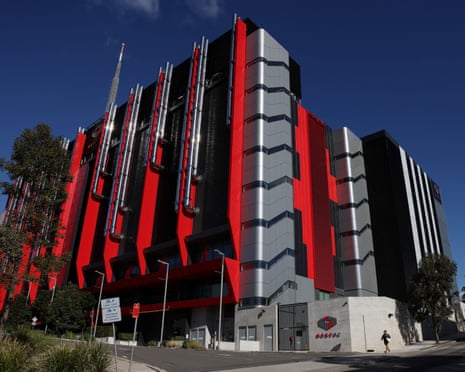
The NSW has committed to assessing new datacentre proposals within 75 days if they meet “world-class” energy, water and environmental standards, under a framework announced today.
The Minns government’s new datacentre guidelines follow the prime minister’s announcement last month of a national office of AI and regulatory framework for datacentres, amid growing community concern about land, water and power use by the rapidly expanding industry.
The Minns government has credited investment in datacentres, which has increased 75% per year on average over the last three years, as the reason NSW has avoided recession.

Under the NSW guidelines, the planning department will commit to assessing proposals within 75 days if datacentre builders comply with six principles, including applying “world-class environmental and efficiency standards”, imposing no net cost to consumers and communities and funding additional water and energy supply.
Under the guidelines, they must “demonstrate a commitment to training and skills to support jobs”. The government says developments will still need to meet planning, environmental and community consultation standards.
The state government says it will introduce regulation to make sure datacentres pay for electricity network upgrades without the cost being passed on to households and small businesses. I
t has not made the same commitment on the cost of providing water, but will commission the independent pricing regulator, Ipart, to review “how water pricing can reflect the full costs associated with servicing datacentres”, including management of the impacts of drought.
The framework has already been endorsed by datacentre companies CDC, AirTrunk, and Data Centres Australia. The NSW treasurer, Daniel Mookhey, says:
This world-class framework provides the certainty that both investors and – importantly – the community need. NSW is a premium destination, so we are setting a high bar.
The NSW government will move its own office of AI, established in 2025, directly into the cabinet office.
It comes after the NSW opposition said it would appoint a dedicated minister for AI if elected next year, alongside a guarantee that frontline workers’ jobs would not be replaced by artificial intelligence.
Following the Albanese government’s announcement of a national framework, the NSW Greens joined their federal counterparts in calling for a moratorium on new datacentres.
Chris Gatenby has be sworn in as Tasmania’s newest senator, replacing Wendy Askew who announced she would leave federal politics in June.
A few days later her colleague, Liberal frontbencher Jonno Duniam, also announced he would depart but that won’t be until later in the year.
Gatenby is a former Liberal Party president and former senior adviser to the Tasmanian premier, Jeremy Rockliff.
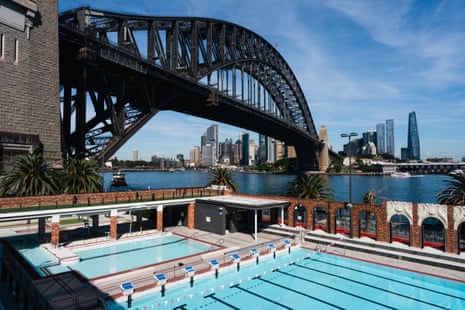
North Sydney Olympic pool re-opens after power issue forces closure
North Sydney Olympic pool has re-opened following a temporary closure just one week after its five-year restoration.
On Thursday afternoon, a power issue forced staff to clear the pool of swimmers and temporarily shut the complex.
But after staff and contractors completed works to address the problem, the pool was open and operating as usual by Saturday, North Sydney Council confirmed:
Council thanks the community for its patience and understanding during the temporary closure and looks forward to welcoming visitors back to the facility.
North Sydney Olympic pool reopened to much fanfare following a costly five-year, $122m redevelopment.
The famous art deco pool, which first opened in 1936 and has been a training ground for countless elite athletes, was due to reopen in 2022 after closing for a major refurbishment. But it was hampered by delays and ballooning costs.
National Australia Bank has recorded an increase in the number of struggling customers amid relentless pressure on Australian households.
The bank said today that levels of “watch loans” were moving higher, reflecting current and potential customer stress.
Watch loans are a leading indicator of a customer’s financial problems, whereby a lender has identified that a borrower may struggle to meet future commitments.
Nab said the Middle East conflict, higher interest rates and recent budget tax changes are creating challenges and uncertainties for customers.
The big bank recorded a $1.83bn quarterly cash profit, according to results published this morning, 2% higher than the average of the prior two quarters.

Chalmers ‘simply making things up’: Hume
The deputy Liberal leader, Jane Hume, has responded to Jim Chalmers’ claim that the Coalition would end the super guarantee, accusing him of making stuff up.
Before heading out to Googong with Angus Taylor for a press conference, Hume rejected Chalmers’ comments and told reporters at Parliament:
I think the treasurer has a leaf out of the Mad Men Don Draper book: if you don’t like what they’re saying about you, change the conversation. The super guarantee is here to stay and the treasurer is simply making things up.
I think the treasurer has a leaf out of the Mad Men Don Draper book: if you don’t like what they’re saying about you, change the conversation.
The super guarantee is here to stay and the treasurer is simply making things up.
Taylor won’t confirm if backpackers will be carved out of Coalition migration targets
Angus Taylor and Matt Canavan might be in for a slightly awkward conversation over which visa classes are going to see cuts to get migration numbers down.
The Coalition has said it will tie migration numbers to housing builds, but the Nats have warned that working holiday visas (ie backpackers) shouldn’t be touched because they’re vital farm workers.
Taylor, who’s doing a press conference in Googong, a town just outside Canberra in NSW, says there will be more to say later about which visas get cut:
We’ll have more to say as we get closer to the election on the composition of visas. What I will say, though, is we will cap migration numbers based on housing supply. Sadly, we’re seeing housing supply [in] freefall … We’ll look at different visa classes and make appropriate decisions. What we don’t want to do, and to Matt’s point, is we don’t want to undermine the skilled labour that our agricultural sectors need.
We’ll have more to say as we get closer to the election on the composition of visas. What I will say, though, is we will cap migration numbers based on housing supply. Sadly, we’re seeing housing supply [in] freefall …
We’ll look at different visa classes and make appropriate decisions. What we don’t want to do, and to Matt’s point, is we don’t want to undermine the skilled labour that our agricultural sectors need.
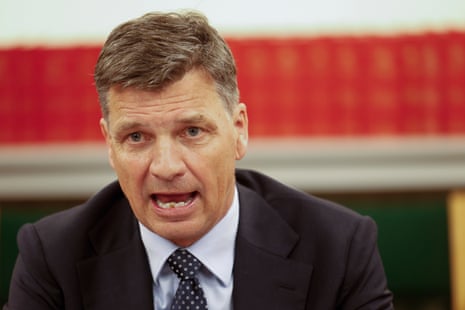
Coalition, One Nation would end super ‘as we know it’ claims Chalmers
Jim Chalmers, who’s become a bit of a fan of the ol’ Parliament House doors-stop (for the unintiated, it’s basically where journos will hang out at the entrances of the Senate and house to ask incoming pollies what their thoughts are on the news of the day).
Chalmers has recently taken it upon himself to – when convenient – enter through the House of Representatives doors rather than the ministerial entrance, so he can give the TV stations a couple of quotes.
This morning he’s taken aim at Jane Hume, the Liberals and One Nation, and claims they’re a threat to super. He accuses Hume of throwing the future of compulsory super in doubt during her earlier interview on News24 (see here):
The Liberals via Jane Hume put the future of compulsory super [in] doubt … The Liberals, the Nationals and One Nation would end compulsory superannuation as we know it. Their policy and their ideology on super would absolutely decimate the economic security and retirement incomes of millions of Australian workers … Last week, Andrew Bragg at the press club compared super for younger workers as akin to super for cats and dogs.
The Liberals via Jane Hume put the future of compulsory super [in] doubt … The Liberals, the Nationals and One Nation would end compulsory superannuation as we know it.
Their policy and their ideology on super would absolutely decimate the economic security and retirement incomes of millions of Australian workers … Last week, Andrew Bragg at the press club compared super for younger workers as akin to super for cats and dogs.
What Hume said this morning was:
I do think that superannuation is highly valued by Australians, it’s not something that you need in your working life, it’s something you need in your retired life … The best indicator of economic security in your retirement is owning a home and that should be a priority.
Gordon de Brouwer has been appointed chancellor of the beleaguered Australian National University, to replace Julie Bishop after months of turbulence.
De Brouwer is a bit of a Canberra institution, most recently having served as the Australian Public Service Commissioner and who has held senior roles in the Department of Prime Minister and Cabinet, treasury and the Reserve Bank.
The decision was made independently of the university’s council after a string of controversies around ANU’s governance. The ANU had voluntarily requested an undertaking from the university quality and safety body, TEQSA, to help make the appointment.
In a statement, De Brouwer said:
I am committed to helping ANU build confidence in its future, with strong governance, a compelling shared strategy and a culture in which our people can do their best work.
The finance minister, and senator for the ACT, Katy Gallagher, has also congratulated the new chancellor who will begin this week:
The ANU is a great national institution and a vital part of Canberra, and I look forward to working with Dr de Brouwer as he leads the University into its next chapter.
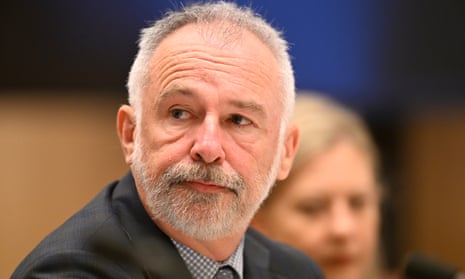
Hume says housing the ‘best indicator of economic security’ in retirement over super
The deputy Liberal leader, Jane Hume says the Coalition will reconsider whether Australians should be able to access more of their superannuation balance early after Pauline Hanson called on Sunday for super rules to be “lightened up a bit” and allow workers to their money in times of crisis.
Hume told News24 this morning its a policy the Coalition took to the last two elections but that it hasn’t come back to shadow cabinet this time around. Coalition policy included allowing first home buyers to use up to $50,000 or 40% of their super balance to buy.
Hume points out that owning a home is the most “best indicator of economic security” in retirement.
It’s something that we will obviously consider as part of our normal processes, that’s not a policy that’s come to our shadow cabinet yet, but of course, it’s something that we would consider. I do think that superannuation is highly valued by Australians, it’s not something that you need in your working life, it’s something you need in your retired life. But as I said, the best indicator of economic security in your retirement is owning a home and that should be a priority.
It’s something that we will obviously consider as part of our normal processes, that’s not a policy that’s come to our shadow cabinet yet, but of course, it’s something that we would consider.
I do think that superannuation is highly valued by Australians, it’s not something that you need in your working life, it’s something you need in your retired life.
But as I said, the best indicator of economic security in your retirement is owning a home and that should be a priority.
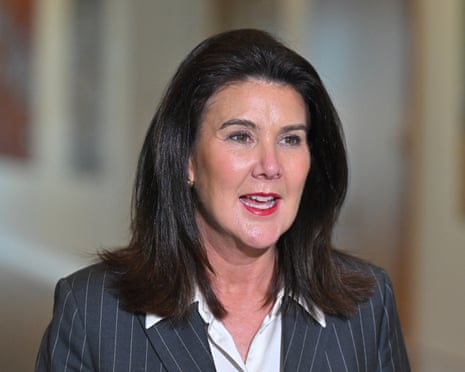
The system is ‘unfair’: state premiers fight over GST deal
RN Breakfast has decided to making itself something of a boxing ring for the GST debate, with not one but three state treasurers on its program today fighting over the deal that the productivity commission has called a “costly mistake”.
Tom Koutsantonis, the SA treasurer is obviously feeling aggrieved by the deal (like all treasurers besides the Western Australian treasurer) and says that before the mining boom, the only reason Perth was able to grow was because of “those bigger states subsidising Western Australia.”
If you put the Productivity Commission report into any pub across Australia, people read it from cover to cover, [they] all say the system currently is unfair. We’re paying more for it than we were told it would cost. We’re using scarce income tax dollars to prop up a state that doesn’t need it.
Following him is WA’s treasurer, Rita Safioti, who says that despite what the PC says, the deal’s actually good and fine for everyone and says her state government is “very confident in our current deal”.
By that she means that it’s so politically sensitive in the west that Anthony Albanese won’t be inclined to overhaul it.
She says it’s an economic rather than a political argument.
This is a deal that doesn’t make any other state worse off, makes sure that there’s the right incentives to deliver productivity and economic growth. And also helps the federal budget bottom line by making sure that we can continue to deliver the royalties and the company tax in particular. WA has a significant resources sector and we need the ability to be able to develop those resources because they lead to national economic growth but also are the national bottom line.
This is a deal that doesn’t make any other state worse off, makes sure that there’s the right incentives to deliver productivity and economic growth. And also helps the federal budget bottom line by making sure that we can continue to deliver the royalties and the company tax in particular.
WA has a significant resources sector and we need the ability to be able to develop those resources because they lead to national economic growth but also are the national bottom line.
Finally, the NSW treasurer, Daniel Mookhey, who’s also been very vocal in his criticism of the agreement, says it’s not fair that people in the west automatically get better entitlements and services because of the deal than those in the east.
He also takes issue with Safioti’s argument that only WA should be incentivised to develop its resources sector.
We have a pretty significant resource state here in New South Wales too, as does Queensland, as does South Australia. And if the logic that WA is arguing for is to apply across the board, then every other state that’s either developing those resources or looking to are entitled to the same benefit.
‘Pretty obvious’ SA treasurer says there will be a gap in care left from NDIS changes
South Australian treasurer, Tom Koutsantonis says he has real concerns about the government’s proposed changes to the NDIS scheme, which it hopes to pass this week, and worries there will be gaps in care from the reforms.
Koutsantonis tells RN Breakfast he’s worried his state and others won’t be able to provide enough support for individuals who are no longer eligible for the NDIS.
It’s been an uphill battle for the federal government to get the states on board with implementing so-called foundational supports and the thriving kids program.
We’re doing our very best, but look, I am concerned about the NDIS. I am concerned about a number of people being taken off the system and those foundational supports leaving people looking for services and they’re going to turn to state governments. And they’re going to turn to state governments, and we won’t have the resources we need to look after them. I think it’s pretty obvious there’s going to be a gap in care. The question is how we deal with it. I mean, I think the entire system needs reform, and I think the commonwealth government are right to reform it. But let’s not pretend somehow that this system is now fully funded and ready to pick up the pieces of people coming off the NDIS. It’s just not.
We’re doing our very best, but look, I am concerned about the NDIS. I am concerned about a number of people being taken off the system and those foundational supports leaving people looking for services and they’re going to turn to state governments. And they’re going to turn to state governments, and we won’t have the resources we need to look after them.
I think it’s pretty obvious there’s going to be a gap in care. The question is how we deal with it. I mean, I think the entire system needs reform, and I think the commonwealth government are right to reform it. But let’s not pretend somehow that this system is now fully funded and ready to pick up the pieces of people coming off the NDIS. It’s just not.
Mathias Cormann defends the WA GST deal he helped create
Mathias Cormann, the former finance minister who helped design the 2018 GST deal for WA and was a senator for WA says he disagrees with critics that the scheme – that’s handed billions of dollars to the west – has been a costly mistake.
On Friday, the productivity commission released an interim review of the deal that says tens of billions of dollars have gone to the richest state and that it “reshaped a system that needed targeted reform, leaving taxpayers with a large and growing bill”.
Cormann, who now heads the OECD (but speaks in a personal capacity) says the deal addressed a “significant unfairness” where WA’s share of GST was down to 30 cents in a dollar.
On RN Breakfast Cormann argues that if the reforms had not been in place, WA’s share would have dropped below 10 cents in the dollar when iron ore prices remained much higher for much longer than was anticipated at the time.
It was a very important reform to federal financial relations, addressing a very significant unfairness for the state of Western Australia, and also a real problem when it comes to the incentive arrangements in our federation in relation to state economic development, in particular of the resources and mining sector.
Asked about WA premier Roger Cook’s comments after the productivity commission released its report on Friday, calling other state governments “lazy” and accusing them of not pulling their weight, Cormann says he won’t go into political commentary.
Nationals senator Bridget McKenzie says the first and only deal so far negotiated between the commonwealth and NSW to buy back guns in the wake of the Bondi terror attack might not work with the constitution.
The scheme will give licence holders a fixed compensation fee based on their type of firearm when they surrender it to NSW police.
McKenzie tells the ABC’s AM program that the deal doesn’t take into account the cost of firearm accessories and falls foul of a provision in the constitution that requires fair compensation:
Does a buyback need to be on just terms? Yes, it does. Does it need to ensure that market value is paid to Australians for their own assets? Of course it does. And under the federal constitution, that’s a requirement.
If that sounds a little familiar to you, it’s the same argument Darryl Kerrigan (or rather his more erudite lawyer) made in the film The Castle: that the commonwealth may acquire property on “just terms”, as set out in section 51(xxxi).
Debate on NDIS legislation begins in the Senate today
The minister for the national disability insurance scheme (NDIS), Jenny McAllister, says she’s confident there is a deal to be reached with the Coalition overhauling the program.
Debate in the Senate will begin today and the government wants the legislation passed this week.
On Friday, the extended Senate inquiry examining the legislation handed down its report.
I’m confident that there is an agreement to be reached here, and I say it for this reason. The Coalition has said publicly that they think that reforming this scheme does matter. They’ve said that they’re up for that task.
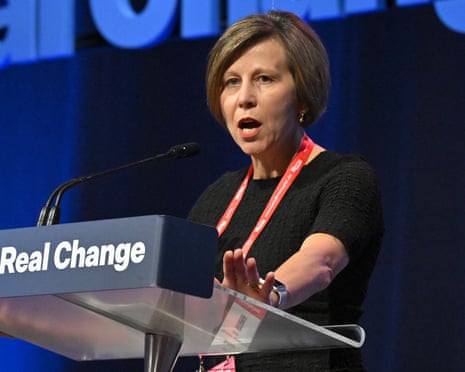
Asked whether participants who will no longer be eligible to be on the scheme under the changes will be left high and dry with the states and territories dragging their feet on alternative support, McAllister says everyone will still be able to access help.
We’ve been really clear that we won’t leave people without supports and it’s why we’ve initiated a conversation about foundational supports well before any access changes. We don’t expect any changes to access to the scheme to occur until 2028. We don’t want to leave people without supports and we don’t want to see people fall between two stools.
We’ve been really clear that we won’t leave people without supports and it’s why we’ve initiated a conversation about foundational supports well before any access changes. We don’t expect any changes to access to the scheme to occur until 2028.
We don’t want to leave people without supports and we don’t want to see people fall between two stools.
Joyce says One Nation are ‘not homophobes’, but won’t be seen at Mardi Gras
One Nation leader Barnaby Joyce says his party are not homophobes, but will absolutely not attend a Mardi Gras event.
Last week Joyce said One Nation was “one of the gayest parties in Australia” after comments surfaced from a failed candidate describing same-sex attraction as a mental illness.
Then Pauline Hanson was asked whether she still held her views from 1996 in when she said she didn’t like the event, and yesterday told News24 she still doesn’t like it. She said she has “no problem” with same sex marriage, but that people should keep their sexuality “behind closed doors”.
Joyce told Sunrise this morning the party is saying that an individual’s sexuality is “their business”.
Everybody’s trying to make us as a pack of homophobes, which we’re not. It’s just ridiculous. And we’re not racist, we’re not homophobes, but we always get these tropes thrown at us … You can absolutely bet I would not go to the Mardi Gras. But that’s my business, and we just want you to live your own life.
Everybody’s trying to make us as a pack of homophobes, which we’re not. It’s just ridiculous. And we’re not racist, we’re not homophobes, but we always get these tropes thrown at us …
You can absolutely bet I would not go to the Mardi Gras. But that’s my business, and we just want you to live your own life.
Dozens of non-profit groups, multicultural advocacy organisations and social service agencies have urged the federal government not to proceed with changes to limit work rights for temporary migrants.
The home affairs minister, Tony Burke, is working on new changes to cut overseas migration levels to Australia. It was reported last week the package, which is delayed pending cabinet deliberations, will include new rules removing some rights for temporary migrants applying for protection once their claim has been rejected.
Burke’s planned announcement at the National Press Club was delayed this month.
Nearly 150 different organisations, including the Asylum Seeker Resource Centre and Jesuit Social Services, have organised a massive open letter to Prime Minister Anthony Albanese, warning against restrictive changes.
It says removing work rights would strip people of their income and their independence, leaving them unable to pay rent, buy food or meet their most basic needs. Instead the letter urges investment in faster processing of applications, help for legal assistance and work rights.
“At a time when multiculturalism and migrant communities are facing growing attacks and scapegoating, Australia needs leadership that brings people together, upholds fairness and ensures our policies do not further harm communities already being targeted,” the letter says.
This is not the Australia we want to be and it is not the answer to the growing challenges facing our community.
Good morning, Krishani Dhanji here with you for week two of this sitting fortnight.
We’re getting to crunch time on Labor’s proposed changes to the NDIS and gambling regulations – both are still on the negotiation table.
Barnaby Joyce has declared that One Nation are not homophobes on Sunrise, after he last week called One Nation “one of the gayest parties in Australia” – more on that in a moment.
And dozens of non-profit and community groups are urging Labor not to change rules that would limit work rights for temporary migrants.
Let’s get stuck in!