Get our breaking news email, free app or daily news podcast
13m agoGreens want digital duty of care bill passed this week
1h agoLabor will ‘save more than we spend’ in budget update: Chalmers
2h agoAustralian rental affordability plummets to 14-year low
2h agoCoalition objects to security agreement with Vanuatu
2h agoPenny Wong to defend US alliance
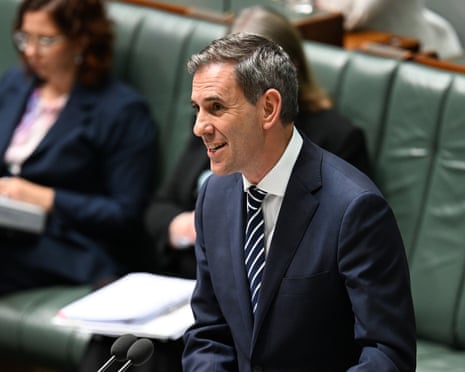
The government will save more than it spends, says Jim Chalmers, but it won’t be a “slash and burn” budget update.
Unlike the federal budget, where we get plenty of notice of when it will be handed down, the government only gives us a few days notice for the mid-financial year economic and fiscal outlook (or Myefo).
We so far know that it will be somewhere between the beginning of December and the handing down of the Bondi royal commission.
There’s still a fair bit of work to do to finalise it all, but we’ve made enough progress to be confident that at this stage there will be a modest net save in the budget. We’re not going to slash and burn in the budget where that would impact the payments that people receive or where it would impact some of the more sensitive parts of the economy. But we haven’t focused the savings on just one portfolio. There will be a number of savings in the mid-year update. They will be substantial, as I said. These are serious times.
There’s still a fair bit of work to do to finalise it all, but we’ve made enough progress to be confident that at this stage there will be a modest net save in the budget.
We’re not going to slash and burn in the budget where that would impact the payments that people receive or where it would impact some of the more sensitive parts of the economy. But we haven’t focused the savings on just one portfolio. There will be a number of savings in the mid-year update. They will be substantial, as I said. These are serious times.
One Nation MP Barnaby Joyce has warned Australia’s agriculture industry is at risk after second infestation of fire ants was found - and destroyed - in Sydney over the weekend.
He told News 24 on Monday evening:
This is incredibly important for Australia, for the people of Sydney on this instance, for the people of Sydney to deal with this fire ant incursion. Otherwise your children, if you put them down in a park on a Sunday afternoon while you’re having a picnic, just like the sharks at the beach, someone’s going to get bitten.
This is incredibly important for Australia, for the people of Sydney on this instance, for the people of Sydney to deal with this fire ant incursion.
Otherwise your children, if you put them down in a park on a Sunday afternoon while you’re having a picnic, just like the sharks at the beach, someone’s going to get bitten.
Joyce said the ants posed an anaphylactic shock risk to people who go to parks or sporting fields in Sydney, and warned cattle, koalas and other native fauna were vulnerable.
The MP added the fire ants “even eat echidnas” - the federal environment department has warned fire ants can kill and scavenge the mammals.
There are four big pieces of legislation the government wants passed this week, and it looks like the Greens are on board with at least one of them getting over the line in the next three days.
The two parties are in deep conversation to pass the digital duty of care bill and the government is considering the Greens demands. One of those demands – to allow private citizens the right to directly sue tech platforms if they experience harm – was even recommended by a Labor-chaired committee.
We’re continuing to have some productive discussions with the government, some less productive. I would hope we get the digital duty of care package resolved in the very near future and before Parliament rises. This has been productive these discussions with the government, and we think material outcomes for Australians have been achieved.
We’re continuing to have some productive discussions with the government, some less productive. I would hope we get the digital duty of care package resolved in the very near future and before Parliament rises.
This has been productive these discussions with the government, and we think material outcomes for Australians have been achieved.
The Greens are also at the negotiation table on the bills to change capital gains tax discounts for trusts, and to reduce health insurance premium rebates for over 65s. Those discussions aren’t quite as far along.
There’s a lot of tax bills floating around. That’s complicated discussions. We’ll continue to talk, but our goal at the end of the day is not to give corporate Australia a big Christmas present … The government keeps asking, and we keep telling them the same thing: you exempt all pensioners [from private health insurance rebate changes], and there’s a pathway through. I mean, it is a bit frustrating that we’ve said this now for months, and the government seems to think that there’s some alternative solution.
There’s a lot of tax bills floating around. That’s complicated discussions. We’ll continue to talk, but our goal at the end of the day is not to give corporate Australia a big Christmas present …
The government keeps asking, and we keep telling them the same thing: you exempt all pensioners [from private health insurance rebate changes], and there’s a pathway through. I mean, it is a bit frustrating that we’ve said this now for months, and the government seems to think that there’s some alternative solution.
Tax gas and stop subsidising fossil fuels: Greens add their 2c to budget savings debate
The Greens aren’t happy that Labor has foreshadowed little extra cost-of-living support in the mid-year budget update – other than yesterday’s announcement to cap PBS medicines to $25 until 2030.
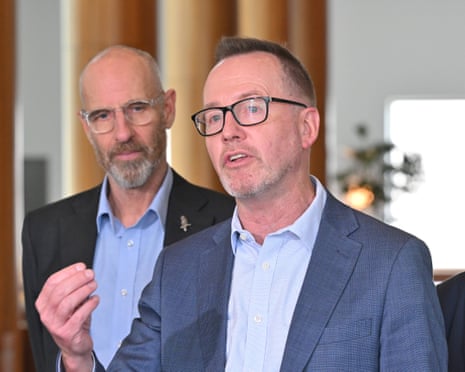
The Greens leader, David Shoebridge, told the media this morning that people need more relief and the government should find its savings elsewhere.
It’s not new – the Greens have been pushing for a tax on gas exports, and calling for subsidies for fossil fuels to end for a while now. The government shows no indication of listening this time, despite growing public support for the measures.
We’ve got a treasurer coming out and saying there’s going to be no relief, and in fact looking to have an austerity budget. This is the exact wrong time to have an austerity budget, take services and support away from ordinary Australians. We know that there are revenue sources the government can tap into: a tax on export gas, getting resource sector to pay its fair share, stopping $16.3bn in fossil fuels subsidies to corporate Australia, and that would provide the headroom so that Australians could get a bit of relief.
We’ve got a treasurer coming out and saying there’s going to be no relief, and in fact looking to have an austerity budget. This is the exact wrong time to have an austerity budget, take services and support away from ordinary Australians.
We know that there are revenue sources the government can tap into: a tax on export gas, getting resource sector to pay its fair share, stopping $16.3bn in fossil fuels subsidies to corporate Australia, and that would provide the headroom so that Australians could get a bit of relief.
Coalition sceptical of Chalmers’ net savings budget promise
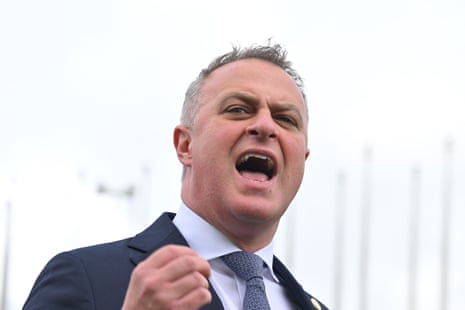
The shadow treasurer, Tim Wilson, casts doubt on Jim Chalmers’ promise that the government will save more than it spends in this mid-year budget update.
He tells ABC’s Radio National that the government hasn’t offered struggling businesses much hope.
Every time the government has said they’re going to deliver savings, they’ve gone on and saved $2 and spent $3.
Asked to respond to Chalmers’ criticism of the Coalition, that all they do is push back against the government’s savings measures, Wilson whips out a favourite insult:
The treasurer likes to engage in his spin. He has a PhD in it.
(Chalmers’ PhD is in political science.)
Wilson says the opposition has a proposal to save more than $31bn in the budget – much of which would come from cutting climate and housing programs.
Chalmers ‘not focused on the columns or the commentary’
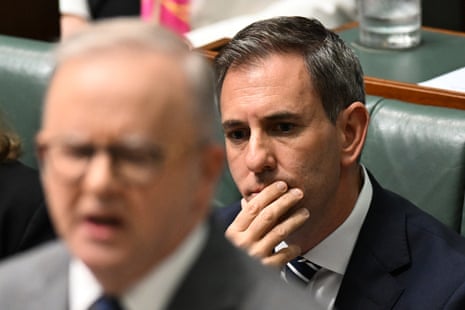
Facing a hefty amount of criticism for his management of the budget in difficult economic landscape, Jim Chalmers says he’s not focused on the columns and commentary.
Probably best for his mental health.
I’m not focused on the columns or the commentary or that kind of speculation that you see in parts of our media from time to time. I always take feedback on board … I take responsibility for the difficult reforms that we’re pushing through, and I understand we’re doing that at a time when people are under pressure, and that will be reflected in the polls. And that those polls will be reflected in the columns and in the commentary. But that’s not my focus.
I’m not focused on the columns or the commentary or that kind of speculation that you see in parts of our media from time to time.
I always take feedback on board … I take responsibility for the difficult reforms that we’re pushing through, and I understand we’re doing that at a time when people are under pressure, and that will be reflected in the polls. And that those polls will be reflected in the columns and in the commentary. But that’s not my focus.
Nvidia stock market reaction shows global market ‘volatile’, says Chalmers
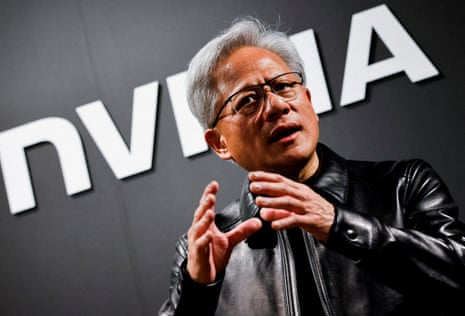
The treasurer, Jim Chalmers, also doesn’t want to make any personal judgements on Jensen Huang or the decision to reinstate him, but he says the reaction does show just how volatile the market is.
Speaking to RN Breakfast, Chalmers says the decision is up to Huang and the board (and I’ll add Donald Trump).
You can see in the quite extraordinary reaction on the stock market just how volatile global markets are right now. I think it’s a bit of a symbol of the quite extraordinary volatility, unpredictability that we’re seeing play out in markets in the AI sector, but more broadly as well.
Asked whether it’s a vulnerability for decisions by these companies and individuals to have such huge knock-on effects, Chalmers says again, that it reflects the “volatility we’re seeing around the world, not just on markets.”
Nvidia shares surged more than 30% on Huang’s return, adding US$1tn to the company’s value. You can follow the latest in our business liveblog.
‘It’s made news’: Wong on Jensen Huang’s return to Nvidia
Well, John Howard might have called his book Lazarus Rising (for his several attempts at the Liberal leadership before finally getting it to stick), but we all know who the real modern day Lazarus is: Jensen Huang.
The Nvidia chief executive was reinstated just days after he resigned following revelations of extramarital affairs, including one US authorities suspected of being a Chinese spy.
Wong is asked whether she was surprised by the decision. Naturally, she doesn’t really want to weigh in.
Look, ah – certainly it’s made news. But, ultimately, a decision for the board and the company. My focus today is more broadly on how I end my speech to the Senate – the ministerial statement on securing Australia’s future in a changing world. Obviously, artificial intelligence is a big part of that.
Despite a slight improvement in prices since 2025, no areas of Australia are affordable, according to the national Rental Affordability Index released on Tuesday, AAP reports.
It’s at the lowest level since 2012, the report shows.
Homes across the country now cost at least 23% of the household income. The outlook is even worse in capital cities – in Sydney, Perth and Hobart, the figures soar past 30%.
Rental prices are considered “acceptable” if they are between 20 and 25% of household income, and “affordable” at anything below that.
Sydney’s affordability has improved by one per cent since 2025 as property prices decline, providing a glimpse of hope for those struggling to pay their bills.
All capitals bar Canberra and Adelaide improved in affordability, as did all regional areas.
‘We all wish a consensus statement had been reached’: Wong
Penny Wong knows a thing or two about not landing a deal at Cop.
While defending her colleague, Chris Bowen, who might be coming back to Australia with his tail between his legs, Wong says she was in the hot seat as a climate minister the last time the UN summit couldn’t reach an agreement – back in 2009.
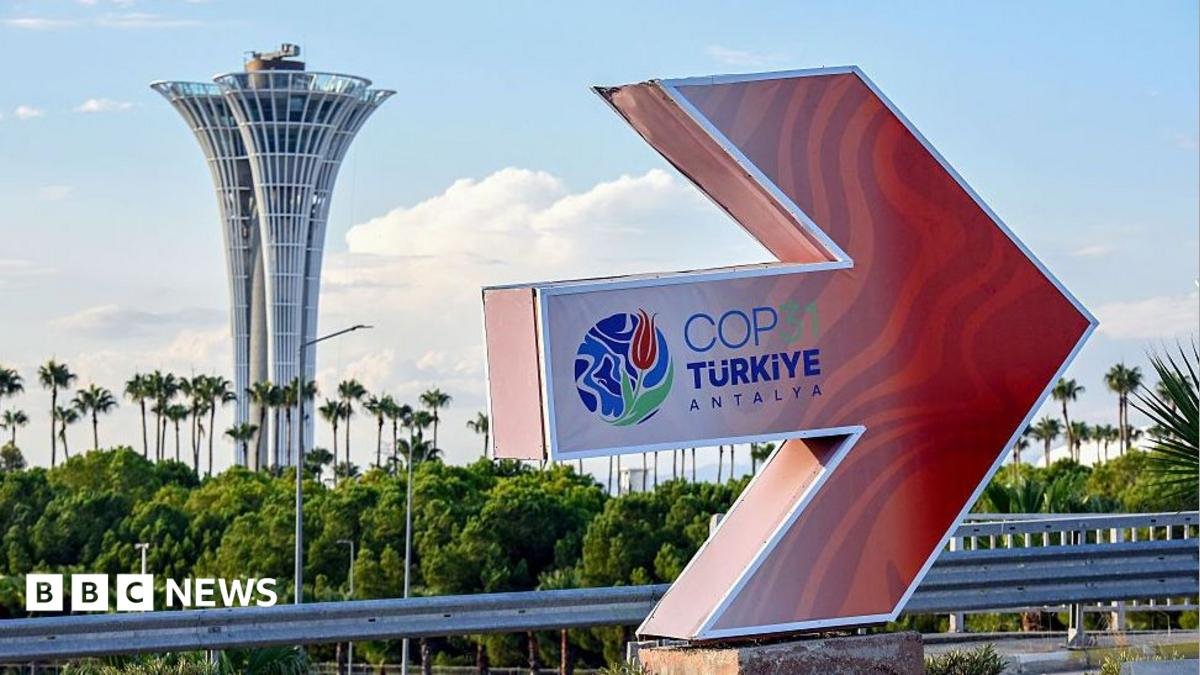
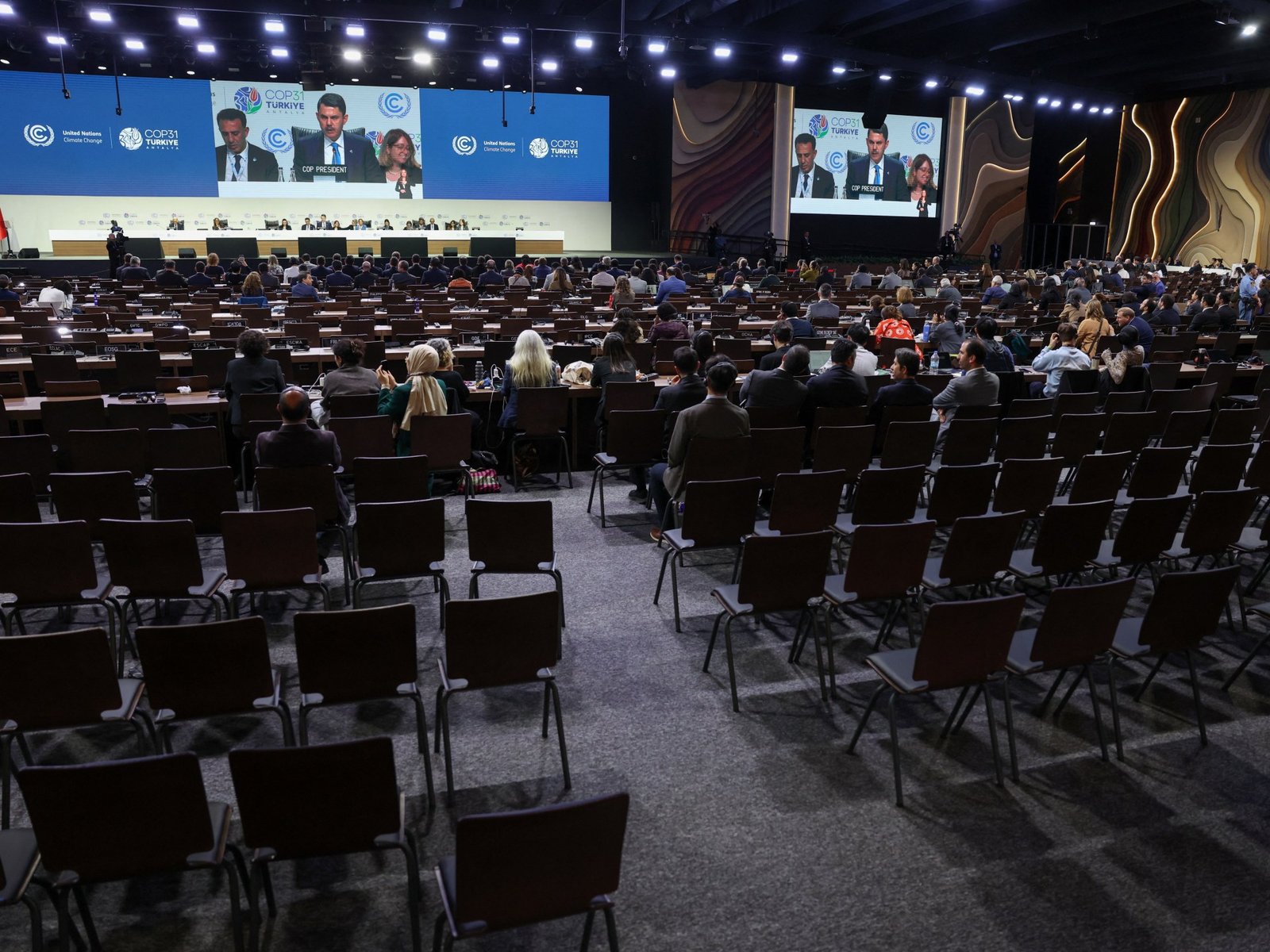
The proposed Cop31 agreement, which didn’t even mention the words fossil fuels, was rejected by the EU, the UK and some others.
Wong tells News Breakfast that despite all this, Australia has “kept the faith” with the Pacific – a key reason Australia put its hand up for Cop in the first place.
Well, we all wish that a consensus statement had been reached. But I’ve been a climate minister and I’ve been at conferences before where we have not managed to reach an outcome. I was famously at Copenhagen, where we had world leaders there and we still were not able to land an agreement. I know what Chris Bowen has done has been to work extremely closely with the Pacific all the way through this process. And to keep faith with them. He sought to do that the whole way through, and I’m sure did so in Turkiye as well. And the reason we sought to participate here was because we wanted to keep faith with the Pacific on climate.
Well, we all wish that a consensus statement had been reached. But I’ve been a climate minister and I’ve been at conferences before where we have not managed to reach an outcome. I was famously at Copenhagen, where we had world leaders there and we still were not able to land an agreement.
I know what Chris Bowen has done has been to work extremely closely with the Pacific all the way through this process. And to keep faith with them. He sought to do that the whole way through, and I’m sure did so in Turkiye as well. And the reason we sought to participate here was because we wanted to keep faith with the Pacific on climate.
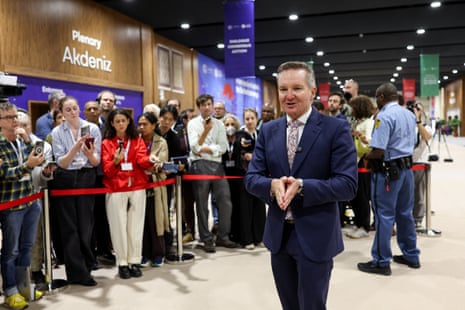
Want to counter the dominance of the US and China?
It’s all about the growing middle powers, says Penny Wong.
It’s something we’ve been hearing more and more about, especially during the visits to parliament of Canadian prime minister, Mark Carney, and European Commission president, Ursula Von Der Leyen.
Wong, starting her media rounds on ABC News Breakfast, says:
The work that we are doing with other countries to secure our position, and how important that is – whether it’s the UK, Canada, the European Union. Or, also, our work in the region – our work with Japan. These are important elements about how you assure Australian security and make sure that we have different options, different pathways, to pursue our interests.
The work that we are doing with other countries to secure our position, and how important that is – whether it’s the UK, Canada, the European Union. Or, also, our work in the region – our work with Japan.
These are important elements about how you assure Australian security and make sure that we have different options, different pathways, to pursue our interests.
Good morning, Krishani Dhanji with you here, thanks to Martin Farrer for getting us started.
The foreign affairs minister, Penny Wong, is doing the media rounds this morning ahead of a speech to the Senate on the world order and defending Australia’s alliance the US. My colleague Tess Ikonomou brought that to you a little earlier.
There are still several deals the government needs to make on a gas reservation scheme, trust taxes, private health insurance rebates for over 65s and the digital duty of care. Conversations between Labor, the Coalition and Greens are ongoing and will come right down to the wire. The opposition and Greens are trying to play it super cool, saying they’re in no rush to make concessions – we’ll see how that shakes out.
And Singapore’s prime minister will arrive at Parliament House today for a meeting with Anthony Albanese and they’ll speak briefly to the media.
It’s going to be a big one, let’s get stuck in!
The Coalition has come out against a security agreement with Vanuatu because of objections to “binding conditions relating to the achievement of renewable energy and climate targets”.
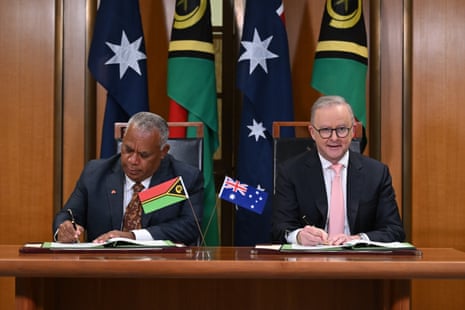
In June, the prime minister, Anthony Albanese, and his Vanuatu counterpart, Jotham Napat, signed the Nakamal agreement in Canberra that rules out the use of its territory for foreign military bases.
Under the $500m deal, Vanuatu stated it would “not permit its territory to be used for any foreign military base or infrastructure”.
But in dissenting comments released last night, Coalition members of a parliamentary committee scrutinising treaties said they did not support ratifying the agreement in its current form.
We acknowledge the legitimate concerns Vanuatu and other Pacific Island nations have regarding climate change and its impacts on their communities, economies, and national security. However, Coalition members object to clauses … that limit the ability of future governments to change current climate and energy policy settings, by creating binding conditions relating to the achievement of renewable energy and climate targets.
We acknowledge the legitimate concerns Vanuatu and other Pacific Island nations have regarding climate change and its impacts on their communities, economies, and national security.
However, Coalition members object to clauses … that limit the ability of future governments to change current climate and energy policy settings, by creating binding conditions relating to the achievement of renewable energy and climate targets.
The Albanese government has forged a number of agreements, including new alliances with Fiji and Papua New Guinea, to deny China a military foothold in the Pacific.
A government spokesperson said the Coalition was “putting culture wars ahead of regional security. It is remarkable that the Liberals and Nationals continue to disrespect Pacific priorities.”
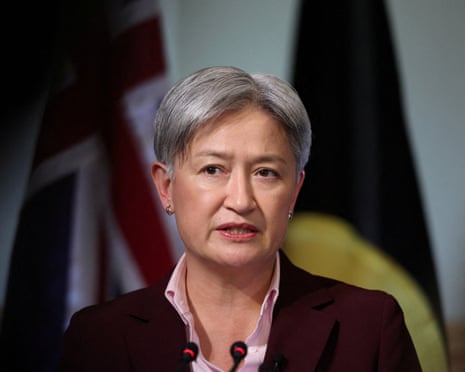
Penny Wong says abandoning the US would “surrender a central source of Australian strategic weight” at the moment the nation needs every tool available during global turmoil.
In a major foreign policy speech on Tuesday, the foreign affairs minister will take aim at opponents of the US alliance who present a retreat from the mutual defence pact as a “road to autonomy”.
Such a policy would surrender a central source of Australian strategic weight at precisely the moment we need every opportunity for influence available to us. What they would do is give us fewer choices and leave us more vulnerable, reducing our capacity to contribute to a regional balance in which our sovereignty can be protected.
Such a policy would surrender a central source of Australian strategic weight at precisely the moment we need every opportunity for influence available to us.
What they would do is give us fewer choices and leave us more vulnerable, reducing our capacity to contribute to a regional balance in which our sovereignty can be protected.
The Greens are opposed to the Aukus security pact, under which Australia is set to acquire nuclear-powered submarines, in addition to the presence of the joint Pine Gap base in the Northern Territory.
Wong will also elevate artificial intelligence as a foreign policy challenge, warning the emerging technology is reordering lives, economies and militaries in ways not yet foreseen.
Good morning and welcome to our live news blog. I’m Martin Farrer with the top overnight stories and then it will be Krishani Dhanji with the main action.
Australian politics live with Krishani Dhanji