Former attorney general also describes receiving antisemitic abuse, saying he was labelled a ‘genocidal Zionist’
Follow our Australia news live blog for latest updates
Get our breaking news email, free app or daily news podcast
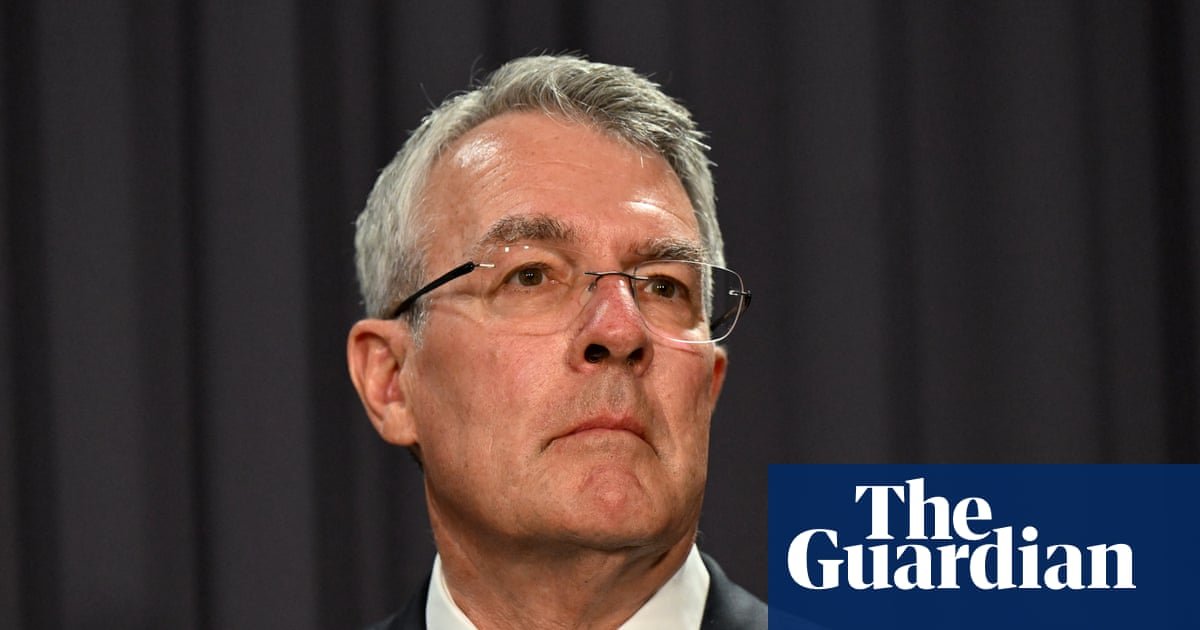
Former attorney general Mark Dreyfus has called on governments to consider banning protests outside synagogues and Jewish schools, invoking a high court decision allowing restrictions outside abortion clinics.
The federal Labor backbencher has told the royal commission on antisemitism and social cohesion the laws should be considered in the light of a 2019 high court decision which upheld safe access zone laws in Victoria and Tasmania which prohibit protests within 150 metres of clinics.
“It’s time to consider whether we need some similar restriction on protest activity outside synagogues, on protest activity outside schools and Jewish places of gathering, not to ban political protest … but rather to protect … Jewish Australians,” Dreyfus said on Monday.
Last year, the New South Wales government reintroduced laws restricting protests that block or threaten a person accessing a place of worship, after an earlier law restricting protests near a place of worship was struck down.
The royal commission’s fifth block of hearings, starting in Melbourne this week, is examining security arrangements for the Jewish community, including the role of the Jewish Community Security Group (CSGs) and their coordination with law enforcement agencies.
At the start of Monday’s hearing, counsel assisting Richard Lancaster SC said evidence would show “a substantial and ongoing threat to the safety and security of the Jewish community in Australia”, leading to a “shrinking of Jewish communal life”, including because of the financial burden of employing security guards.
Dreyfus, who is Jewish, told the commission on Monday that following Hamas’s 7 October 2023 attack on Israel, he had been shocked by the “breach of that sense of safety” previously created by providing asylum to Jewish refugees, including his father, who came to Australia in 1939 as an 11-year-old from Nazi Germany.
He said his former role as a Jewish member of the cabinet in the Albanese government’s first term had put him in a “unique position”, which he said had resulted in “particularly difficult and painful” criticism from some Jewish Australians.
Dreyfus said since leaving the cabinet in a reshuffle after the 2025 federal election which saw him replaced as attorney general by Michelle Rowland, “I’ve been much freer as an MP”.
Dreyfus used his evidence on Monday to urge the commonwealth government to consider introducing a criminal offence for vilification, following NSW and Victoria, as well as a “private right of action” under the government’s proposed digital duty of care to allow for the takedown of online abuse on social media.
“It can’t just be left to the eSafety commissioner,” he said.
Dreyfus told the commission that while antisemitism in Australia had not “come from nowhere”, pointing to historical examples, solidarity with Jewish Australians after the 7 October had been “followed by an upsurge in antisemitism [that] has been deeply shocking to me”.
This including an incident in which a man approached him outside Victoria’s state library in April 2024 and said to him: “You are a genocidal Zionist. You should be ashamed of yourself.”
“No one had ever hurled abuse at me because I am Jewish. This was a new development in my engagement in Australian politics, and I know I’m not alone,” said Dreyfus, who has been the MP for Isaacs in south-east Melbourne since 2007.
On Monday, the commission heard from members of state-based Jewish Community Security Groups, volunteer-led organisations which monitor threats to the Jewish community and provide security for schools, synagogues and events.
One senior member of the Victorian CSG said combined data showed the protection requirements for CSGs nationwide had nearly doubled since October 2023, but that organisations still did not have sufficient staffing numbers.
Another witness, appearing under the pseudonym ACR, described a feeling of being “always on call”, saying they “very much discourage my family from attending Jewish community events”.
“I don’t want to put myself in a position where I would have to decide between extracting them or dealing with a threat if something arose, and so that’s incredibly difficult.”
Following hearings in Melbourne this week, the royal commission will return to Sydney next week.
Royal commission on antisemitism and social cohesion
Australian security and counter-terrorism