Central bank announces surprise plan to sell billions of pounds in government bonds back to the Treasury
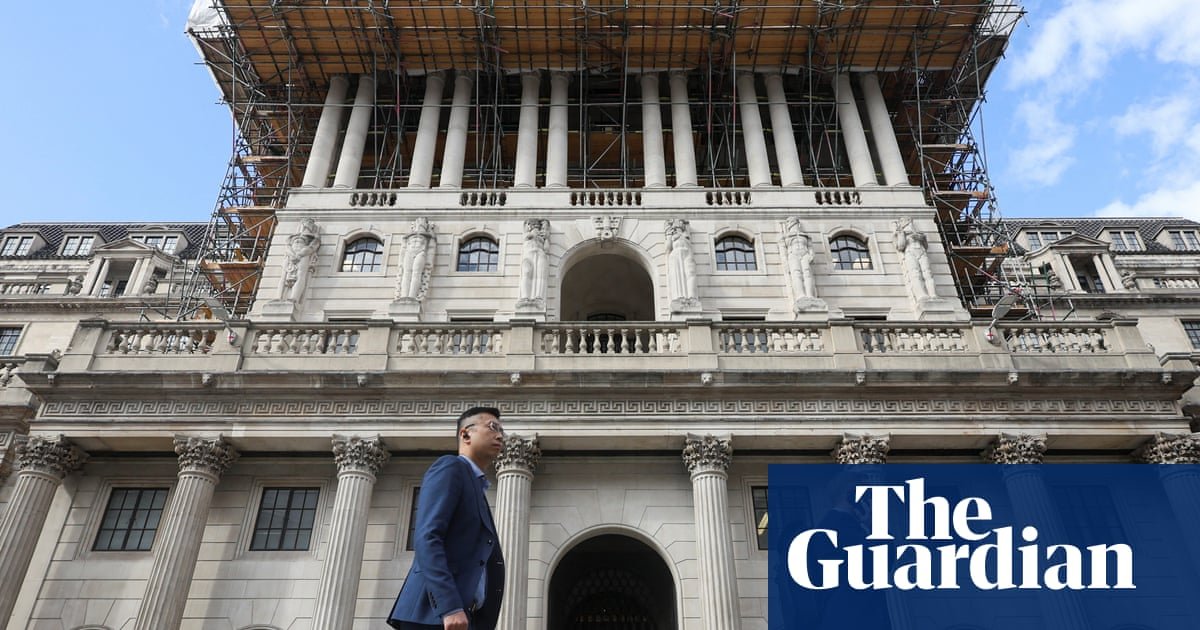
The Bank of England has kept interest rates on hold as it warned a continuation of the bitter fighting in the Middle East could force it to raise borrowing costs amid mounting fears over inflation.
It also announced a surprise plan to sell billions of pounds in UK government bonds back to the Treasury to avoid fuelling turbulence in the gilt market, a decision that could have significant consequences for the public finances before next month’s budget.
As the fallout from war in the Middle East fuels a rise in energy prices, the Bank’s monetary policy committee (MPC) voted by a majority of six to three to keep its base rate unchanged at 3.75%.
However, the Bank said the increasingly probable prospect of a lengthy war fanning intense volatility in global markets had dramatically raised the chance of it putting up borrowing costs in future.
Andrew Bailey, the Bank’s governor, said: “So far higher global energy costs have had a limited effect on price and wage setting in the UK.
“But the longer this volatility persists, the bigger the impact it will have on inflation, and the more likely it is we will need to raise [the] Bank rate to ensure that inflation falls back to our 2% target.”
Highlighting the risk to the economy as the Iran war intensifies, the Bank said inflation was on track to reach 4% by early next year, as the surge in energy prices hits households with a fresh cost of living crisis. Three members of the MPC were outvoted with a call for an immediate quarter-point increase in the base rate.
It came after Andy Burnham said he was prepared to take “difficult decisions” to tackle high inflation and keep the economy on track and would take action at next month’s budget on the cost of living.
However, the MPC said there was not yet a need to take action on borrowing costs because there had been “little evidence so far of material second-round effects” – when inflationary pressures push businesses and workers to demand higher prices and pay settlements.
There were also signs of weaker food price inflation despite the surge in energy prices triggered by the Iran war, it added.
Against a volatile backdrop in global financial markets, Threadneedle Street also announced updated proposals for the winding down of its financial crisis-era quantitative easing programme, which had involved the buying of £895bn of UK government bonds at its peak.
In an unexpected move, the Bank said it planned to sell £146bn of bonds to the Treasury, at a pace of about £20bn a year until 2034, in a plan that would require agreement from the chancellor.
The process will be used to complete Threadneedle Street’s “quantitative tightening” programme – which has involved the sale of gilts held on the Bank’s balance sheet since 2022, which has reduced its holdings to about £488bn.
The Bank said it would retain about £120bn of bonds on its balance sheet, which were needed to back the issuance of notes and coins circulating in the economy. However, it said it would pause the current process of active gilt sales until a deal with the government could be reached on what to do with the remaining assets.
Leaving about £222bn of bonds, it said this amount would be disposed of through a mixture of allowing the debts to mature, and through active sales. If a deal to sell them back to the Treasury was not agreed it would resume selling the bonds back to big institutional investors.
Financial markets expected the Bank would keep borrowing costs unchanged as policymakers grapple with the worsening global energy shock at a time when the domestic jobs market is coming under strain.
Official figures on Wednesday showed UK inflation rose to 3.1% in August from 2.9% in July as the escalating hostilities in the Middle East drove up the average price of petrol and diesel by almost a quarter, hitting households already squeezed by years of fast-rising prices for everyday essentials. The Bank’s inflation target is 2%.
The sharp rise in global energy prices prompted the US Federal Reserve to raise interest rates on Wednesday for the first time since 2023, after a decision last week by the European Central Bank to raise eurozone borrowing costs.
With the Bank under pressure to guard against high rates of inflation becoming entrenched in the UK economy, City traders predict a quarter-point rise in borrowing costs from as early as November and three more increases to 4.75% next year.