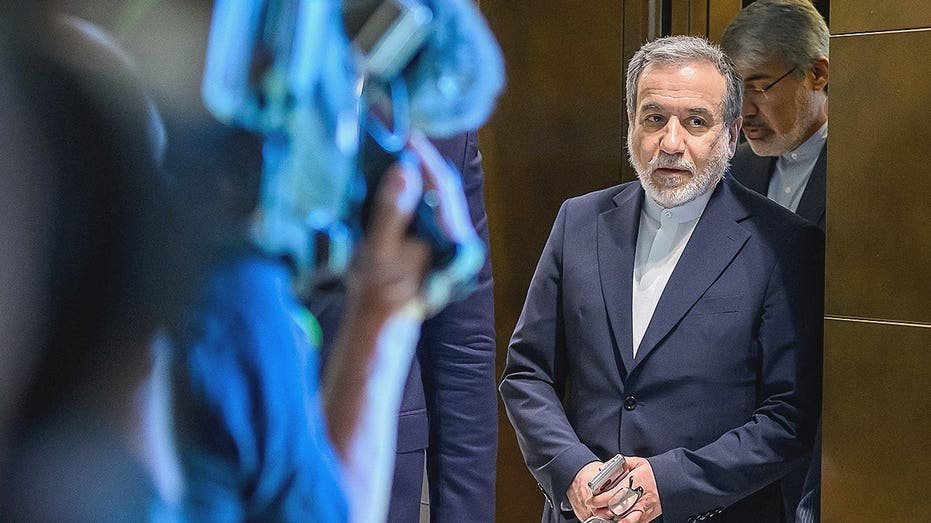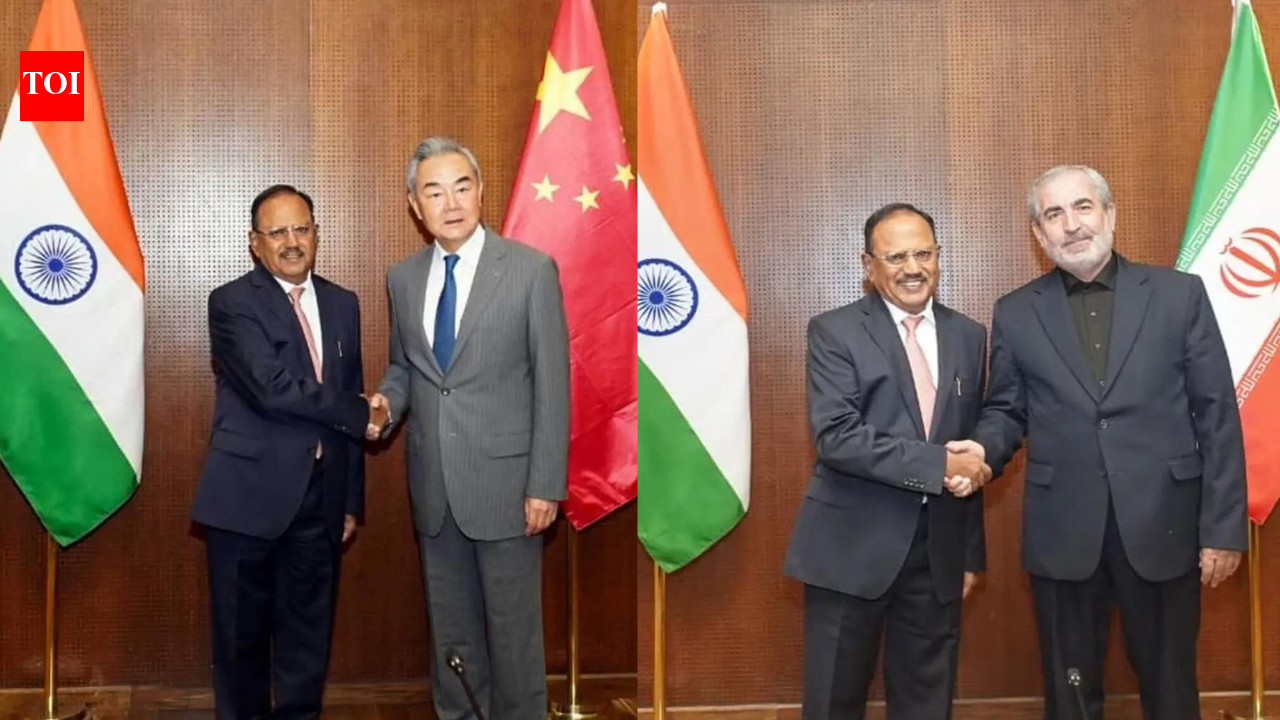
Ajit Doval holds 'constructive" talks on normalising ties with China FM Wang Yi, discusses Middle East situation with Iranian Dy Secy Defence Ghadir Nezamipour National Security Adviser Ajit Doval on Monday held a series of high-level bilateral meetings, including talks with Chinese foreign minister Wang Yi and senior Iranian security official Ghadir Nezamipour, as New Delhi hosted the BRICS National Security Advisers' conclave amid growing geopolitical tensions and shifting regional dynamics.India is hosting the two-day security meeting in its capacity as the current chair of BRICS, bringing together top security officials from the expanded grouping for discussions on regional and global security challenges.In one of the most closely watched engagements, Doval met Chinese Foreign Minister Wang Yi on the sidelines of the conclave.
According to the Ministry of External Affairs (MEA), the two sides reviewed recent developments in bilateral ties and noted progress towards the gradual normalisation of relations.Sharing details of the meeting on X, MEA spokesperson Randhir Jaiswal said, "The two sides reviewed recent developments in bilateral relations and noted progress towards gradual normalisation.
NSA underlined that stable, predictable and constructive bilateral relations contribute to building trust and better understanding between the two sides.
The discussions were constructive and forward-looking." Foreign Secretary Vikram Misri, Ambassador Vikram Doraiswami and Lt Gen Rajiv Ghai were among the Indian officials present during the talks.The meeting comes as India and China continue efforts to rebuild ties following years of tension triggered by the 2020 border clashes.
Since 2024, both sides have gradually moved towards de-escalation and increased diplomatic engagement.
The latest interaction follows a series of meetings between Prime Minister Narendra Modi and Chinese President Xi Jinping on the sidelines of international summits, including the SCO Summit in Tianjin last year.The two leaders had then welcomed the positive momentum in bilateral ties and reiterated that India and China should remain development partners rather than rivals, while ensuring that differences do not turn into disputes.Separately, Doval also held wide-ranging discussions with Ghadir Nezamipour, Deputy Secretary for Defence Affairs at Iran's Supreme National Security Council (SNSC), focusing on the evolving security situation in West Asia."Both sides reviewed the ongoing situation in West Asia.
They also discussed cooperation under the BRICS platform and India-Iran bilateral ties," Jaiswal said.The visit marks the first trip to India by a senior Iranian official since Tehran reached a peace agreement with Washington, adding significance to the discussions amid continuing regional uncertainty.The BRICS security conclave, which formally began on Monday, is expected to focus extensively on the security situation in West Asia, the Russia-Ukraine conflict, terrorism and other emerging geopolitical challenges.
Besides Wang Yi, Russian Security Council Secretary Sergei Shoigu and senior security officials from other BRICS nations are participating in the deliberations.India is also expected to raise concerns relating to terrorism, including cross-border terror activities targeting Jammu and Kashmir by Pakistan-based groups.
The situation in Afghanistan and tensions involving Pakistan are also likely to feature in the discussions, according to people familiar with the matter.The meeting takes place against the backdrop of growing complexity within the expanded BRICS grouping.
Originally comprising Brazil, Russia, India, China and South Africa, the bloc expanded in 2024 to include Egypt, Ethiopia, Iran and the United Arab Emirates, with Indonesia joining in 2025.Today, BRICS represents around 49.5 per cent of the world's population, nearly 40 per cent of global GDP and approximately 26 per cent of global trade, making it one of the most influential platforms for emerging economies.However, differing geopolitical priorities among members continue to pose challenges.
At the BRICS Foreign Ministers' Meeting in May, member states failed to agree on a joint statement after differences emerged, particularly between Iran and the UAE over developments in West Asia.
As BRICS operates on the basis of consensus, India had instead issued a chair's statement and outcome document reflecting areas of agreement while noting issues on which unanimity could not be reached.Get the latest India news and live updates.
Download the TOI App.