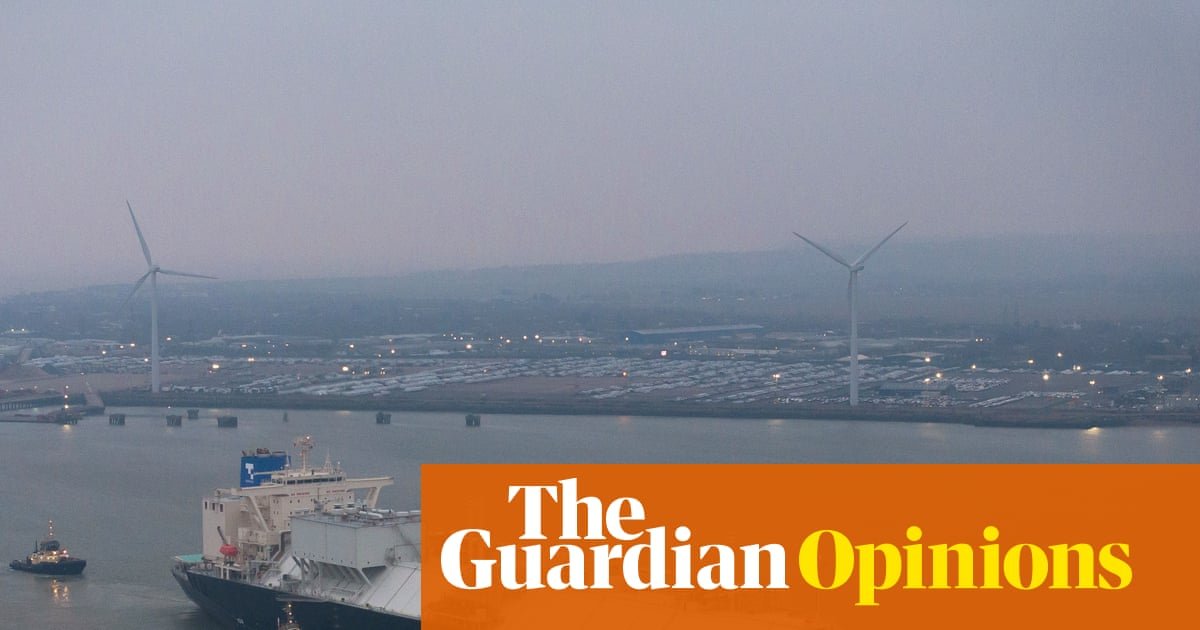
More terminals may be needed if the UK is to meet demand for energy.
Last-minute deals with Belgium are not a proper fix Nils Pratley The UK still imports 60% of its gas and, even with Jackdaw, its energy supply and resilience problems are not going away After the overdue approval of the Jackdaw field in the North Sea, here comes a reminder that Britain still imports almost 60% of its gas and the stuff has to come from somewhere.
We’re now doing a deal with Belgium to ensure enough supply can flow through a connecting pipeline this winter should a “low-probability but high-impact stress event”, to quote the regulatory mouthful, occur.
To be fair, the arrangement to maintain capacity from Belgium is a belt-and-braces measure.
The imagined events do sound genuinely stressful and may never happen.
A critical piece of infrastructure, such as the two import terminals in Milford Haven to bring in liquefied natural gas (LNG) into Britain, would have to be out of action during a prolonged cold snap in which demand is very high.
Equally, though, the “high-impact” bit matters: we’re talking about having enough supplies to run gas-fired power stations at full pelt if necessary to keep the lights on.
You don’t take chances.
In short, 10p a month will be added to bills to cover the cost of paying Interconnector Limited, the Belgian owner of the pipeline, to maintain the compressors needed to shove big volumes of gas to Britain in a hurry if required.
Without the arrangement, the company had already warned it would cut capacity, in part because the big pipe was not used much in practice last year.
The first conclusion – the comforting one – is that the deal sounds like decent value for money.
As insurance policies go, £1.19 a household a year is not much.
The second, however, is that risks to Britain’s gas security are plainly mounting.
The Ofgem document describing the Belgian deal says it was “the only currently available intervention identified that both addresses the immediate security of supply position for winter 2026/27 and provides continuing security of supply benefits over the following four years”.
It was Belgium, plus any future deal on the Dutch pipeline, or nothing.
Nor is the Belgian shuffle a cure-all.
“The agreement does not remove the need for further measures led by government that are likely to be required to support security of supply and wider gas system resilience over the medium and longer term,” says Ofgem.
The government should take that line as a heavy hint to get a move on.
Do we need more gas storage, more LNG terminals, or both?
And post-Jackdaw, what’s a realistic appraisal of how much will be sourced from the North Sea?
It is now almost a year since an alarming report from the National Energy System Operator (Neso) warned of an “emerging risk to gas supply security” in 2030.
The government promised to “do whatever it takes” to avert a crunch but one cannot say it has actually done much.
An interim response to the Neso report came in August but no timetable was given for choosing what kit or arrangements were needed and by when.
The final response isn’t due until next year.
Read the “winter outlook” report from National Gas, published on Friday, and a few points stand out.
Yes, it’s good news that, with the help of the Belgian deal, this winter’s outlook is positive.
But the company also says that, even as annual consumption drifts down slightly, the peaks for demand remain as high as ever, driven by the role of gas-fired power generation when renewables output is low. skip past newsletter promotion after newsletter promotion Like Ofgem, National Gas says “continued progress on government plans to reform security of supply arrangements will be vital to address enduring challenges in the years ahead”.
It is becoming a theme.
The obvious answer is more gas storage to address Britain’s skimpy current levels.
That could mean Centrica’s Rough facility in North Sea (currently due to close next spring), the Bains development led by dCarbonX off the north-west coast of England (which may happen anyway), more on-shore salt caverns or any combination.
Or, perhaps, German-style forward-buying deals on LNG.
But something has to happen soon.
None of this infrastructure gets built quickly and that 2030 potential crunch is getting closer.
Certainly, the government cannot agonise for as long as it did over Jackdaw.
Eleventh-hour deals with Belgium are not a permanent fix for Britain’s gas security headache.
Explore more on these topicsEnergy industry Nils Pratley on finance Energy Energy storage Economic policy Belgium comment Share Reuse this content