Nearly a quarter of market traders now hold master’s degree, PhD or medical doctorate, research shows
One in five young market traders now holds a master’s degree, PhD or medical doctorate, according to exclusive figures shared with the Guardian, in a sign of how Britain’s markets are attracting an unexpected new generation of highly educated entrepreneurs.
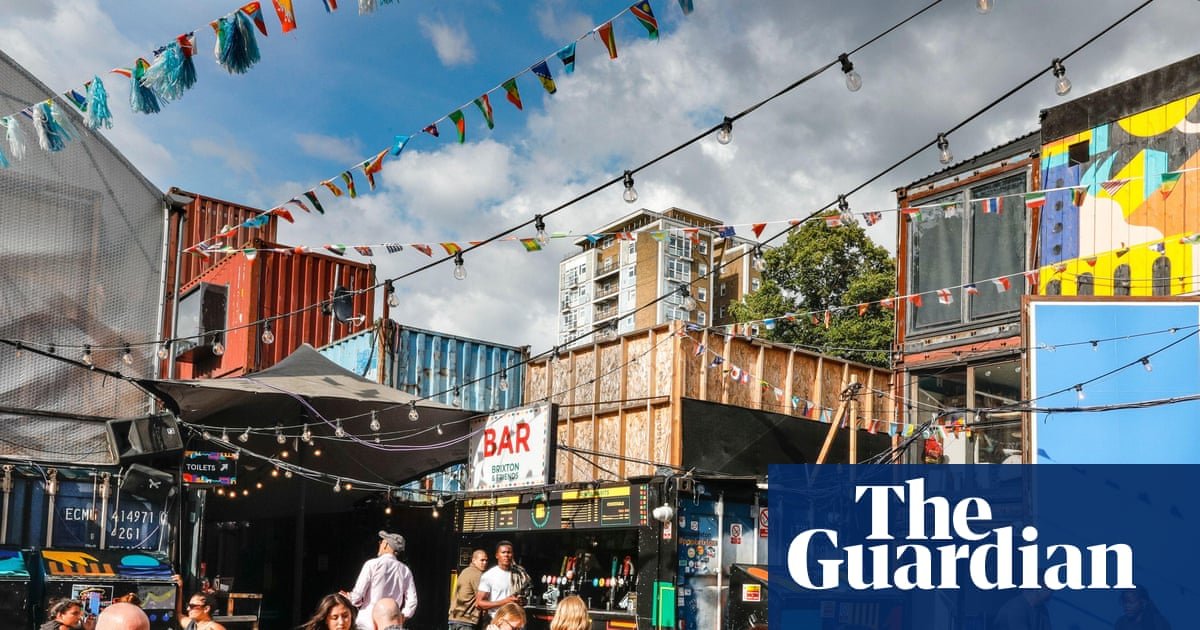
Separate data from Kerb, the street food collective behind some of London’s best-known food markets, points in the same direction. Almost three-quarters of its founders have university degrees, including one in four with postgraduate qualifications. About 95% work in their businesses full-time rather than treating them as weekend side hustles.
The figures show the graduates behind the stalls include solicitors, architects, bankers, nurses and PhD students.
Joe Harrison, the chief executive of the National Market Traders Federation (NMTF), which carried out the research, said: “These aren’t side hustles: these are young, highly educated people looking to build full-time careers in the markets; people who wouldn’t previously have even thought of becoming a market trader.”
Harrison said the change had happened in the past two to three years. “I was pleasantly shocked by the figures: this is a striking development,” he said. “Up until now, young traders have mostly been school leavers and hobby businesses. Professional people who came into market trading were mostly in their 50s, often after redundancy.”
He puts the change down to the changing nature of work. “These are young people who’ve gone through university – often to the highest level – but then looked at the uncertain jobs market and decided to take things into their own hands,” he said. “Market trading offers a wealth of entrepreneurial, AI-proof opportunities.”
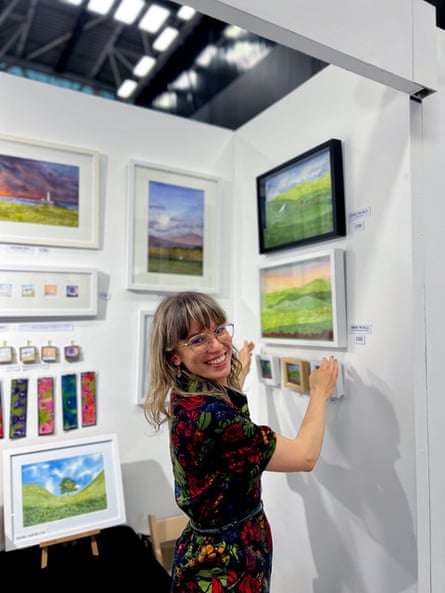
Among the young people is 29-year-old Wiktoria Anna, who completed a master’s degree in law and qualified as a solicitor in 2022 – but left the profession one year later to build a full-time business selling watercolour paintings, prints and workshops through markets.
“I’d achieved the career that I’d chosen at 17 and worked towards for years, but by the time I qualified I realised it was no longer the life I wanted,” she said. “I missed creativity, the freedom to make things and the sense of connection that came from sharing work with people. Markets gave me a practical way to build something from the ground up, on my own terms.”
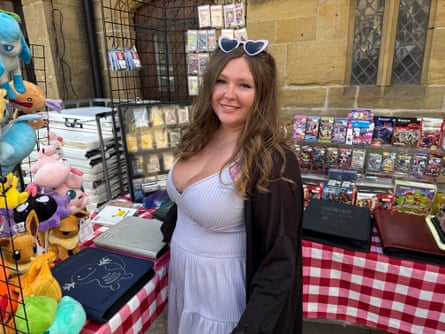
For 28-year-old Anastasia Maseychik, who holds first-class undergraduate and master’s degrees in history from Durham University, postgraduate study proved unexpectedly good preparation for running her own market stall selling gaming cards.
“I realised that the reason the jobs never worked out wasn’t to do with the specific career, but working for someone else,” she said.
“I realised my MA had trained me to be totally self-managing,” she said. “You have to set your own deadlines, teach yourself new skills and solve problems independently. Running a business isn’t so different: I’m my own web designer, marketer, graphic designer and analyst.”
Maseychik said she couldn’t run her business online. “I sell 95% of my cards at markets,” she said. “I have an online shop for the very high-end cards because nobody is going to drop £700 on a single card in the middle of a market. But other than those few sales, I’m IRL [in real life].”
Charlie Ball, one of Britain’s leading experts on graduate employment, described the figures as “a very striking pattern”.
He said: “A master’s is becoming quite an entrepreneurial qualification. Universities, particularly in creative disciplines, are increasingly recognising that many graduates are likely to spend at least part of their careers self-employed, meaning courses now include far more enterprise, freelancing and commercial training than they once did.”
Research by the Federation of Small Businesses found almost two-thirds of 18- to 34-year-olds would like to run their own business, although only a small minority do so.
Other highly educated young people making similar moves include an architect who now runs a street-food business, a former banker, an anaesthetic nurse, and 23-year-old Amara Iqbal, who graduated with her MBA in May and is planning to leave conventional employment to expand her henna business.
Iqbal said: “Market trading is just so much more interesting and challenging than any 9-5 job I could get. Every market day is different and success depends on understanding your audience, the atmosphere, the location and even the weather.
“Markets have taught me valuable lessons about adaptability, customer service and building genuine relationships with people from all walks of life,” she added.
Harrison said one attraction of markets is that entrepreneurs can test products, pricing and branding with relatively little financial risk before expanding. “You meet customers face to face, see what works and solve problems,” he said. “Those are the same principles you’ll need if you later open your own premises.”
The Young Traders Market campaign was launched by the NMTF in 2013 after it found the average UK market trader was 55.
Since then it has created more than 9,000 trading opportunities and helped launch more than 700 businesses. It attracts more than 1,000 registrations from aspiring traders aged 16 to 30 each year.