Kenya challenges British military immunity in abuse cases Kenyan survivors seek accountability for alleged abuses linked to British military training, challenging immunity that has kept cases from court.
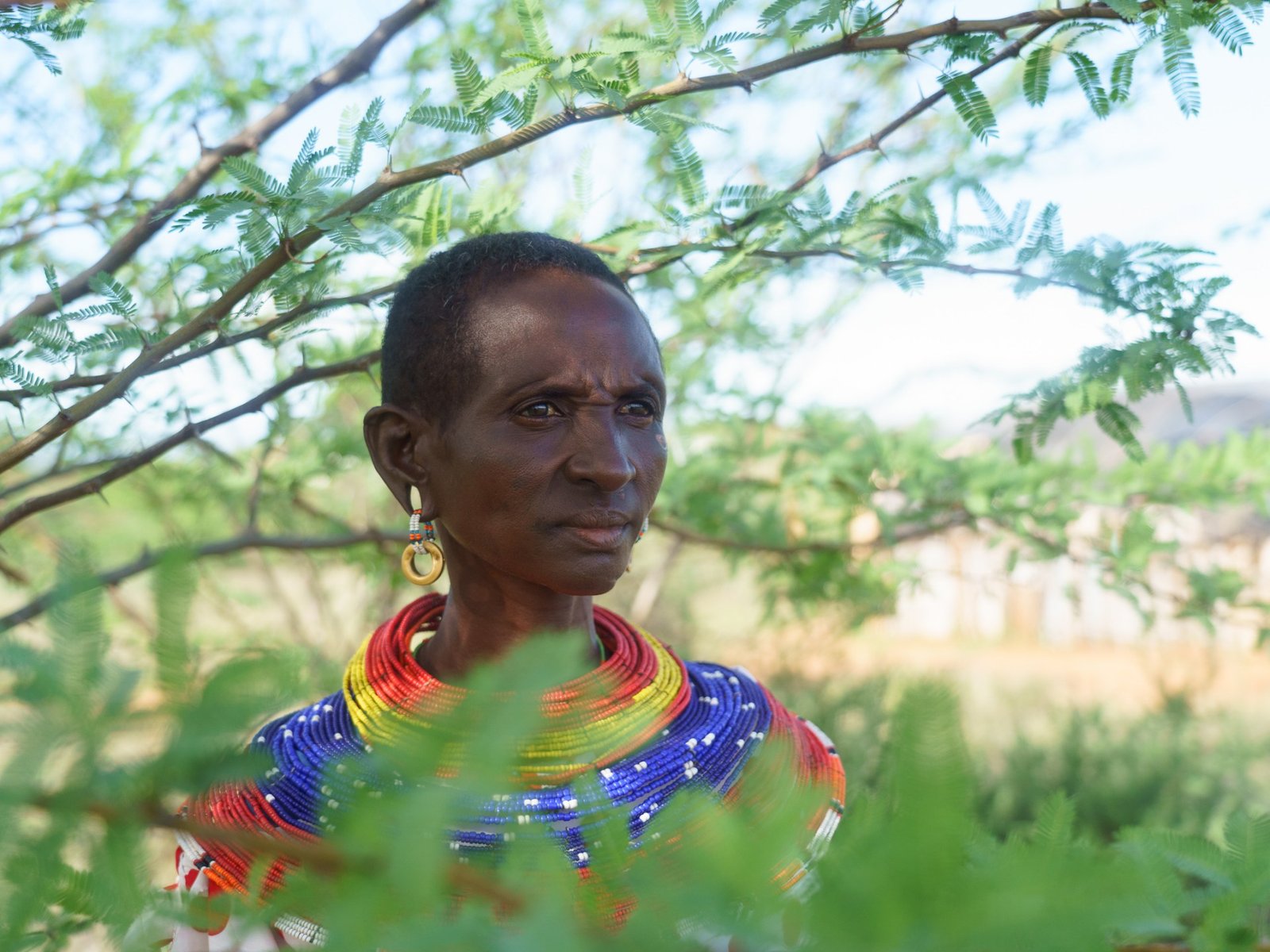
Noldonyo Piro says a soldier broke her arm and sexually assaulted her the same day her sister Mantoi Lekoloi Kaunda was killed — an assault for which no one has ever been charged [Jaclynn Ashly/Al Jazeera] Noldonyo Piro says a soldier broke her arm and sexually assaulted her the same day her sister Mantoi Lekoloi Kaunda was killed — an assault for which no one has ever been charged [Jaclynn Ashly/Al Jazeera] By Jaclynn Ashly Published On 3 Oct 20263 Oct 2026 Save Share When Noldonyo Piro and her older sister were growing up, they were inseparable.
Just a year apart, Piro, then about 15, and Mantoi Lekoloi Kaunda, 16, spent most days grazing the family’s herd of about 250 goats and sheep across the vast plains that stretch for miles around their home in northern Kenya.
“We lived a very simple life,” Piro, now in her 40s, recalls, sitting outside her small home made of tin sheets and sticks, topped with a patchwork roof of plastic bags in Archer’s Post, a rural settlement in Samburu County.
“I remember we used to stand some distance away from each other, and then one of us would start singing, and the other would answer.
We loved to play with each other and tell stories.” As teenagers in the mid-1990s, their biggest fears involved the wildlife roaming the area — lions, cheetahs and elephants.
The sisters had no reason to fear the British soldiers who had long trained on the outskirts of Archer’s Post.
In fact, neither had ever seen a white man before — until, on one afternoon, everything changed.
Piro and Mantoi, who was about six months pregnant, were out herding livestock when Piro saw white soldiers approaching from behind.
“I felt scared and started running,” she tells Al Jazeera, staring at the thickets across the arid landscape.
“One of them chased me and hit me on the back of my head.” “I fell down, and the soldier stood on my arm until it snapped and broke.” She holds up the arm, still visibly indented where the bone broke.
Piro says the soldier then raped her until she passed out.
When she regained consciousness, she was covered in blood.
Nearby, her sister Mantoi lay with her eyes closed, lifeless.
Piro staggered home.
“She was just shouting ‘problem, problem,’ and I could see she was having trouble walking,” her father, the late Kaunda Lekoloi, later told ITV.
“She said the white men had attacked them.” He went out to search for Mantoi.
“I found Mantoi covered in blood.
I could see that she was dead.
There were two sets of soldiers’ boot prints in the dust.” He carried his daughter’s body home on a donkey and buried her the next morning.
“There was no one to tell,” Piro says.
No police post was within reach, and for a Samburu pastoralist in the 1990s, reporting an attack by men in foreign uniforms was unlikely to lead anywhere.
For years the family lived with the horror in silence, only whispered from household to household.
“After that day, I became more scared of white men than I was of lions,” Piro says, her eyes filling with tears.
“Even now, when I think about what happened, it makes me sick to my stomach.” No one has ever been charged over Mantoi’s alleged murder.
Her case is among decades of allegations against soldiers from the British Army Training Unit Kenya, or BATUK, that include rape, murder, abandoned children fathered by soldiers, deaths and severe injuries from unexploded ordnance, environmental destruction and fatal vehicle collisions.
The military arrangement dates back to a 1964 defence agreement, signed months after Kenya’s independence, that allowed United Kingdom forces to keep training on Kenyan soil.
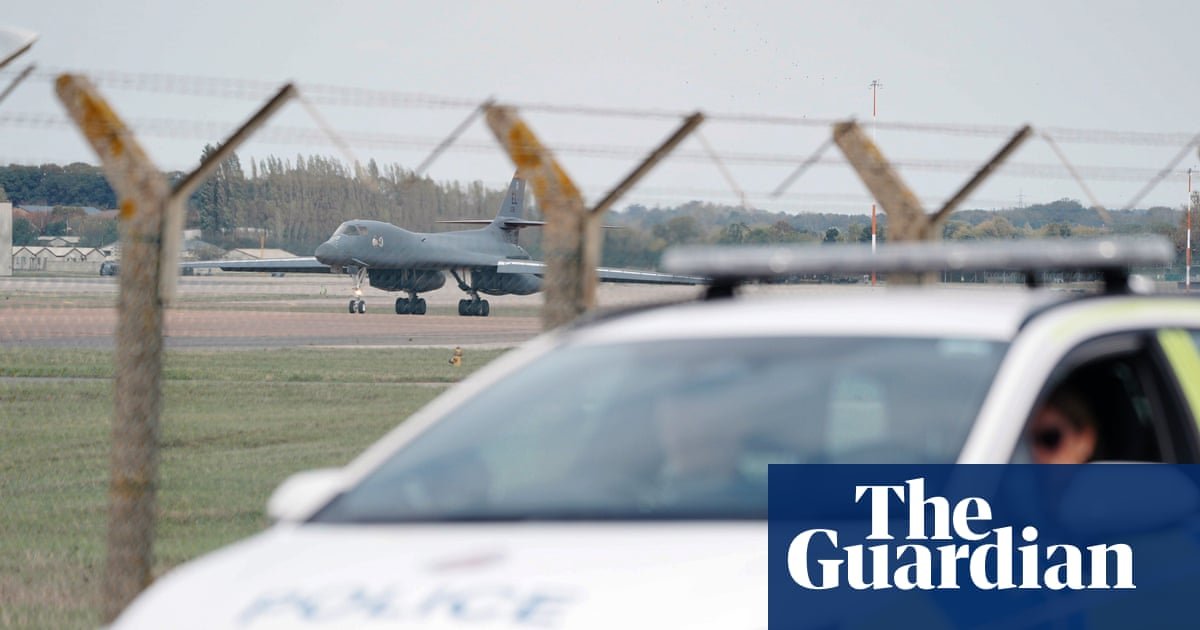
Six decades later, BATUK remains embedded in northern Kenya, training around 10,000 soldiers a year in Laikipia and Samburu.
There has been no known case in which British personnel accused in the cases documented by Kenyan communities and investigators have faced prosecution in Kenya.
The UK has repeatedly invoked sovereign immunity — the principle that one state cannot be sued in another’s courts — a claim that went untested for decades, keeping cases from reaching Kenyan judges.
Now, finally, that power imbalance is being challenged.
Soldiers in the British Army Training Unit Kenya (BATUK) showcase a UK Battle Group training during Exercise Askari Storm in Lolldaiga training area, Laikipia, Kenya, in November 2022 [File: Daniel Irungu/EPA] Soldiers in the British Army Training Unit Kenya (BATUK) showcase a UK Battle Group training during Exercise Askari Storm in Lolldaiga training area, Laikipia, Kenya, in November 2022 [File: Daniel Irungu/EPA] Unearthed, then buried again Mantoi’s case might have stayed buried had hundreds of women from the Maasai and Samburu tribes not come forward in 2003, alleging decades of rape by British soldiers and suing for negligence under UK law, arguing commanders had known of issues since 1977 and failed to act.
The Royal Military Police launched Operation Tasker in March 2003 to investigate the allegations.
By October 2004, it had logged more than 2,000 allegations of rape and sexual violence involving British soldiers over the preceding four decades.
Kenya’s Criminal Investigation Department handled Mantoi’s case, and her father allowed her body to be exhumed — a profound cultural taboo in Samburu tradition.
The pathologist told ITV at the time that the rib fractures indicated that considerable force was sustained to her back, suggesting a blow from a boot.
Experts also recovered hair from her lower body, including an unidentified pubic hair.
Gideon Kibunja, the detective chief superintendent leading the investigation, was direct.
“The findings so far tend to agree with the claim by Mantoi’s sister that they were attacked by a British soldier,” he said, noting that investigators hoped UK authorities would help them obtain DNA samples from soldiers training in the area at the time.
Piro says that when the investigators left, her father quietly buried his daughter a second time, hoping that, after all those years, he might finally get some answers.
He died shortly afterwards without seeing justice served, and the investigation went cold.
Despite the allegations by 2,000 women, the UK Ministry of Defence (MOD) announced in 2006 that the three-year investigation, Operation Tasker, had found no reliable evidence to support a single allegation, and claimed much of the evidence provided by Kenyan police and medical authorities appeared to have been fabricated.
No one was prosecuted.
The investigators also failed to conduct DNA tests on any of the 69 mixed-race children whose mothers say were conceived when they were allegedly raped by British soldiers.
Piro says the family has not heard from the police since the exhumation and has never been shown the autopsy report.
Declassified UK, a British investigative media outlet, filed freedom-of-information requests with the MOD for documents on Mantoi's case, including the pathology report, DNA results and the ministry’s correspondence with Kenyan police and courts surrounding the exhumation.
The MOD confirmed it held some material but refused to release the records, saying they were scattered across electronic files and archive boxes and that searching them would take at least 14 days — far beyond the statutory cost limit of three and a half days of work.
It told the journalists there was no way to narrow the request to bring it within the limit.
Last year, after Piro supplied a letter supporting the request, the MOD eventually released a single, redacted Royal Military Police interim investigation summary.
The report, provided to Al Jazeera by Declassified UK, documents seven unhealed rib fractures consistent with injuries sustained at or shortly before death, and a British military-type battery recovered two feet above the grave’s surface.
The report notes that Kenyan police “appeared to apportion significant relevance to this find”.
But the British officer who wrote it disagreed, reasoning that Mantoi had been buried some 9km (6 miles) from where she was attacked.
“The importance of this find is not shared by the undersigned,” he wrote.
The section titled The Kenya Police Enquiries is blacked out.
The forensic results were still pending when it was written, and nothing further has been released.
Al Jazeera asked the MOD whether the forensic testing was ever completed, and whether British soldiers’ DNA had ever been compared with samples from the grave.
It replied that the investigation and exhumation “were led by the Kenyan authorities”, with the Special Investigation Branch, the RMP’s investigative arm, “fully” supporting both, and directed further questions to the Kenyan police.
Kenya’s Directorate of Criminal Investigations, the Attorney General and the Office of the Director of Public Prosecutions did not respond to questions about the case.
Operation Tasker "is now a closed investigation with no official requests to reopen it”, the MOD said.
Piro, meanwhile, struggles to believe justice will ever be possible.
“Nothing ever happens except people coming here, asking me questions, taking pictures and then leaving,” she says with a tired shrug.
“Those men should have been arrested many years ago.” But a new generation has taken up the question Piro was never allowed to ask: whether the British Army can be made to answer under Kenyan law.
At the centre of this effort is a lawyer whose grandfather was among the last anti-colonial Mau Mau fighters to emerge from the forest after Kenya’s guerrilla war against British rule: Kelvin Mugambi Kubai.
Kelvin Mugambi Kubai, a 29-year-old advocate of the High Court of Kenya, is preparing four cases - including Mantoi Lekoloi Kaunda's - against BATUK [Jaclynn Ashly/Al Jazeera] Kelvin Mugambi Kubai, a 29-year-old advocate of the High Court of Kenya, is preparing four cases - including Mantoi Lekoloi Kaunda's - against BATUK [Jaclynn Ashly/Al Jazeera] When history came full circle Kubai, a 29-year-old advocate of the High Court of Kenya, was a child when investigators descended on Mantoi’s grave in 2004, 73km from his home in Meru County.
His late grandfather, Musa Mwariama, had fought British colonial forces in the forests of Mount Kenya decades earlier.
A Mau Mau field marshal, he led fighters armed with a handful of guns and, more often, arrows and crude weapons against a better-equipped army.
While studying law at the University of Nairobi, Kubai encountered a pivotal 1913 case before the colonial high court in Mombasa: Ol le Njogo v.
Attorney General — the first known case in which indigenous Africans in East Africa took the British Crown to a local colonial court.
A young Maasai man and seven other community leaders had challenged their forced eviction from Laikipia, arguing the agreements surrendering their ancestral land were invalid: Their paramount chief had no authority to give away communal territory.
Rather than contest the claim, the British Crown had the case dismissed on jurisdictional grounds: The agreements were treaties between sovereign powers, beyond the authority of domestic courts.
Versions of that argument outlived the empire and were invoked repeatedly to shield Britain from legal challenges over colonial-era abuses.
“From that day, that case never escaped my mind,” Kubai tells Al Jazeera from his office in Nairobi.
He did not know then that it would one day become his fight.
In 2021, a fire broke out during a UK military training exercise at the Lolldaiga Conservancy in Laikipia, scorching some 12,000 acres of grazing land and crops, killing livestock and blanketing nearby communities in smoke for days.
Kubai and activists from the African Centre for Corrective and Preventive Action opened temporary offices to register victims.
Taking on the UK military was, in Kubai’s words, “uncharted waters”.
Lawyers he consulted believed sovereign immunity made it unwinnable.
“When I brought up the case to my former professor, his answer was a blanket ‘No, you cannot sue the army; they have sovereign immunity,’” Kubai recalls.
Then a Swahili song came to mind: “I will not stand by while injustice reigns.” “That’s something I share with my grandfather,” Kubai explains.
“I can't cower from standing against injustices, and I can’t be silent in the face of evil.” Despite the warnings, Kubai, then 23, filed a class-action lawsuit against BATUK at the Environment and Land Court on behalf of affected residents.
The British army responded much as it had a century earlier.
BATUK was an organ of a sovereign state, its lawyers argued, and the Defence Cooperation Agreement governing its presence in Kenya — renewable every five years — was an accord between nations.
Under sovereign immunity, Kenyan courts had no jurisdiction over a foreign power — the same argument used against the Maasai in 1913.
“It was shocking to me because I was facing the same defendant in essentially the same situation, and they came back with the same defence,” Kubai recalls, shaking his head.
“They were using a hundred-year-old trick on me,” he says.
“But this time around, it didn’t work.” British Army Training Unit Kenya (BATUK) signage stands next to the road in Nanyuki, Laikipia County, Kenya.
In 2025, Kenya's Parliament accused British soldiers of decades of sexual abuse, killings, human rights violations and environmental destruction while training in the country [File: Monicah Mwangi/Reuters] British Army Training Unit Kenya (BATUK) signage stands next to the road in Nanyuki, Laikipia County, Kenya.
In 2025, Kenya's Parliament accused British soldiers of decades of sexual abuse, killings, human rights violations and environmental destruction while training in the country [File: Monicah Mwangi/Reuters] Breaking the shield Kubai's response was the text of the defence agreement itself.
Under Article 6, Kenya has jurisdiction over criminal offences committed by British personnel — unless the offence arose in the course of “official duty,” in which case jurisdiction falls to the UK.
The agreement specifies that sexual offences, torture, slavery and robbery can never be treated as acts undertaken in the course of official duty.
Murder, however, is absent from that list.
Article 11 goes further, giving Kenya jurisdiction over all civil claims arising in its territory and obliging Britain to pay “prompt and adequate compensation” where its forces are found liable.
Article 23 requires the same for any death, injury, loss or damage caused to local communities.
Kubai argues that, despite the agreement’s provisions on civil claims and compensation, BATUK invoked sovereign immunity in the Lolldaiga litigation to challenge the Kenyan court’s jurisdiction.
“In this agreement, they expressly waived their immunity,” Kubai says of those provisions.
“So you cannot waive something when it suits you, and then raise it again when it doesn’t suit you.” In March 2022, the Environment and Land Court agreed.
Justice Antonina Kossy Bor ruled that in signing the agreement, the UK had “waived their immunity to the extent stipulated”, giving Kenya jurisdiction over the Lolldaiga claim.
She was not persuaded, she wrote, that starting “a massive destructive fire” could be considered part of military training or a sovereign act at all.
According to Kubai, it was the first time the British army had raised sovereign immunity in a Kenyan court and lost.
“This ruling broke through the ceiling and penetrated the shield of sovereign immunity that so many lawyers had been unwilling to challenge,” Kubai tells Al Jazeera.
But the victory came with a catch: The same judge ordered claimants to first exhaust a mechanism in the Defence Cooperation Agreement itself, the Intergovernmental Liaison Committee, a body of senior officials from both countries that meets roughly twice a year and, Kubai says, has no permanent office or published complaints procedure.
The MOD says it is a forum and can meet virtually or in either country.
That process dragged on for years, and activists say around 50 elderly claimants died waiting.
Last year, the UK agreed to pay 2.9 million pounds ($4m) to 7,723 claimants, some receiving as little as 22,500 Kenyan shillings — about $175 — and, under the confidential settlement, the UK accepted no liability for the fire.
But the case also established that, in certain circumstances, the British military could be held to account in Kenyan courts.
It wasn’t the only case shattering the perception that British soldiers were untouchable.
Agnes Wanjiru, a 21-year-old mother, was last seen in 2012 at a Nanyuki hotel with British soldiers.
Her body was found two months later in a septic tank, and a 2019 Kenyan inquest — a fact-finding process, not a criminal trial — concluded that she had been unlawfully killed by one or more of the soldiers.
Last year, a Kenyan court charged Robert James Purkiss, the former UK soldier accused of killing her, with murder and issued an arrest warrant.
Purkiss denies the charge.
Weeks later, he was arrested in the UK and is now contesting extradition in a London court.
If extradited, he would, according to ITV News, be the first former or serving British soldier to face trial abroad for murder.
Ben Keith, a London barrister who specialises in extradition and whose colleagues at his chambers are representing Purkiss, tells Al Jazeera that the chances of Purkiss being sent to Kenya are “moderate to good”.
He expects the former soldier will be extradited eventually, but the process could take two to three years.
One obstacle, Keith notes, is prison conditions in Kenya.
UK courts have approved extraditions to Kenya after accepting prison-condition assurances in the past, but those precedents are old and may carry less weight in Purkiss’s case.
“There is now an awakening that is happening which was not there before,” Kubai explains.
“Victims now see that justice is possible, and they are willing to pursue it.” But that shift has been slow to reach the communities where the harm occurred.
Across Samburu and Laikipia, most of those affected by BATUK are poor pastoralists, far from the courts, with no local office to lodge a complaint and few lawyers willing to take their cases.
Memusi Lochede at her home in Archer's Post with her daughter Chaula, who lost her leg after being hit allegedly by a speeding BATUK vehicle in 2019 [Jaclynn Ashly/Al Jazeera] Memusi Lochede at her home in Archer's Post with her daughter Chaula, who lost her leg after being hit allegedly by a speeding BATUK vehicle in 2019 [Jaclynn Ashly/Al Jazeera] “Get away with it” Memusi Lochede sits on a bed as her 24-year-old daughter Chaula lies motionless on the floor of their home in Archer’s Post, in the shadow of the training grounds.
A donated wheelchair sits in the corner.
Her daughter’s right leg is gone; metal rods brace a body so badly injured that she struggles to hold up her head.
“I have so much pain in my heart seeing my daughter in this condition,” 46-year-old Lochede tells Al Jazeera, wiping the drool from her daughter’s chin.
“I feel ashamed that she needs so much help, and I don’t know how to help her.” In 2019, Chaula, then a teenager, says she was hit by a speeding BATUK vehicle while crossing the road.
Her leg was amputated and, her mother says, she was left paralysed and spent nearly three years in hospital.
A BATUK representative later came to see Lochede, she says.
“He apologised for what happened and said they don’t want a court case and would take care of my daughter — anything she needs,” she recounts.
The MOD said it “has not located a record of an approach having been made by a BATUK representative to the family.” When her daughter was discharged, BATUK paid the hospital bills — without receipts or disclosing the amount — and disappeared, Lochede says.
For years, Lochede called its community liaison officer, the Kenyan official tasked with receiving complaints like hers, who never answered.
Eventually she gave up.
The MOD told Al Jazeera in August that BATUK is aware of the claim that one of its drivers “hit and injured a minor” in 2019, “resulting in permanent injuries”.
It said legal representatives have been in contact with the Kenya National Commission on Human Rights about the case and that a compensation offer has been made but the commission has not responded.
In late September, Al Jazeera asked the MOD what had been offered, when, and through whom.
It did not provide those details, saying instead that BATUK “remains willing to engage with the child’s family, through an appropriate representative and on a without-prejudice basis,” but that “to date, we have been unable to establish contact with the family or an authorised representative”.
Any resolution would have to rest on “verified medical and factual information” and, because the claim concerns a minor, be approved by a Kenyan court.
Ruth Getobai Nchagwa, a deputy director at the commission, says it has “never engaged with BATUK directly as our letters to them went unanswered”.
Chaula’s case “has not been addressed to date,” she notes, and the commission is not aware of any discussions about compensation.
Lochede similarly says no one has ever approached her about compensation.
Before the accident, Lochede supported her five children by making beaded necklaces and selling them in Nairobi.
Now she cannot leave her daughter’s side, and Chaula’s care costs about 30,000 Kenyan shillings ($230) a month — more than Lochede usually earns.
“It’s a shameful feeling to pick up the phone and call so many numbers for help, and no one picks up your call,” she explains, her lips quivering as she fights tears.
“In those moments where I can’t provide for my daughter, I just lock myself inside the room and lie in my bed and cry.” Her daughter, once healthy and active, now barely speaks.
“There are some days she wakes up and says just one word, like ‘food’ or ‘bathroom,’” Lochede says.
“Those are the good days.
Other days, she refuses to eat.
I can see that she’s depressed and lonely.
Inside, her soul is shattered.” “These soldiers do these things because they know they can get away with it,” she adds sharply.
“They know we don’t have money.
We don’t have power.
It’s extremely difficult for us to fight them.” Cases like Chaula’s are far from isolated.
Last year, a landmark two-year inquiry by Kenya’s parliamentary defence committee put decades of alleged BATUK abuses on the official record.
The 94-page report gathered testimony from hearings across Laikipia and Samburu, including a herder allegedly shot by a British sergeant; the alleged gang rape of 30 women at knifepoint in 1997; a boy who lost both arms and an eye to unexploded ordnance; and women with children their British fathers had never acknowledged.
BATUK declined to appear, citing its status and immunities under the defence arrangements.
The committee condemned the refusal as contemptuous, calling it “emblematic of institutional contempt for the authority of Parliament and, by extension, the sovereignty of the people of Kenya”.
It concluded that BATUK “is increasingly seen as an occupying presence rather than a development partner”, with affected residents drawing parallels to colonial injustices.
Witnesses told the committee that “suspected BATUK abuses are not only unpunished but actively covered up” — that whenever a BATUK member is implicated, police files often “go missing” and complainants are “intimidated into silence.” An MOD spokesperson told Al Jazeera the UK “deeply” values its relationship with Kenya, “which has long been the UK’s defence partner of choice in East Africa”.
The MOD is “addressing concerns raised by Kenyan authorities and communities, focusing on legal accountability, ethical standards, environmental stewardship, economic benefit and social responsibility,” the spokesperson said.
Regarding road traffic incidents, the spokesperson said BATUK “cooperates fully with the local authorities and Kenyan Police”, that all such incidents are “investigated thoroughly” and that “where claims are made, BATUK submits to the jurisdiction of the Kenyan courts”.
When asked what progress the MOD had made on the concerns raised by the committee, and whether it was investigating any of the specific cases, it referred Al Jazeera to the written statement it submitted to the inquiry, which said it was “not aware of any evidence to support any allegation of collusion with security forces to suppress or dismiss complaints, or intimidate, bribe or coerce victims into silence”, and that any such evidence “would be taken extremely seriously and investigated accordingly”.
For Awino Okech, professor of feminist and security studies at SOAS University of London, the parliamentary report points beyond individual abuses.
“This is no longer a case of a few bad apples but reckoning with what many will interpret as accepted militarised institutional culture,” she tells Al Jazeera.
“The fundamental question the British government is being asked to reflect on is their responsibility when there is a documented pattern of malbehaviour by their employees in a foreign country.” Okech says the pattern cannot be separated from race.
“We cannot ignore the racialised element.
In this case, it is visible when crimes committed in Kenya are taken less seriously.” Irene Kipsage, who suffered hearing damage and lost her home in a 2007 blast that killed her nephew Robert Swara Seurei, says BATUK never apologised [Jaclynn Ashly/Al Jazeera] Irene Kipsage, who suffered hearing damage and lost her home in a 2007 blast that killed her nephew Robert Swara Seurei, says BATUK never apologised [Jaclynn Ashly/Al Jazeera] Among the cases recorded by the committee was that of Robert Swara Seurei, a 28-year-old BATUK worker who lived with his aunt, Irene Kipsage.
He was killed in 2007, three weeks into his first job with BATUK.
He came home from the training grounds with a heavy metal object he mistook for a candle.
When he tried to light it, the device exploded, killing him, destroying the family home, and injuring his grandmother and Kipsage.
According to the parliamentary report, BATUK’s own investigation found warnings not to remove objects from the training grounds had been issued in English, which Seurei did not understand.
Kipsage says compensation for Seurei’s death was paid to his father, his legal guardian.
Kipsage, who suffered hearing damage and lost her home, and his grandmother, who became permanently deaf, received nothing.
“BATUK never even apologised,” Kipsage tells Al Jazeera from her rebuilt home in Laikipia, where the blast occurred nearly two decades ago.
“They treat us like we’re not human — like we don’t exist.” The MOD confirmed that liability for the incident was admitted in March 2008.
The claim was brought by his family and “was settled by agreement in November 2010”, it said, constituting “a full and final settlement”.
The MOD noted that it does not discuss the details of individual compensation claims.
Based on its available records, it said, no further claim from the family has been identified since the 2010 settlement.
Irene Kipsage's home in Laikipia, which was destroyed in 2007 when an unexploded ordnance detonated.
Her nephew, Robert Swara Seurei, mistook the explosive for a candle, killing him three weeks into his first job with BATUK and injuring Kipsage and his grandmother [Jaclynn Ashly/Al Jazeera] Charles Ngare was 17 in 2010 when British soldiers asked him and his friends to help free a vehicle stuck in a culvert.
As the boys rocked it loose, it lurched back into the lorry towing it, crushing his leg between the two.
The soldiers drove him to hospital but, Ngare says, told staff they had found him injured by the roadside.
The parliamentary report also notes that “BATUK personnel were [...] accused of providing false accounts to mislead investigators” in Ngare’s case.
Sixteen years on, his leg still causes pain, preventing him from doing the manual labour that is the main work available where he lives.
In 2018, his compensation claim was dismissed as time-barred, according to correspondence he has kept from the case.
Kubai says this is a tactic BATUK uses to let complaints languish unanswered until they are too old to pursue.
“My case may not be as severe as others, but I still deserve justice,” Ngare says, with letters to BATUK scattered across a table in his family’s home.
“These British soldiers feel they can harm anyone and nobody will question them.” The MOD said Ngare’s claim was filed in 2018, “after the applicable limitation period had expired”, and dismissed by the Kenyan courts as time-barred.
“The MOD respects and complies with decisions of the Kenyan courts,” it said.
On the allegation that BATUK personnel gave false accounts, it said the materials currently available “do not substantiate” it, and that no witness statements, investigative findings or disciplinary determinations were identified establishing that its personnel deliberately gave false evidence.
Charles Ngare sits with letters he sent to BATUK scattered across a table in his family's home, seeking compensation for a leg injury he suffered in 2010 while helping British soldiers free a stuck vehicle [File: Jaclynn Ashly/Al Jazeera] Charles Ngare sits with letters he sent to BATUK scattered across a table in his family's home, seeking compensation for a leg injury he suffered in 2010 while helping British soldiers free a stuck vehicle [File: Jaclynn Ashly/Al Jazeera] The war remains For Kubai, these cases follow a familiar pattern.
“BATUK has been harming a class of persons with no resources to defend themselves,” he says.
“So they get away with it.
Not because what they did was right, but because they harmed someone who has no capacity to litigate the injustices against them.” Kubai works with UK lawyers and geneticists to identify British soldiers who fathered and abandoned children in Kenya, using DNA databases to trace them and press them to take responsibility.
He is currently preparing four cases against BATUK, including those of Mantoi, Ngare and Chaula.
Much of the work is funded by his law firm or, at times, his own pocket.
Kenyan organisations that could support it are reluctant, he says, because many depend on British aid.
But there are too many victims for one lawyer.
“It feels very disappointing when I have to turn people away,” Kubai explains.
“I am just one person doing work that our government and the British government should be doing.” “The cases themselves are very, very draining,” he adds.
“My time, my effort — so much of it goes uncompensated.
But you have to be okay with it, because there is a bigger goal.” The dispute over BATUK has now impacted the legal agreement governing the UK military presence in Kenya.
The 2015 Defence Cooperation Agreement expired in 2021.
A replacement was signed that July.
Kenya’s Parliament gave the replacement conditional approval in 2023, requiring that murder be added to the offences over which Kenyan courts hold primary jurisdiction.
The UK did not accept the condition, and Kenya has not completed ratification.
The agreement, the parliamentary committee noted last year, is “in limbo” — leaving the legal framework governing the British military’s continuing presence in Kenya contested and unresolved.
Keith, the London barrister, calls Kenya’s demand to add murder to the list of crimes that automatically fall under Kenyan jurisdiction “unusual” and doubts that Britain would ever accept such a provision.
In an exceptionally serious case, such as the alleged murder of a civilian, he says The UK could be expected to permit a local prosecution.
But automatically assigning murder to Kenyan jurisdiction in every case would go further, he argues, substantially limiting the jurisdictional protections normally available to British troops stationed abroad.
Keith suspects the dispute is tied directly to the “historical issues” between Kenya and BATUK.
The failure to ratify the Defence Cooperation Agreement, Keith adds, means the new agreement was never implemented into domestic law.
In its written statement to the inquiry, the MOD said the defence relationship “is governed by the 2015 DCA”, which is overseen by the joint UK-Kenyan liaison committee, and that Britain “continues to engage with the Kenyan government on the two reservations outlined by the Kenyan Parliament” — which include corporate social responsibility obligations for visiting forces and the inclusion of murder under Kenyan jurisdiction.
Asked by Al Jazeera whether Britain would accept the demand on murder, the MOD said the two governments “are discussing routes to bring the 2021 Defence Cooperation Agreement into force” but that it does not comment on potential amendments proposed during those discussions.
Defence cooperation with Kenya, it said, “continues to be governed by the 2015 Defence Cooperation Agreement, which was extended by mutual consent pending entry into force of the 2021 agreement”.
Last year, Kenya's Parliament urged immediate ratification, and the two governments have continued to negotiate.
But the dispute over jurisdiction remains unresolved.
Kubai wants the agreement to go further.
He points to Cyprus, where the British military runs a permanent claims office allowing residents to walk in and file complaints.
The MOD operates similar offices in Germany and elsewhere, but not in Kenya.
“When you come to Kenya, there is no such channel for accountability,” he explains.
“Kenyan civilians and their claims have been suppressed for far too long.
That cannot continue.” There is also a stark disparity in the compensation that is paid.
In 2018-19, the MOD’s most expensive single payout for farm animal deaths in Cyprus was 5,031 pounds ($6,800) — to a farmer whose pregnant goats miscarried after being panicked by low-flying British aircraft.
The payment covered the loss of unborn animals and veterinary fees.
The Lolldaiga settlement — for a fire that burned for two weeks, scorched 12,000 acres, killed one man and left thousands breathing smoke — averaged under 400 pounds ($530) per claimant.
Kubai’s recommendations for BATUK's operations in Kenya are specific.
He wants a permanently staffed claims office in Nanyuki, funded through the DCA and modelled after those in Cyprus and Germany, where a family like that of Agnes Wanjiru’s could have reported her missing.
He also recommends using the same fund to reimburse pro bono lawyers for the costs of representing victims who cannot afford legal services.
Pressure on BATUK has also moved into the streets.
On August 12 , survivors, bereaved families and residents from BATUK-affected communities marched to the Parliament in Nairobi, petitioning lawmakers not to ratify the defence agreement until the documented abuses are addressed.
The odds, however, remain lopsided: a well-funded army with some of the country’s best lawyers on one side, and victims who often cannot afford the bus fare to court on the other.
But Kubai is not deterred and says the odds were even worse for his grandfather.
“At one point, he and the other [Mau Mau] were fighting the colonial government with vastly inferior means against an army that was well equipped and well coordinated,” Kubai says.
“The odds were always very much against him.
And that has always been the case with me.” “There hasn’t been one single war that ends all injustices in this world,” he continues.
“Then, my grandfather was fighting in the terrain of Mount Kenya.
Now, I’m fighting in the corridors of justice.” “It’s just that the battlefields change,” he says.