From a choreographed summit that dominated Westminster but barely registered in Brussels to a climate showdown in Turkey, last week revealed the EU’s priorities – and the limits of its collective power
Don’t get This Is Europe delivered to your inbox? Sign up here
Two very different European diplomatic dramas played out almost simultaneously last week. On Friday, a tightly choreographed EU-UK summit transfixed London, while barely registering on the continent. On Sunday, Cop31 collapsed after a united EU forcefully vetoed a watered-down climate pact, even as it relaxed its own green rules at home. What do these two events reveal about the EU: how it works, what takes up its bandwidth, how it exercises its clout – and where it’s vulnerable?
Part 1: The 95% British summit
If you were a consumer of most British media last Friday morning, you could have been forgiven for thinking Britain was going to rejoin the EU before lunchtime.
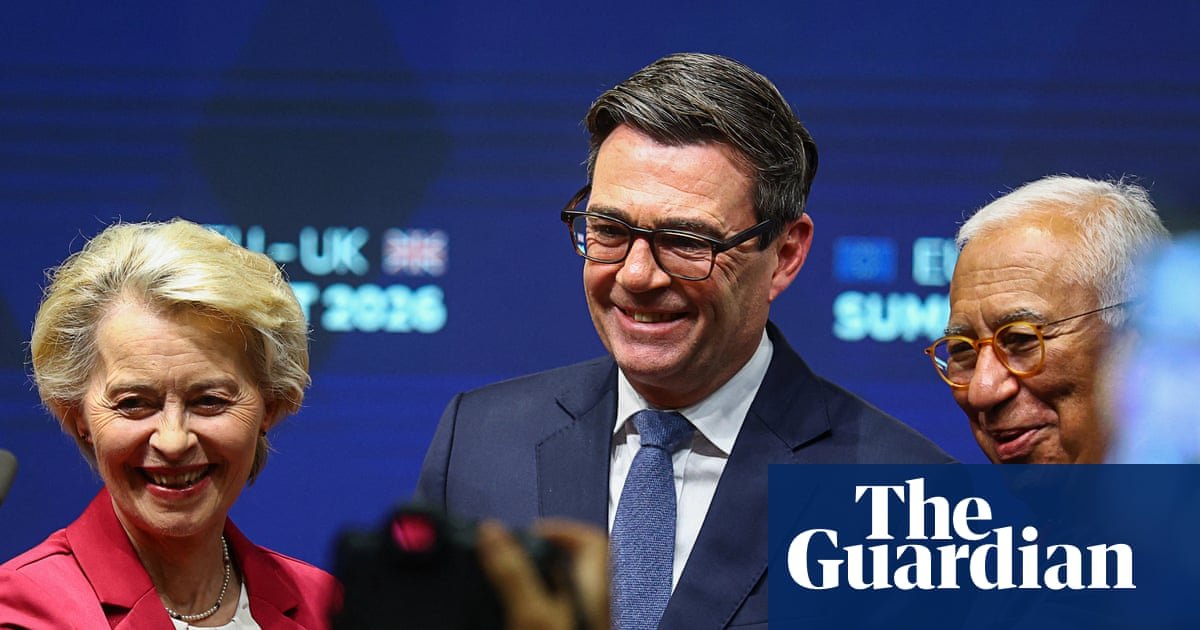
Live blogs tracked Andy Burnham’s every step in the Europa building, as he arrived for a summit that Downing Street billed as a landmark “reset” but that was actually aimed at sealing a package of relatively narrow post-Brexit fixes. A Cabinet Office “mythbuster” assured voters the forthcoming deal wouldn’t ban smoky-flavoured crisps. Westminster was plunged into passionate debate over whether a technical three-part trade package was a Brexit betrayal by instalments, or a national reckoning.
Across the Channel, the UK’s domestic psychodrama was, well, no big deal. For Le Monde, the only question that mattered about the EU-UK summit – and the one that remains unanswered – was “what does Britain actually want?” For Germany’s FAZ, a “swift UK return” to the EU was in any case “an illusion”.
It was a fair reflection of where things stand. For Britain, the EU remains its single largest trading partner, and the deals to ease border checks on food, link carbon markets and launch a capped youth experience scheme marked domestic progress – politically and, hopefully, economically.
By Monday, indeed, Burnham was touring a supermarket, touting a victory in the battle against the cost of living. For the EU, however, the UK remains a third country like many others. It has bigger fish to fry than the paperwork mountains involved in the UK exporting cheddar (or importing chorizo).
That doesn’t mean the EU is indifferent to London, just that its priorities lie elsewhere. Westminster obsesses over food checks; Brussels is more interested in the hard-power domains where the UK is a valuable, even indispensable partner.
Both sides have moved to integrate the UK into EU military mobility networks and deepen support for Kyiv. They are looking into closer electricity market integration, and operational intelligence sharing on issues such as smuggling gangs.
Beyond those strategic interests, the EU largely saw Friday’s summit as theatre for Britons: a not-too-demanding EU contribution to the delicate Downing Street balancing act that aims to boost struggling businesses and placate pro-EU voters, without handing too much ammunition to the Conservatives or Nigel Farage.
The European Commission and Council presidents played their parts with aplomb. But the harsh underlying reality was that while London was quick to hail a “done deal”, EU member states let it gently be known that actually, no, a dispute over university tuition fees would have to be resolved first.
And beneath it all lay a barely concealed European frustration: Britain keeps submitting shopping lists of bespoke, sector-by-sector fixes, without ever deciding what long-term relationship it really wants. Thinktanks in Paris (Ifri) and London (Institute for Government) made the point: the UK is trapped in what might be called an “incrementalism loop”.
Europe values the UK as a nuclear-armed neighbour, a North Sea energy partner and a security ally. Beyond that, it is not the main character in Europe’s story. So while London decides whether it wants long-term third-country status, Swiss-style dynamic alignment, or a return to the single market, customs union – or even the EU – Brussels won’t lose much sleep waiting for the answer.
Part 2: Heroes or hypocrites?
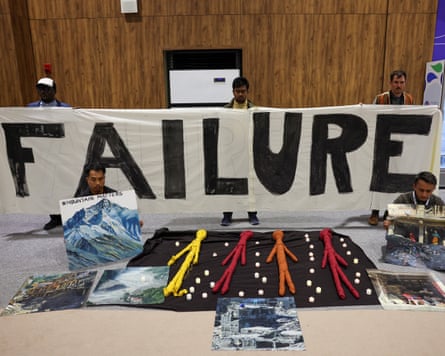
If the UK summit showed the EU more or less on autopilot, the concluding hours of Cop31 in Antalya, Turkey, showed it exercising some raw institutional muscle – and, simultaneously, exposing its sharpest internal contradictions.
When Cop31 ended almost 48 hours over deadline – making it the longest UN climate summit in history – the headlines were all about what wasn’t there: no overarching pact, because no mention of fossil fuels.
At the centre of the collapse stood the 27 EU member states. Facing intense pressure to sign a watered-down “Antalya pact”, Brussels held firm alongside the UK and vulnerable island nations, formally objecting and pulling the plug on the centrepiece agreement.
The bloc stayed together thanks to three mechanisms. First, EU climate negotiators had – unlike on foreign policy – a binding mandate agreed by environment ministers in October, locking in red lines to defend the bloc’s 2023 pledge to transition away from fossil fuels.
Second, the EU’s climate commissioner, Wopke Hoekstra, and Ireland’s Darragh O’Brien, representing the bloc’s rotating council presidency, worked in tandem, leaving little room for wedges between the Brussels bureaucrats and national capitals.
Finally, member states shared the same economic self-interest. Having already priced carbon at home and rolled out a Carbon Border Adjustment Mechanism, even conservative EU governments had no wish to let international competitors off the hook.
Look closer, though, and it all gets a bit more conflicted. EU finance ministers had strictly boxed in new funding, leaving the bloc demanding maximum ambition on emissions while offering minimum movement on money. To developing nations, European unity looked less like principled leadership and more like a coordinated refusal to pay its share.
Even more striking was the timing back home. As Brussels was lecturing the world on fossil fuel ambition in Turkey, EU lawmakers were finalising a two-year delay to the bloc’s own flagship methane rules for oil and gas importers – giving in to fierce lobbying from fossil fuel companies and the Trump administration.
For Brussels, speaking with one voice in Antalya proved it absolutely can draw global red lines. But it might have a harder time ensuring the green standards it defends with such principle abroad are not quietly dismantled at home.
To receive the complete version of This Is Europe in your inbox every Wednesday, please subscribe here.