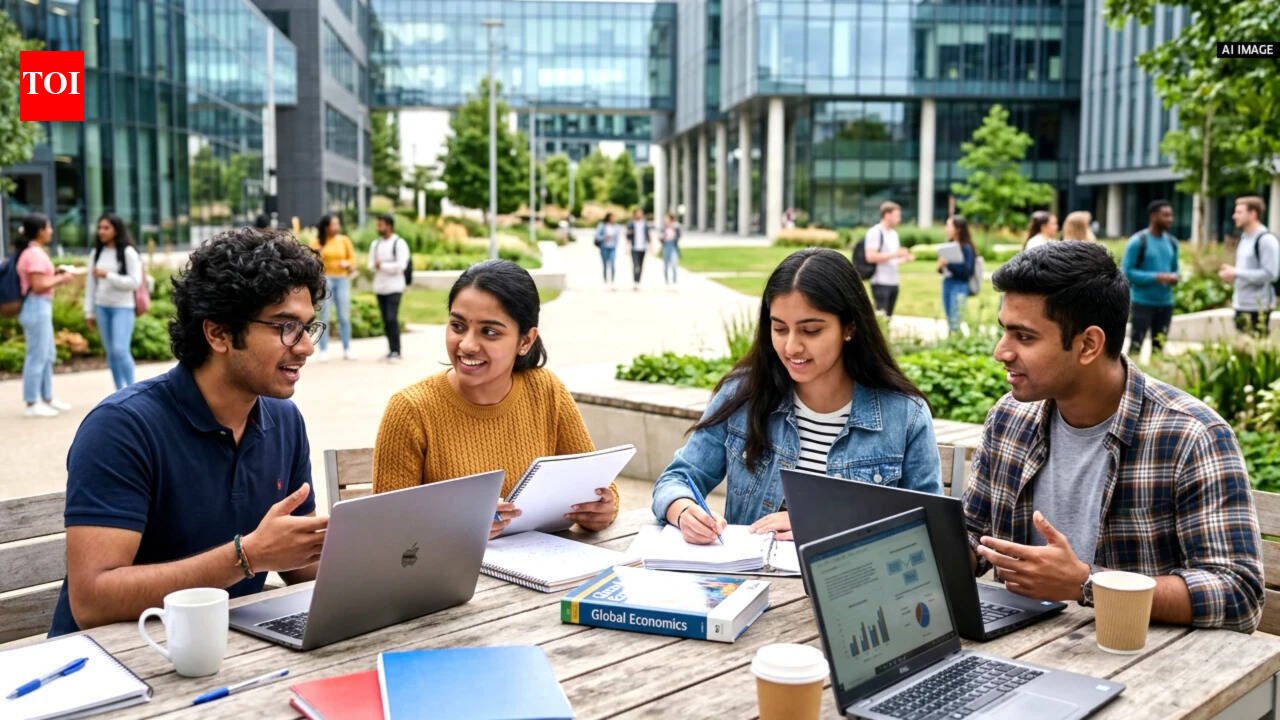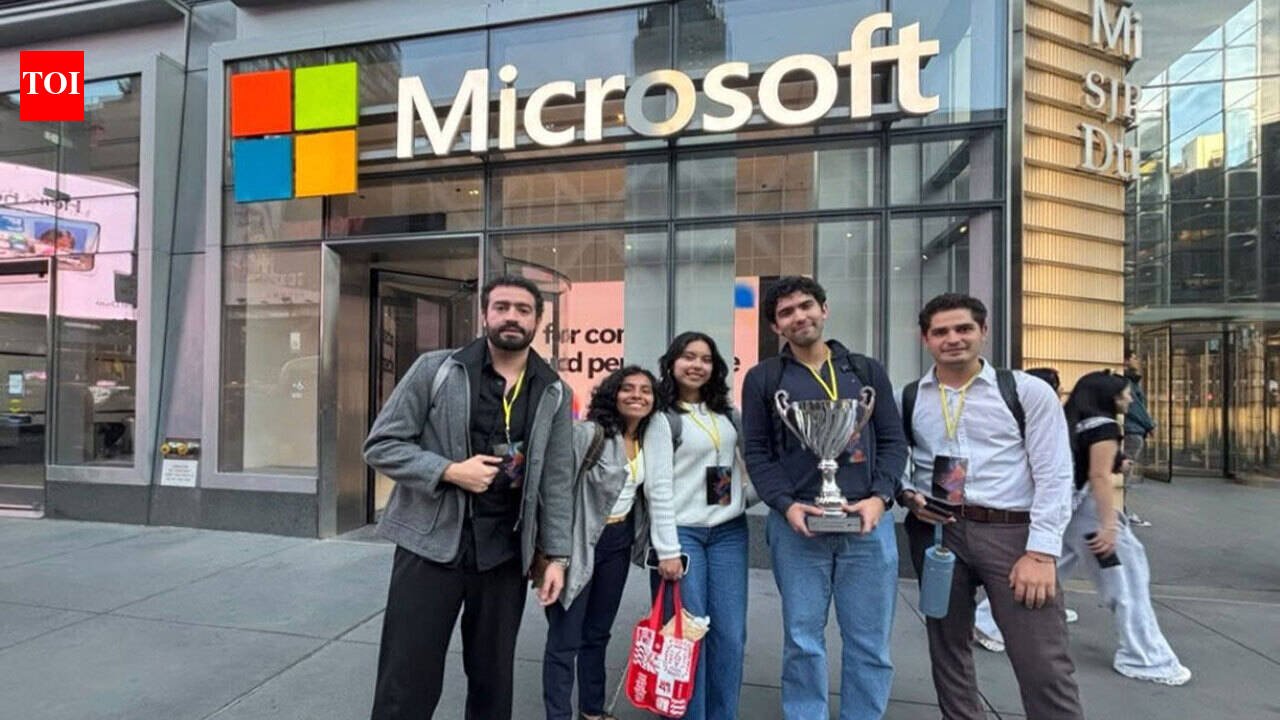
5 RIT students win Microsoft's 2026 hackathon with AI tool that checks whether purchases match customer preferences. (Photo: RIT) An AI agent tasked with booking a flight may not always make the choice a customer would have made.
Someone who routinely books nonstop flights, for instance, could end up with an itinerary involving multiple layovers.It was this gap between what consumers want and what AI agents might select that five students from Rochester Institute of Technology (RIT) set out to address.
Their solution, Align Buddy, won first place at Microsoft's LEAD Aspire 2026 hackathon, held at the company's Times Square office in New York City.According to RIT, more than 1,000 applications were received for the competition, with 17 teams selected as finalists.
The event brought students together with professionals from Microsoft, Mastercard, EY and GitHub to work on real business challenges.The winning team, which called itself Los Tigres de RIT, comprised Denise Reyes Lujan, a fifth-year computer science student from New Rochelle, New York; Gesem Mejia, an electrical and computer engineering PhD student from Mexico; Carla Lopez, a fifth-year software engineering student from Peru; Cristian Morataya, a fifth-year computer engineering student from Chicago; and Emilio Garcia Rabell, a fifth-year computer engineering student from Mexico.
The finalists were asked to take on the role of a Microsoft Cloud and AI Specialist for a day.
Their task was to understand a client's requirements, develop a strategy, build a solution using Microsoft's AI technologies and present its business value within eight hours."The goal was to understand client needs, develop a strategy, create a solution using Microsoft's AI technologies, and pitch its value all within an eight-hour-day," Reyes Lujan told RIT.How the students developed Align Buddy At the competition, the team worked with Mastercard representatives on a challenge involving consumer trust in agentic e-commerce.
The emerging technology allows AI agents to carry out shopping-related tasks and make purchasing decisions on behalf of consumers.While such systems can make online shopping more convenient, ensuring that an AI agent understands and follows an individual's preferences remains a challenge.The students examined Mastercard's existing initiatives, including Agent Pay and Verifiable Intent, before deciding to develop a solution that could complement the company's existing technology.They came up with Align Buddy, an AI-powered tool that builds a broader picture of a customer's preferences using previous transactions and stated choices.
It then assesses proposed purchases to determine whether they are consistent with those preferences before payment is made.For example, if a customer regularly books nonstop flights, Align Buddy could flag a proposed itinerary with multiple layovers before the transaction is completed.The objective is to identify discrepancies between a customer's preferences and an AI agent's purchasing decisions, helping prevent unwanted transactions and potentially reducing returns.Reyes Lujan told RIT that the team was initially unsure whether its idea was innovative enough.
The students subsequently approached a product manager for feedback.The advice they received was to focus on a solution that could be implemented easily or integrated into the company's existing systems."She mentioned that the best ideas for their company are things that they can easily implement, or fit in with, what they currently have," Reyes Lujan recalled.
She believes this approach helped the team distinguish its proposal from the other entries.The team almost missed the application deadline The students' participation in the competition nearly did not happen.
According to RIT, the group initially missed the application deadline.
Rather than abandon the opportunity, Reyes Lujan contacted an organiser directly through LinkedIn.The organiser appreciated the team's initiative, and the students were subsequently selected as finalists.Their travel to New York was supported by RIT's Golisano College of Computing and Information Sciences, Kate Gleason College of Engineering and Student Government.The students also credited the university's cooperative education programme, internships and capstone projects with preparing them for the challenge.
These opportunities gave them experience working with clients, understanding business requirements and developing solutions with practical applications.Industry connections beyond the winning trophy The team received a trophy and headphones for securing first place.
However, the opportunity to interact with professionals from Microsoft, Mastercard, EY and GitHub was another important part of the experience.Mejia recalled that industry representatives exchanged LinkedIn details with the students after the announcement and expressed interest in their technical skills.As reported by RIT, professionals told the team that companies were looking for people who could interpret data, build models and solve similar business challenges.Join conversation Share your thoughts in the comments Be respectful · TOI community guidelines "When we received the trophy, everyone gave us their LinkedIn information and said, 'If you ever wanted to work at our company, you guys are exactly what we want,'" Mejia told RIT.Several members of Los Tigres de RIT had also connected through the university's chapter of the Society of Hispanic Professional Engineers, where they have been involved in student activities.The first-place finish brought recognition to the five students' work, while their experience at the competition gave them an opportunity to demonstrate how their academic and project experience could be applied to an actual business challenge.