Recent data from HMRC showed revenue from CGT was up 89% in 2024-25 after changes in tax policy.
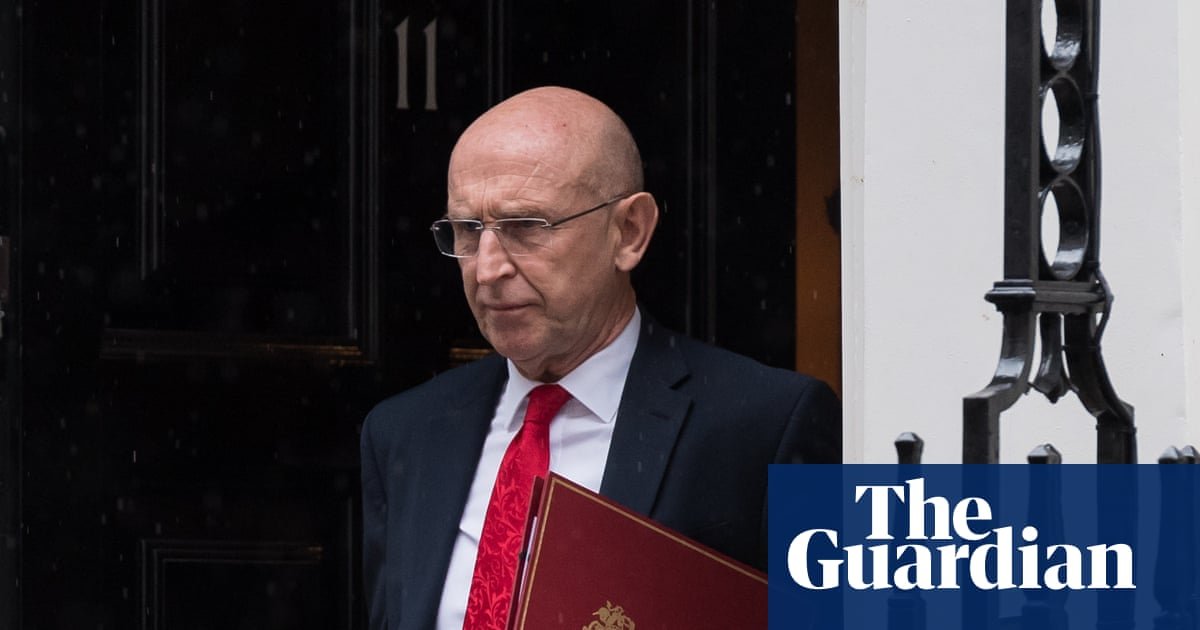
Explainer Capital gains tax: how it works, benefits and pitfalls of another hike Increasing the rate of CGT is one of the tax levers available to chancellor as he considers revenue-raising options Capital gains tax (CGT) has been widely cited as a possible revenue-raiser as the chancellor, John Healey, prepares to deliver a tough budget next month.
How does it work, and what are the pros and cons of raising it further?
What is CGT?
When you sell an asset – whether it’s a share, a business, or a buy-to-let property – you pay capital gains on the uplift in its value since you bought it.
It’s not quite that simple: you can reduce your CGT bill by deducting losses made on other investments, and the costs of investing in improving a property.
But essentially, it’s a tax on the profits realised when an asset is sold.
The rate of CGT is now 18% for basic-rate taxpayers and 24% for higher-rate taxpayers.
There’s an even higher rate, of 32%, for City fund managers who take their earnings as a share of profits in a controversial system called “carried interest”.
All those rates have gone up significantly since Labour came to power in 2024, as Rachel Reeves, the previous chancellor, chose to tax wealth more heavily – the basic rate was previously 10%, for example.
Recent data from HMRC showed the take from CGT was up 89% in 2024-25 as a result of these and other changes, which have also included cuts to the tax-free personal allowance for CGT, begun under the last Conservative government.
Who is calling for CGT to rise?
Thinktanks and politicians across the left have argued that it is unfair to tax the gains from holding an asset at a lower rate than a salary that has been earned by working. (The basic rate of income tax is 20%, for example.) Another argument – advanced by the Institute for Fiscal Studies (IFS) – is that it distorts behaviour: incentivising people to hold on to assets inside a business, for example.
Back in May, when Wes Streeting had his eye on the Labour leadership, he called CGT “the wealth tax that works” – in contrast with the prospect of setting up an entirely new tax.
Given Streeting’s position towards the right of the Labour party, his backing for higher rates of the key tax underlined how widespread the view is within the party.
The first secretary, Louise Haigh, argued in an article in the journal Renewal, before she took on her powerful role in Andy Burnham’s cabinet, that CGT rates should be “brought closer to income tax rates”.
She said such a change was necessary to “shift the taxation burden away from punishing work, and towards unproductive capital accumulation which does little to grow the everyday economy”.
Other advocates of equalising CGT and income tax rates include the Institute for Public Policy Research (IPPR), the Centre for the Analysis of Taxation at Warwick University (CenTax), the Resolution Foundation, and the TUC.
What are the downsides?
Business lobby groups argue that higher rates of CGT would disincentivise just the kind of productive investment the UK needs to generate stronger economic growth.
As Lena Levy, the deputy director of policy at the British Chamber of Commerce, puts it: “Speculation over changes to capital gains tax in next month’s budget is only adding to the huge uncertainty for people looking to invest, grow or sell a business.
The UK’s capital gains taxes are already above the OECD average of 20%.” The prospect of another rise – along with a slew of other tax reforms since 2024 – is also cited as one reason that high net worth individuals might choose to leave the UK.
And there would be fears, too, that some wealthy individuals would be able to dodge the new higher rates through other forms of tax avoidance, undermining it as a revenue-raising strategy.
Are the pitfalls avoidable?
Fans of equalisation say yes: Prof Arun Advani, of CenTax, says there’s no point just raising CGT rates without reforming the “base” – the rules that determined what it is charged on.
He suggests a package of reforms, to be implemented alongside a rise in CGT rates.
As well as making the system fairer, the aim of these would be to prevent potential revenues leaking out – with an “exit tax” levied when wealthy individuals move elsewhere, for example, and by removing the exemption that now applies to inherited assets.
And the changes would also be intended to incentivise productive investment better, by including an “investment allowance” that would mean CGT was only paid on gains made over and above the general rate of asset inflation across the economy.
These and other CGT reforms have been widely discussed – a version of them was recommended in the IFS’s authoritative Mirrlees review of the UK tax system way back in 2011, for example.
But in 2024, Reeves opted for the simpler halfway house of just raising the rates.
Healey could do the same, or wait until the budget next spring to undertake more comprehensive reform.
What are Healey’s other tax-raising options?
The most straightforward would be the big money-raisers – income tax, national insurance or VAT.
Income tax is expected to raise about £330bn this year, for example; capital gains tax roughly £22bn.
Burnham has ruled out breaking the Labour manifesto promise to leave these untouched, however, so if Healey wants to raise taxes he would have to look elsewhere.
Other much-discussed possibilities include a bank windfall tax, or tweaking Reeves’s upcoming “mansion tax” so that it applies to more homes, and/or at a higher rate.
Does he have to raise taxes?
It depends on how far off course the Office for Budget Responsibility (OBR) believes Healey is from meeting Labour’s fiscal rules, and how slim a margin against those rules he is willing to accept.
And that depends crucially on how the OBR interprets a slew of recent data – in particular, eye-wateringly high energy prices that have also spooked government bond markets and driven up the cost of borrowing.
Treasury insiders suggest the budget will be relatively narrowly focused – on fiscal devolution, for example – with some big decisions, such as when the UK should aim to be spending 3% of GDP on defence, deferred into 2027.
But a particularly bleak fiscal forecast, or a decision to take more drastic action to cushion consumers from looming energy bill rises, could yet prompt a more radical statement on 28 October.
In that case, CGT may seem like an obvious lever to pull.
Explore more on these topicsCapital gains tax Tax and spending Tax John Healey Budget Labour Economic policy explainers Share Reuse this content