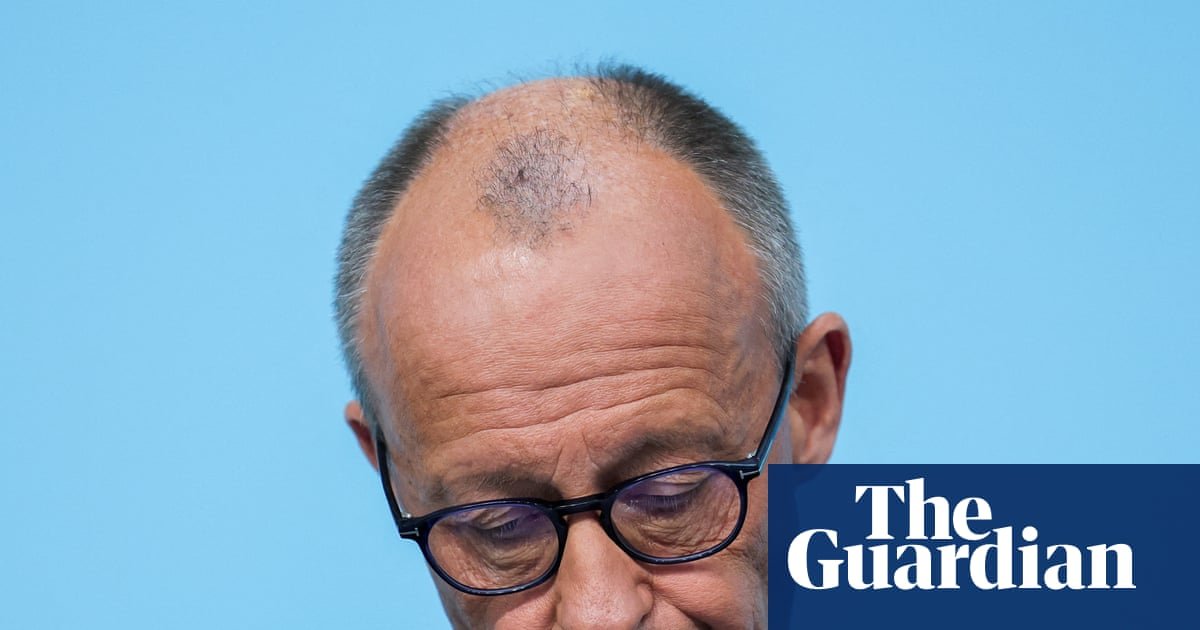
Merz seeks to shore up support after CDU loses two state elections and is ejected from Mecklenburg parliament
Latest German election humiliation puts Merz on borrowed time as CDU unrest grows
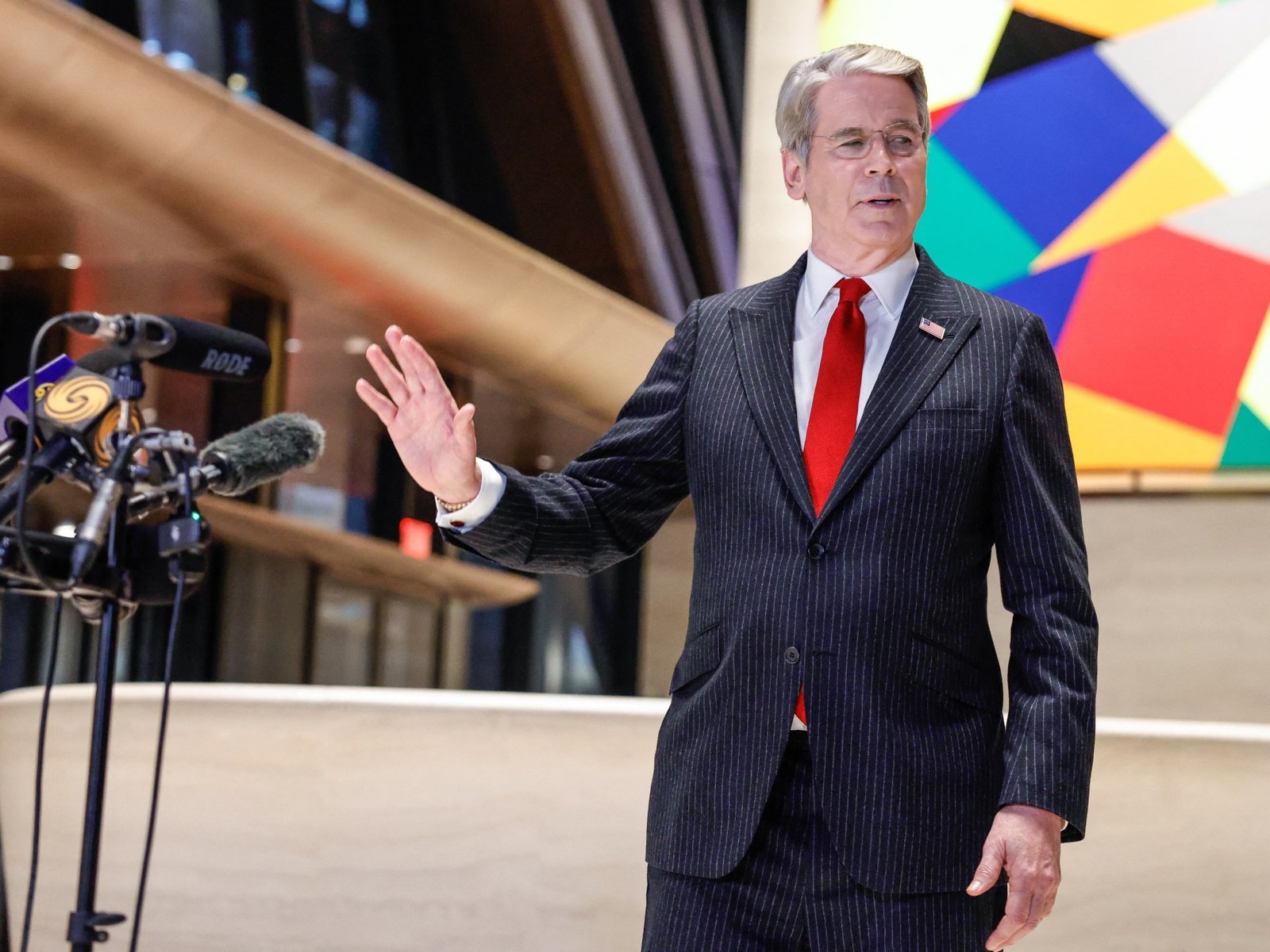
Germany’s beleaguered leader, Friedrich Merz, has vowed to keep his fractious coalition government together for the good of the country’s “democratic future” after his conservative party suffered a drubbing at the polls in two state elections.
Merz, who has vowed to plough ahead with an unpopular reform agenda, dismissed speculation over his position, saying it was vital that he and his coalition government remained in place.
“We are determined to live up to the historic responsibilities our country is facing,” Merz said on Monday. “It is about nothing less, and nothing more, than the democratic future of our country.”
Germany faces political uncertainty in the aftermath of three hefty defeats for Merz’s Christian Democratic Union (CDU) this month, with it ousted from a state parliament for the first time, and the far right and far left making strong gains at its expense.
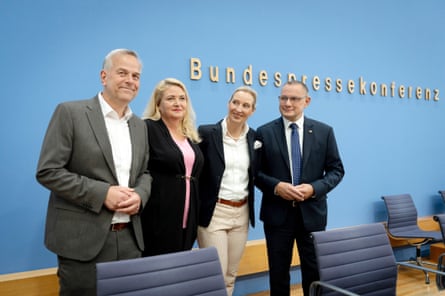
On Sunday the far-right Alternative für Deutschland (AfD) emerged victorious in the coastal northern state ofMecklenburg-Western Pomerania for the third time in a German state, securing 38%. The anti-immigration, pro-Russia AfD party’s leaders predicted Merz would be out of office in months, as they set their sights on securing victory at the next federal election in 2029.
“The chancellor certainly won’t make it to the end of the year,” Leif-Erik Holm, the AfD’s top candidate in Mecklenburg, said. “I think the twilight of the chancellor’s era has begun.”
Merz described the results as a “disaster”, in particular the CDU’s ejection from Mecklenburg-Western Pomerania’s state parliament, where it failed to reach the 5% barrier needed after losing more than half of its voters to the far-right AfD and centre-left Social Democrats. The result was all the more shocking as Mecklenburg was once a CDU stronghold.
In Berlin on Sunday, the CDU fell to second place behind the far-left Linke party, which is on track to lead the next government in the city-state and could give Berlin its first Turkish-born mayor in its lead candidate, Elif Eralp.
In Mecklenburg, the SPD under its existing state leader, Manuela Schwesig, is expected to lead a three-party coalition government. Her campaign had focused almost wholly on presenting herself as a buttress against the AfD, as well as distancing herself from the federal government’s reform agenda. The SPD is Merz’s coalition partner in the federal government.
Although the CDU’s poor performance had been predicted, Sunday’s outcomes only added to the extreme pressure on Merz already after the CDU’s crushing defeat to the AfD in the state of Saxony-Anhalt two weeks ago, which triggered the first serious speculation over his future as leader.
Last week, the CDU’s powerful regional leaders governing in eight states gave their backing to Merz, but questions remain as to how sustained their support will be. At the same time there appear to be few candidates willing to step up to the post, which is increasingly being viewed as a poisoned chalice.
On Monday, Merz dismissed the idea that the outcome was a personal rebuke. “The reasons for these election results go far beyond my own person,” he said. “We are witnessing a profound transformation of the political party system in Germany as well as in many other countries around the world.”
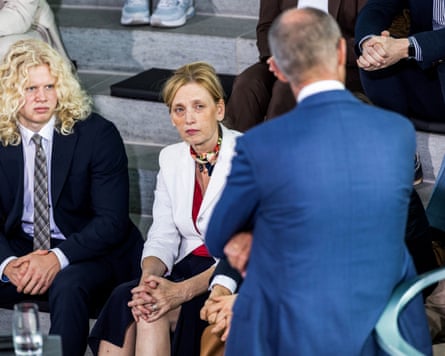
Karin Prien, the education minister and deputy CDU leader, accepted accusations that the government was failing to take voters’ fears seriously enough. But she said the government had no choice other than to continue trying to reform Germany from within, at a time of chronic economic weakness and global instability.
“Without support and steadfastness we will not be able to achieve the necessary reforms, which are by no means a given. Nevertheless, not everything can remain as it is,” she told the broadcaster Deutschlandfunk.
“The chancellor knows he will have to change, at least in how he addresses the people … We are a strong country, we have every chance of mastering this challenge together, but I believe that cooperating with each other will be crucial for this, and for the party it means we must broaden our appeal.”
Doubts over the efficacy and fairness of the government’s agenda – which includes an overhaul of the pension system, a reduction in overbearing bureaucracy and cuts to income tax for the less well-off – played heavily into both election campaigns.
On Monday, SPD leaders said they remained confident in their coalition with the CDU, but said that changes to the agenda were necessary.
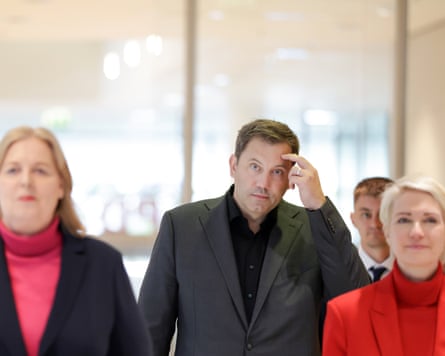
Lars Klingbeil, the deputy chancellor and finance minister, said: “Saying we will ignore what the voters said to us in three state polls won’t work.”
While the country needed reforms, he said, they “must be fair and they need support in the population”. The labour minister, Bärbel Bas, also of the SPD, said the plans needed a “reality check”, but said “nothing would be more lethal than letting this coalition break apart over some technicality”.
Rubbing salt into Merz’s wounds, the Kremlin on Monday waded into the election analysis, calling the AfD’s win in Mecklenburg a response to Berlin’s refusal to buy cheap Russian gas, which has jolted the economy and caused prices to soar, contributing to voter dissatisfaction.
The Kremlin spokesperson Dmitry Peskov said: “Naturally, Germans, or at least some of them, are looking for an alternative to the current authorities in order to improve their situation. That is a natural process.”