Beijing says it will take ‘all necessary measures’ to protect its interests as US steps up efforts to isolate Tehran
Explainer: could US sanctions threaten China-Iran ties?
China has denounced the threat of US sanctions for its trade with Iran, saying any such measures would be illegal, and warned it would take “all necessary measures” to protect its national interests.
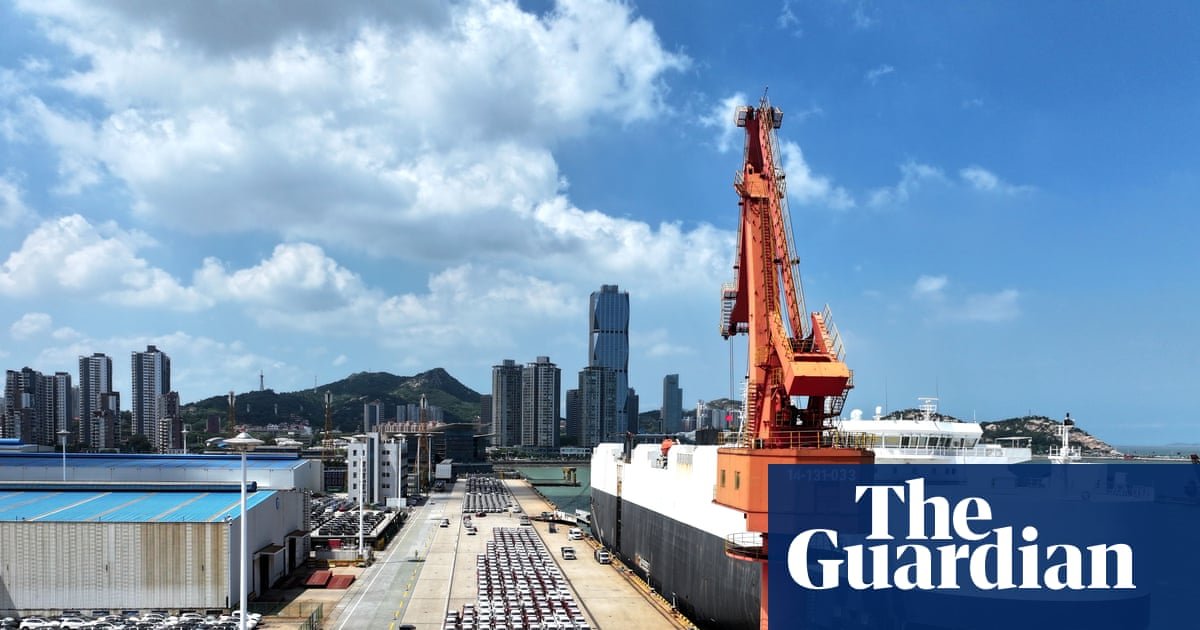
Beijing’s rejection of the US threat of secondary sanctions for any country or entity continuing to trade with Tehran had been predicted. China buys an estimated 80% of Iran’s oil exports and it has defied previous US efforts to limit the flow of revenue to the Tehran regime.
Its statement of opposition raises the question of how far the Trump administration would be prepared to go in confronting China and its financial system in the drive to isolate Iran.
In making the sanctions threat on Monday, the US treasury secretary, Scott Bessent, announced an initial set of sanctions on 60 individuals, entities and vessels for alleged involvement in trade with Iran, but there were no Chinese financial institutions on the list, despite their involvement in financing the Iranian oil trade. The omission reflected US caution.
Asked why the Trump administration had not declared immediate sanctions and had stopped short of naming potential sanctions targets, Bessent replied: “Why would I want to blow up the global financial system?”
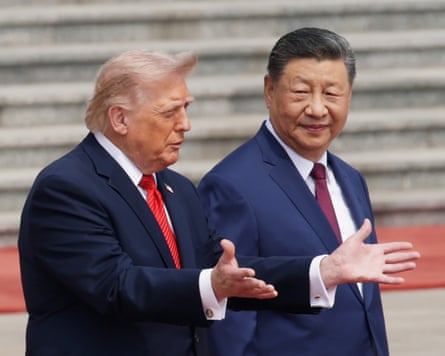
Financial and trade experts say the administration is well aware of the risk of Chinese retaliation before a scheduled summit next month between Donald Trump and Xi Jinping. China could strike back through financial markets or with limits on its export of critical minerals.
The spokesperson for China’s foreign ministry, Lin Jian, told reporters on Tuesday: “Cooperation between China and Iran has always been conducted within the framework of international law and should not be interfered with or disrupted.
“China has already stated many times that it firmly opposes illegal unilateral sanctions. China will take all necessary measures to firmly safeguard its own rights and interests.”
Iran has been economically wrecked by the war and the accompanying US blockade, but it maintained its defiance in response to Bessent’s threats of total isolation.
The economy minister, Ali Madanizadeh, said on state television: “Our defence is no longer so defensive; the enemies should wait for an attack.”
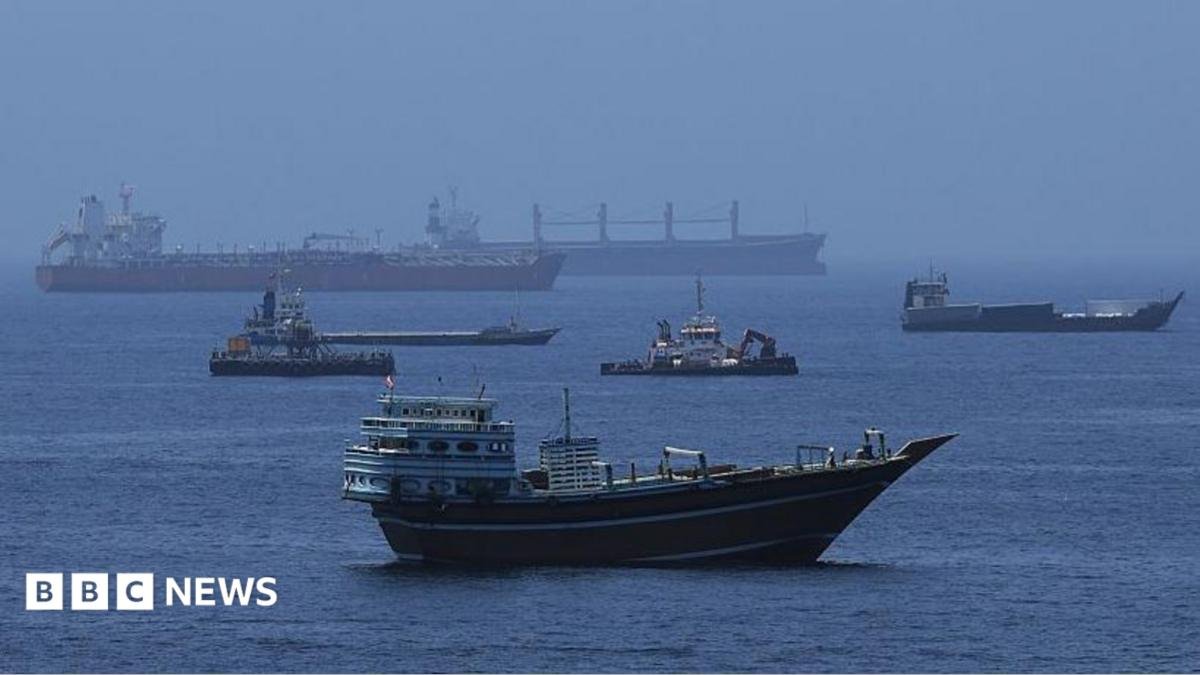
An oil tanker was reportedly hit on Tuesday by an unidentified projectile at the mouth of the strait of Hormuz. Only two commercial vessels were reported to have successfully made the transit through the narrow waterway on Monday.
The declaration of what Bessent called Operation Economic Outcast suggests that the prospects of a resolution to the conflict with Iran are still remote. It also suggests a lean towards economic measures and away from military force after a six-month war that has not brought about the intended Iranian capitulation.
The near closure of the strait of Hormuz and knock-on effect on oil prices and the global economy is a political risk for Trump as congressional elections loom in November.
The US defence secretary, Pete Hegseth, insisted that further military action was not off the table. “By no means are we foreclosing using kinetic strikes anywhere in the strait of Hormuz or around Iran,” Hegseth told reporters on Monday.
Bessent called the sanctions campaign unprecedented and compared it to the D-day Normandy landings, a turning point in the second world war.
“Today, in that same spirit, we are launching an economic onslaught against Iran’s financial connections around the globe,” he said. “Our objective is to sever every economic lifeline that sustains this tyrannical regime until Tehran stands alone.”
He said the US had identified those that continued to deal with Iran and each violator would be given a deadline to cut ties or face US sanctions. He said the deadlines imposed would depend on individual circumstances.
“Any entity that facilitates money laundering on behalf of Iran will be removed from the US dollar system,” he said. “The clock just started ticking.”
Bessent said Trump was “making phone calls to world leaders with specific requests to cease their interactions with the regime”, but he did not specify whether the US president would talk to his Chinese counterpart.
Sina Toossi, a senior non-resident fellow at the Center for International Policy, said: “After nearly six months without a military or diplomatic victory, Washington appears to be trying to accomplish through intensified economic strangulation what military force has so far failed to achieve. But Tehran is answering that zero-sum approach with one of its own.”
In apparent anticipation of the US measures, the United Arab Emirates, a close US and Israeli ally, announced it was suspending trade ties with Iran. Turkey, another trading partner with Iran, which has been critical of the US-led campaign against the Islamic Republic, has yet to respond to the US threat of sanctions.
Andrew Miller, a senior fellow at the Center for American Progress, said: “The announcement of new economic sanctions on Iran and those countries trading with it signals what is plain to all: this war has brought the United States no closer to eliminating Iran’s nuclear programme or crippling the Iranian regime. But while sanctions can be effective, it is highly unlikely they will produce a quick settlement favourable to the United States.”
US-Israel war on Iran
Middle East and north Africa