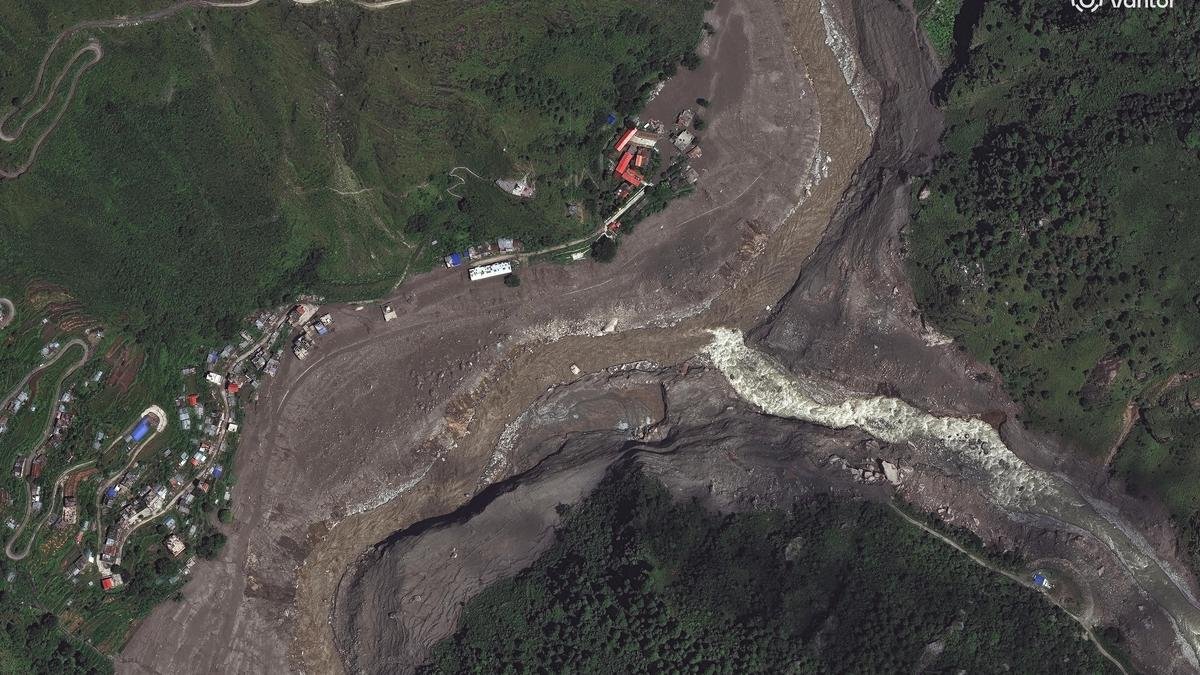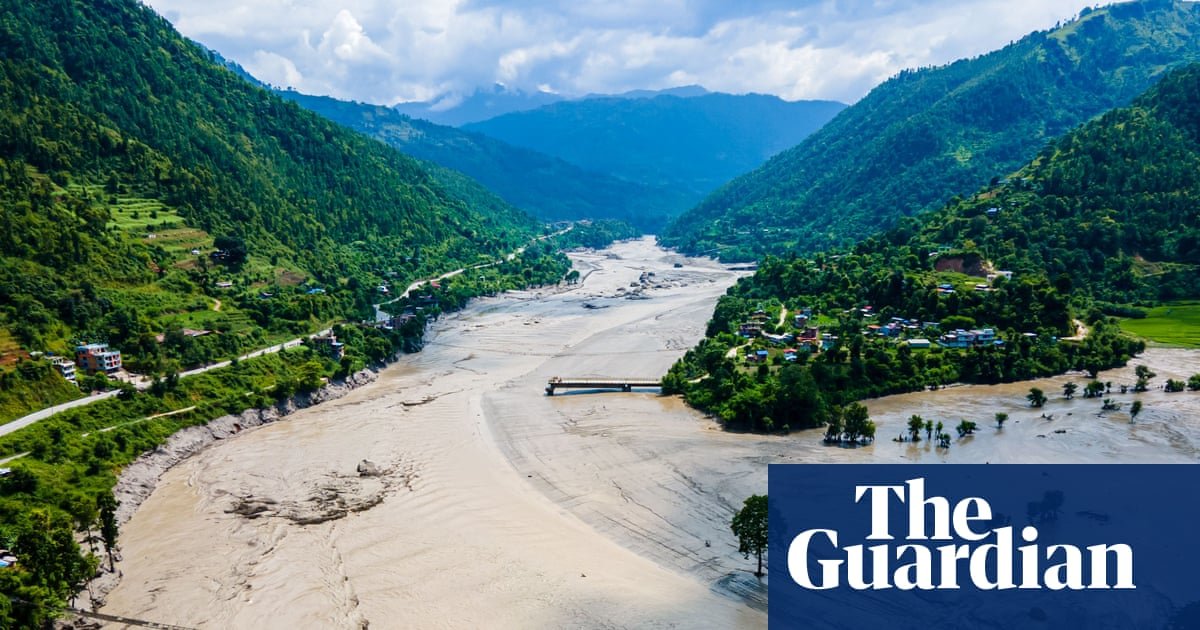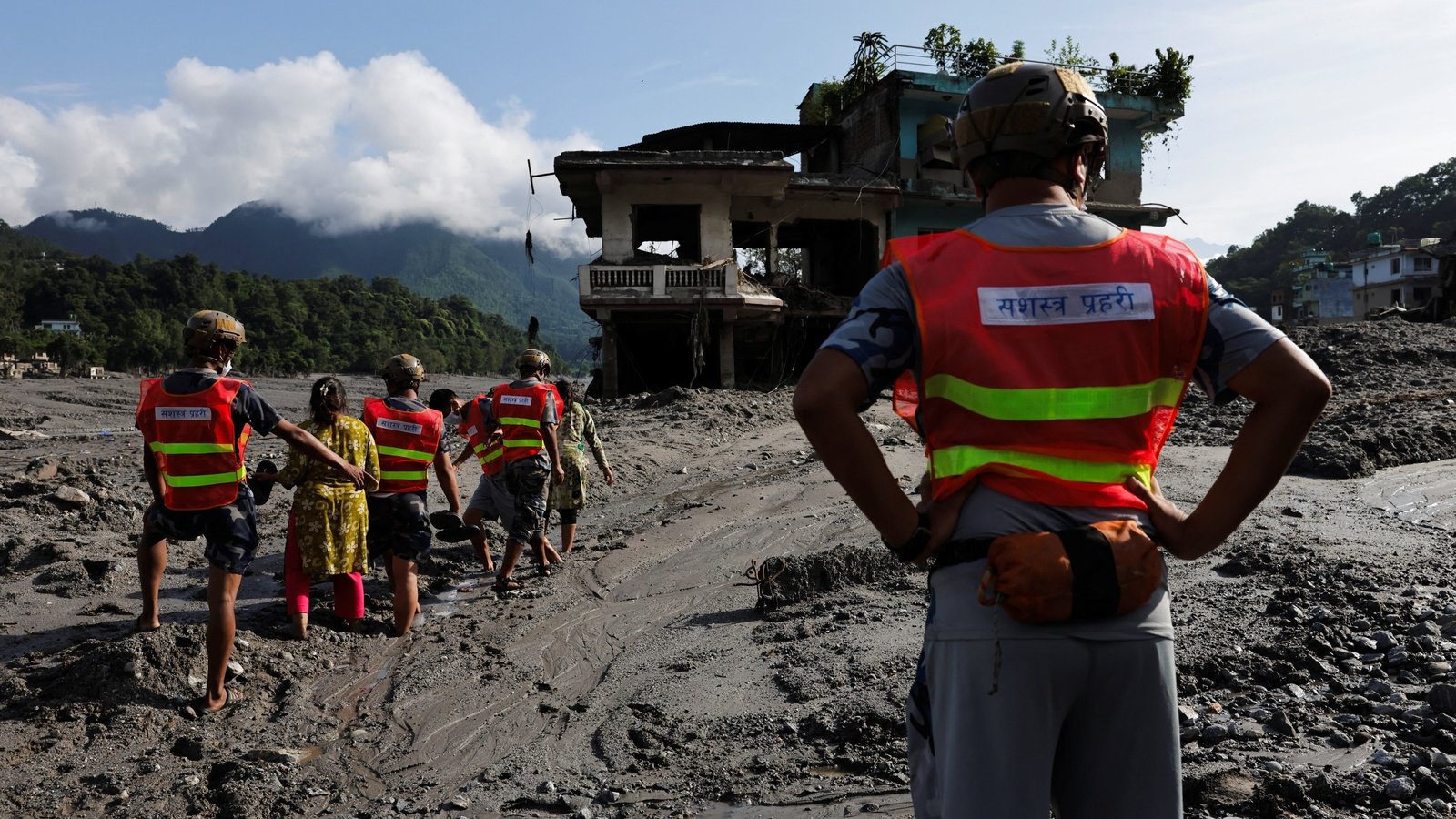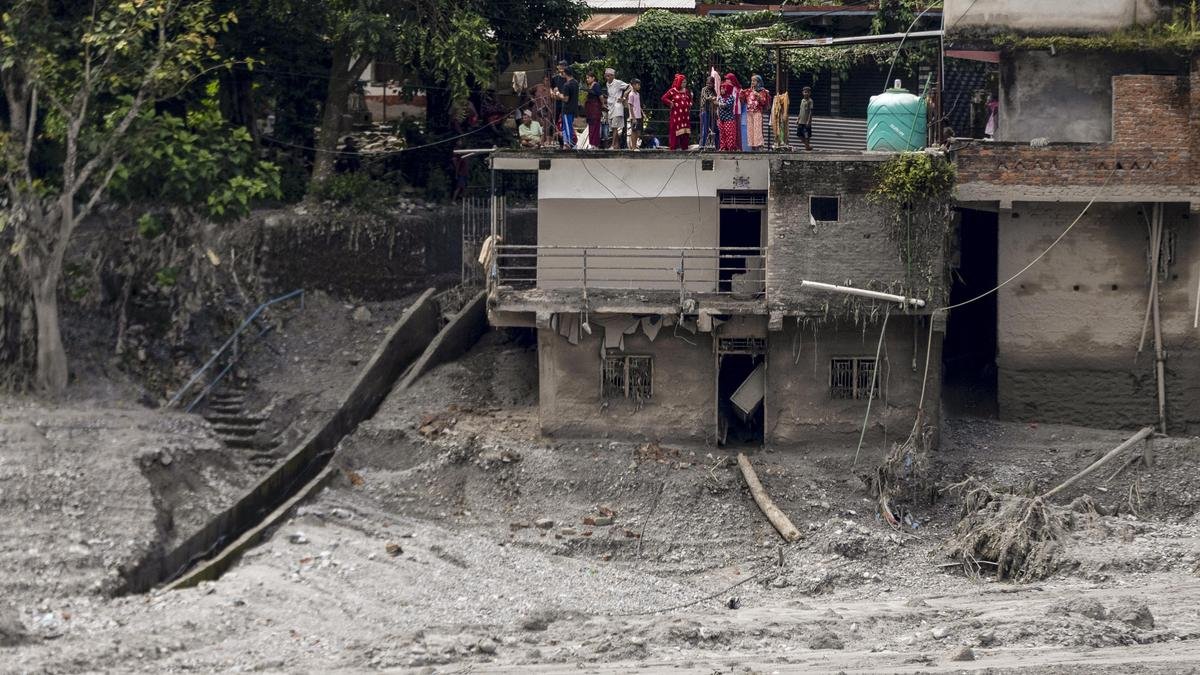
A preliminary assessment suggested the collapse of a high-altitude glacier in Nepal was behind the mudslides and floods along the Nepal-China border, China’s Foreign Ministry said on Friday (August 28, 2026).
“We noted that experts and official institutions of China and Nepal have made preliminary assessments on the cause of the disaster,” spokesperson Lin Jian said.
“According to their analysis, the disaster may have been triggered by the collapse of a high altitude glacier in Nepal.” Nepal flash floods LIVE updates Chinese authorities said 555 tourists had been evacuated from Gyirong county in Tibet.
As of Friday (August 28), Chinese authorities had confirmed three deaths but added that more than 550 people were still missing.
People carry essentials as they move to safer locations after authorities issued a fresh flood warning following a rise in water levels in areas affected by a devastating flash flood earlier this week, in Dhading district, Nepal, on Friday, August 28, 2026. | Photo On whether there were tourists from India among those evacuated and among the missing, Mr.
Lin said China was in touch with the Indian Embassy in Beijing and details of nationalities were being verified.
“We have already notified the embassies of relevant countries and we will maintain communication with them,” he said.
Nepal floods highlight growing glacier risks in warming Himalayas Chinese President Xi Jinping on Friday (August 28) chaired a rare emergency meeting of the Communist Party’s leadership “to deliberate and make arrangements on rescue and relief efforts”.
A statement following the meeting, which began with a moment of silence, warned of the complications involved in rescue efforts, saying that operations were being carried out swiftly.
China’s Premier and second-ranked leader Li Qiang arrived in Gyirong on Thursday (August 27) to oversee rescue efforts and meet with those displaced.
Glacier break or earthquake?
What triggered the Nepal floods? | Explained “The disaster occurred in a severely cold plateau region with steep valleys, variable weather, many surrounding glaciers and glacial lakes, as well as potential geological hazards, which poses significant challenges to emergency rescue operations,” the statement said, adding that “every effort should be made to search for and rescue all missing Chinese and foreign nationals”.
The statement said China will provide emergency aid to Nepal and carry out “international rescue cooperation”.