Chief Justice of India (CJI) Surya Kant on Friday (July 24, 2026) said that no petition seeking the Supreme Court’s intervention into the alleged police excesses during the July 20 crackdown on student protesters in the national capital had been filed, and criticised “reckless” reports suggesting that the court had refused to list such a matter.
He clarified that the court had received only a representation from a lawyer and that no petition had been instituted.
The oral remarks were made during mentioning hours, when lawyers draw the court’s attention to matters requiring urgent listing.
CJP to launch website to identify police personnel who used brute force on protestors during Parliament March “Till morning, 10 a.m., I tried to find out, no case had been filed...
Not a single page has been filed in the Supreme Court.
It was one representation...
How can I treat the representation as a writ petition?
And people start recklessly reporting this,” the Chief Justice remarked while presiding over a Bench also comprising Justices Joymalya Bagchi and V.
Mohana.
The observations came two days after the top court declined to initiate suo motu proceedings on an oral request made by advocate Narendra Mishra to take cognisance of the alleged police brutality during the July 20 Parliament march organised by the Cockroach Janta Party (CJP).
Expressing concern over the reportage, the Chief Justice said sections of the media had engaged in “reckless” reporting.
“In the last two days, a completely false statement was made that a matter was filed, and the media is absolutely free from all responsibility, recklessly falsely reporting that the Chief Justice refused to list the matter,” the CJI said.
CRPF ‘verifying’ reports of pellet guns used against protesters in Delhi: official During the hearing on Wednesday, Mr.
Mishra had referred to a letter petition addressed to the CJI and urged the court to examine videos purportedly showing police personnel assaulting unarmed protesters.
He had also offered to place the videos before the court.
However, the Bench declined the request, with the Chief Justice telling the lawyer not to “waste” the court’s time.
“We are not interested in videos.
We don’t have time to watch them,” the CJI had said.
Later that day, the Delhi High Court sought responses from the Union government and the Delhi Police on a batch of petitions alleging that the police used excessive force against students and other protesters during the Parliament march on July 20.
The court also directed the authorities to preserve all relevant records, including CCTV footage and videography, related to the protest march.
The petitions are slated to be heard on September 11.
Attempts to invoke the top court’s jurisdiction through letters date back to the late 1970s, when the court began relaxing the traditional rules of locus standi, allowing public-spirited individuals to approach the constitutional courts on behalf of aggrieved persons to protect fundamental rights and uphold the rule of law.
This led to the evolution of the court’s epistolary jurisdiction, under which informal letters and postcards addressed to judges were treated as writ petitions with the objective of improving access to justice for the marginalised who had little or no meaningful access to the courts.
One of the earliest instances was Sunil Batra v.
Delhi Administration (1979), where the court treated a prisoner’s letter alleging custodial torture as a writ petition and issued directions to curb such practices.
The right to protest and the limits of police power | Explained The Chief Justice’s reported remark on “cockroach” in reference to fake law degree holders during the hearing of a writ petition on May 15 spawned public furore and a viral online platform, the Cockroach Janta Party, which is spearheading the protests at Delhi’s Jantar Mantar.
The Chief Justice offered a “clarification” the following day in a statement that he was misquoted by sections of the media and had the greatest concern and respect for the youth of the country.
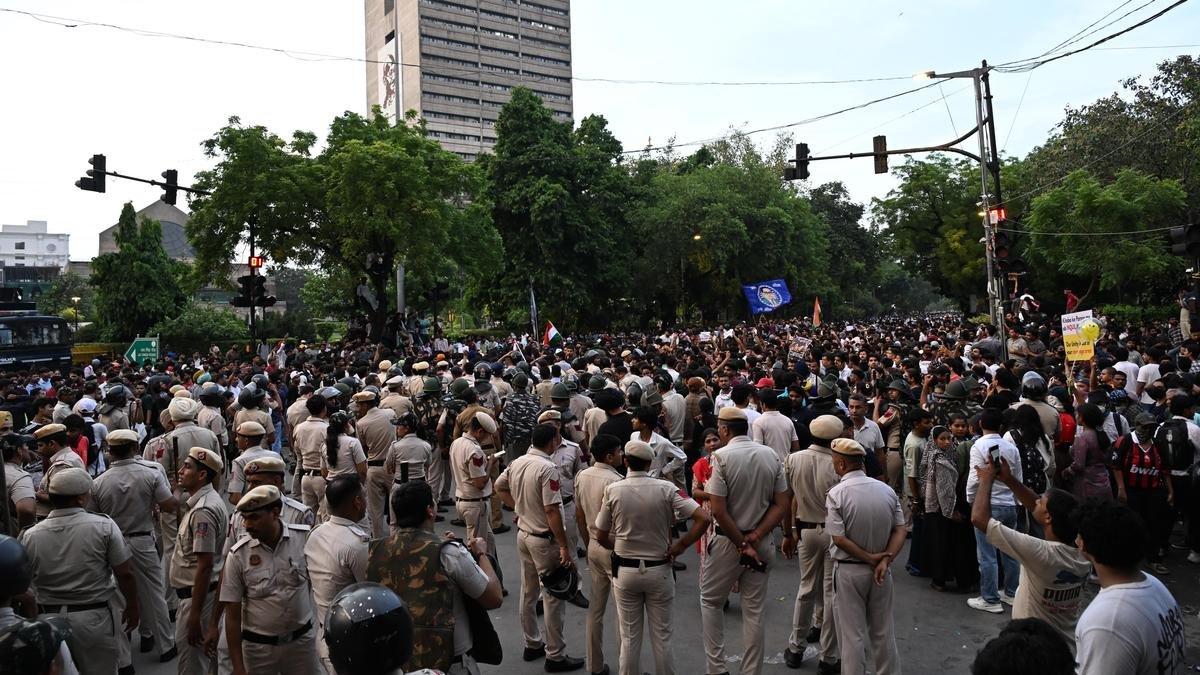
On Monday (July 20, 2026), the Delhi Police cracked down on the Parliament march called by the CJP, leaving several protesters injured.
The Hindu has reported that at least one of the nearly 80 protesters injured during the march to Parliament sustained pellet gun injuries and is undergoing treatment at Lady Hardinge Medical College.
A friend of Shaikh Irshad Mansoori (25), the protester, told The Hindu that Mr.
Mansoori was hit near Palika Bazaar in Connaught Place by a Rapid Action Force (RAF) jawan in uniform.
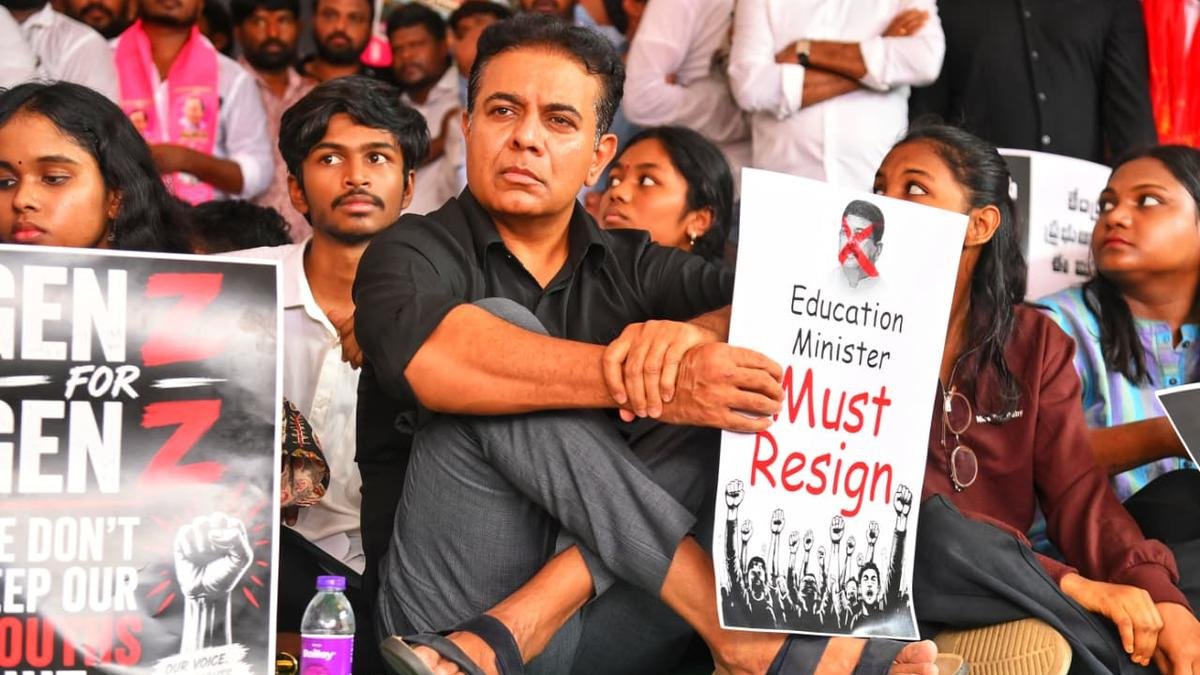
The CJP called the July 20 Parliament march after weeks of protests and a hunger strike at Jantar Mantar in the national capital.
Thousands of protesters attempted to march towards Parliament, demanding the resignation of Union Education Minister Dharmendra Pradhan over alleged examination paper leaks and reforms in the examination system.
The Chief Justice’s remarks on Friday came even as activist Sonam Wangchuk ended his 26-day hunger strike after receiving assurances from the Centre.
He broke the fast on certain conditions.
The government gave a written assurance that cases against students would be taken back if they were not violent, said Cherring Dorjay Lakruk, co-convenor of the Leh Apex Body.