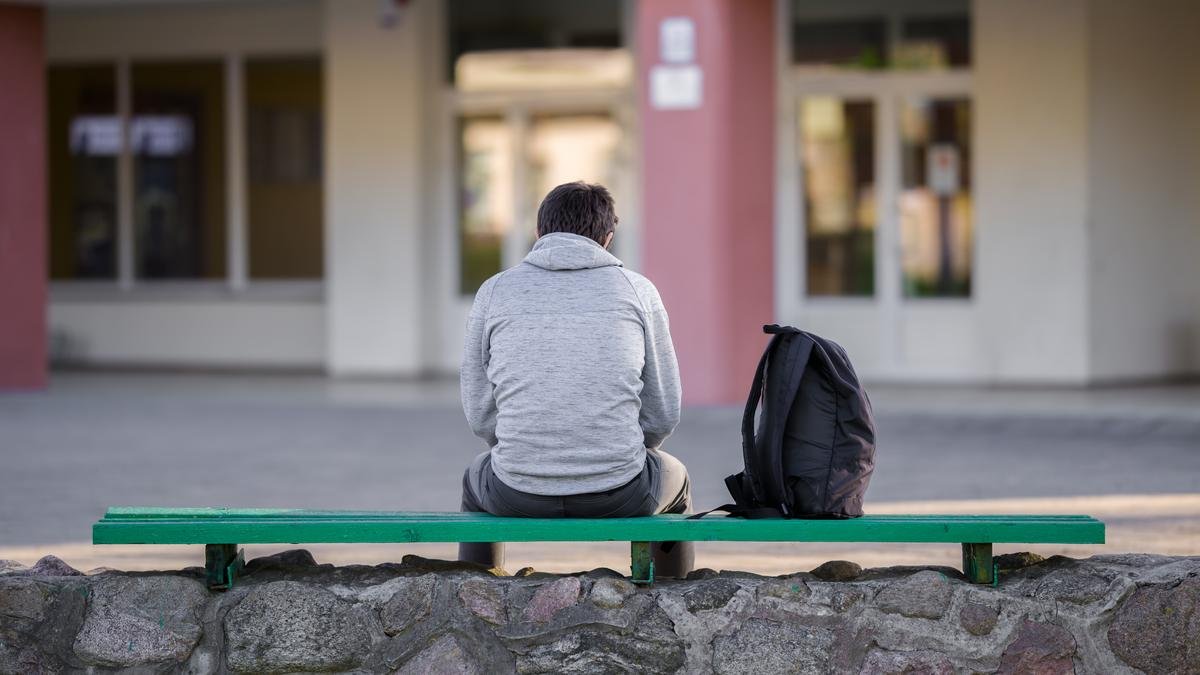
What is harder in life—being parentless or having different names recorded as parents in official documents? Praveen (name changed), a parentless boy from Odisha, has learnt the answer the hard way.
Raised in childcare institutions, Praveen fought against the odds to make his way to Gangadhar Meher University, Sambalpur, one of Odisha’s premier higher education institutions.
But discrepancies in the names of his parents recorded in his certificates and Aadhaar card have deprived him of government assistance, casting a shadow over both his identity and education.
Taking note of his ordeal, the Odisha Human Rights Commission (OHRC) has directed the Sundargarh district administration to probe how the discrepancies arose and explore remedial measures to correct his records.
“I had no idea how I landed in an orphanage or who my parents were—the uncertainty is an ordeal every parentless child lives with. But my life was thrown into turmoil when I found imaginary parents’ names in my certificates and Aadhaar card. The orphanages also showed little urgency in correcting the records, leaving me in all sorts of trouble,” said Praveen, who is pursuing his graduation at Gangadhar Meher University, Sambalpur.
When Praveen was five, someone left him at the gate of Sarbabhoutik Shishu Seba Ashram in Rourkela. The childcare institution was closed in 2012 for reasons that remain unclear, following which he was shifted to Rourkela Sishu Bhavan.
“At Sishu Bhavan, the names Munna Ekka and Kan Ekka were recorded as my father and mother. But when my Aadhaar card was made, P. K. Senapati, the superintendent of the institution, was recorded as my father. My ordeal began there,” Praveen recalled.
He alleged that the discrepancies between his certificates and Aadhaar card deprived him of government assistance meant for orphans and persons with disabilities. Praveen has a hearing disability.
After matriculation, he was denied admission when he sought to pursue Plus Two at Sundargarh Government College. The intervention of the Sundargarh district collector eventually resolved the issue.
“Without government assistance, I had to take tuition classes and work as a newspaper hawker to meet my expenses and survive,” he said.
Praveen said he repeatedly approached the authorities, drawing attention to the discrepancies in his records, but no corrective action was taken.
“When I tried to correct my Aadhaar card myself, executives at common service centres asked me for my date of birth, residence certificate and parents’ details—documents I simply did not have. I fear these discrepancies will ruin my career and my life,” he said.
During an awareness programme at the university in the third week of August, an Odisha Human Rights Commission (OHRC) team heard Praveen’s account. He submitted a written account of his ordeal, tracing his journey from childhood to university. The Commission took serious note of the matter.
The OHRC has ordered a 13-point inquiry into how the names of the purported parents came to be recorded in Praveen’s documents and what remedial measures are needed to resolve the issue. The district collector has been directed to complete the inquiry within five days. The next hearing has been scheduled for September 1, 2026.
“This is a serious human rights concern and may not be an isolated case. The Women and Child Welfare Department should direct all childcare institutions to identify similar cases. As society moves increasingly towards digital records, discrepancies in educational and other personal documents can jeopardise a person’s future,” said human rights activist Biswapriya Kanungo.