There are howls of protest from the right about plans for Birmingham to be a 20mph city. But it will be a good thing, and others will follow
If it can happen in Birmingham, it can happen anywhere. Moves by Birmingham city council to impose a 20mph speed limit on all roads, apart from a few major thoroughfares, marks a turning point in transport policy that could and should attract imitators.
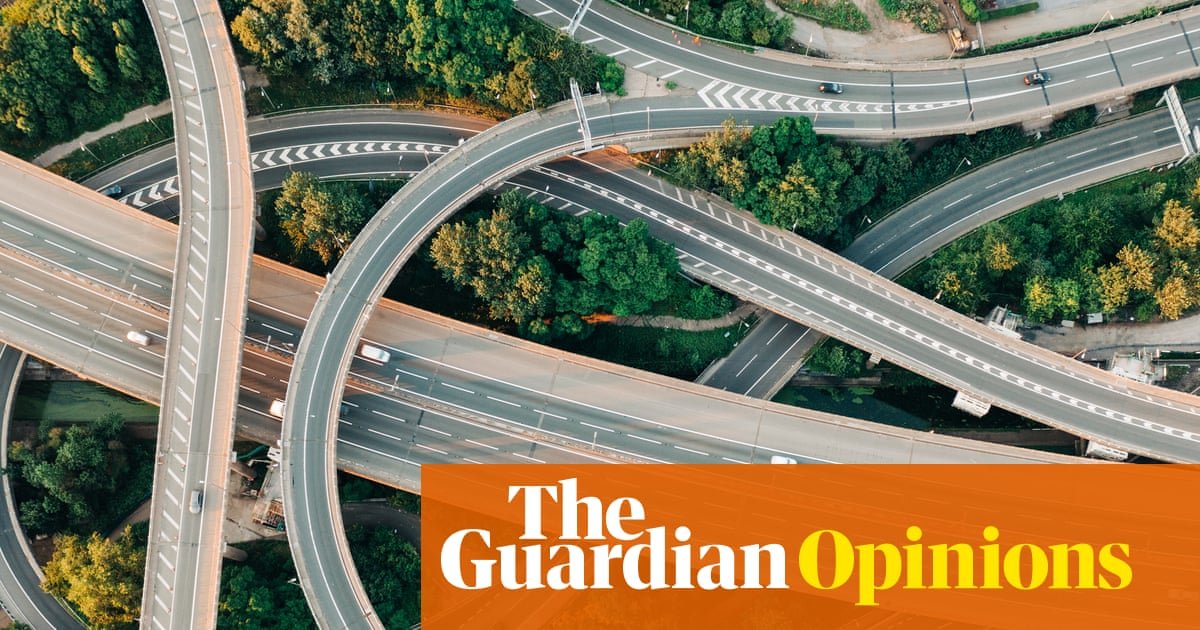
Remember that in the 60s Birmingham was the city that had a racetrack style networks of roads at its heart, and a tangle of elevated routes and roundabouts that pushed pedestrians underground and ensured no one would be mad enough to try to cycle. Moreover, it was the headquarters of the UK’s car industry, and its roads were designed more as a test track for new models than a way for people to get to the shops. The emphasis on roads above all else was a deliberate strategy by a city that saw its future inextricably bound up with motoring manufacturers.
This ode to the motorcar has gradually been dismantled over the past couple of decades, with the removal of roads turning the city centre into a far more pedestrian-friendly environment. The tram system is being expanded and soon – well actually, not that soon, thanks to endless delays – there will be a new station to accommodate high-speed rail services. Birmingham has been changing, but this latest move will accelerate the process. The imposition of a 20mph zone throughout the city seals the deal. No longer will the needs of cars dominate. Instead, walking, cycling and public transport will be the modes of choice, as car travel becomes slower and more of a hassle.
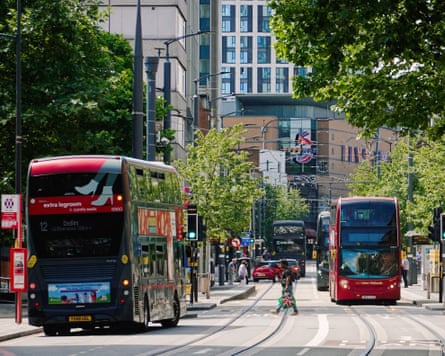
The opposition, Conservatives and Reform alike, are already on the warpath, emphasising that this is part of a “war on the motorist” – the cliche brought out whenever any politician attempts to redress the balance between speed and livability in the urban environment. Gradually, far too slowly, they are losing the war, even if they occasionally win the battles: in Toronto, the Ontario governor, Doug Ford, is planning to rip out 19km of cycle lanes.
Diehards such as Ford are on the losing side of history. Birmingham’s shift of emphasis in the urban realm is part of a global phenomenon that is manifested in numerous ways: a pedestrianised main street in Vancouver, a congestion charge in New York City, 500km of new cycle paths in Bogotá and so on. Sadiq Khan has got in on the act with the imminent pedestrianisation of Oxford Street (a measure I advocated in a 1998 Evening Standard op-ed).
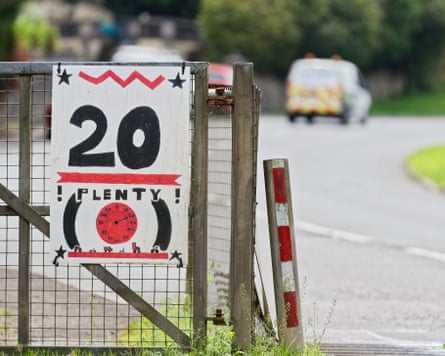
Wales has led the way with “20’s plenty”, the brilliant campaign founded by Rod King two decades ago that has influenced policymakers across the country. All Welsh local urban roads were restricted to 20mph in September 2023. Though a few busy streets have reverted to 30mph, by and large the concept has been accepted – and research has shown reductions in road deaths and injuries.
In the global race to sustainability and livability, the leader is probably Copenhagen, where ambitions of having a 50% modal share of cycling for commuters may already have been achieved and there are ambitions to go further. Paris, however, is quickly catching up – and demonstrates that change can be rapid once momentum picks up. Since the election of Anne Hidalgo as mayor in 2014, the transformation has been astonishing. It has involved a raft of measures, building on the creation of Paris’s large bike hire scheme in 2007 and the pedestrianisation of the left bank of the Seine in 2013. There has been a comprehensive refocusing of the city’s roads in favour of cyclists and pedestrians, with more than 1,000km of cycle lanes, the removal of thousands of parking spaces, the closure of dozens of school streets and the creation of low-traffic neighbourhoods.
And here’s the rub: ultimately, the opponents are right. This is an attempt to make life more difficult for motorists, in order to improve the situation for people not travelling in large metal boxes. That does and should involve a raft of measures. Parking spaces need to be removed, access to town centres limited to deliveries, congestion charges imposed. This will give rise to noisy opposition, such as the fanatics in London who broke cameras monitoring compliance with the ultra-low emission zone (Ulez).
We need politicians to explain – and to keep explaining – why the unrestricted use of cars in urban centres is damaging to the local economy as well as to the environment, to people’s health and to the overall feel of a place. It’s no good dodging the fact that the policies that prevailed until the late 1960s, and which still seem to be favoured by backward-looking opponents, were a mistake. Brave politicians need to take on opponents without compromise. Khan did this with the Ulez, standing firm against critics even though some were inside his own party, and the success is for all to see. Not only does research show that children’s lungs are becoming bigger because the air is cleaner, but just go to Parliament Hill in Hampstead Heath and look over London: there is no longer a foul yellow miasma permanently overhanging that famous view.
Khan could push through his Ulez because he has some mayoral powers, though less than those of his counterparts abroad. Hidalgo and her successor, Emmanuel Grégoire, have powers that British mayors can only dream of. However, opportunity is at hand. Andy Burnham’s emphasis on devolution may offer the opportunity for brave new mayors to follow the examples of Paris, Bogotá and Copenhagen – and Birmingham. Twenty is plenty: get used to it.
Christian Wolmar is the presenter of the Calling All Stations podcast and writes a weekly Substack entitled Transport News