Updated on: Sep 10, 2026, 15:47:35 IST By Arnabjit Sur Prefer HTon Google Share via Copy link A Delhi court has ordered the framing of money laundering charges against former Bihar chief minister Lalu Prasad Yadav, his wife Rabri Devi and son Tejashwi Yadav in the IRCTC hotel scam case.
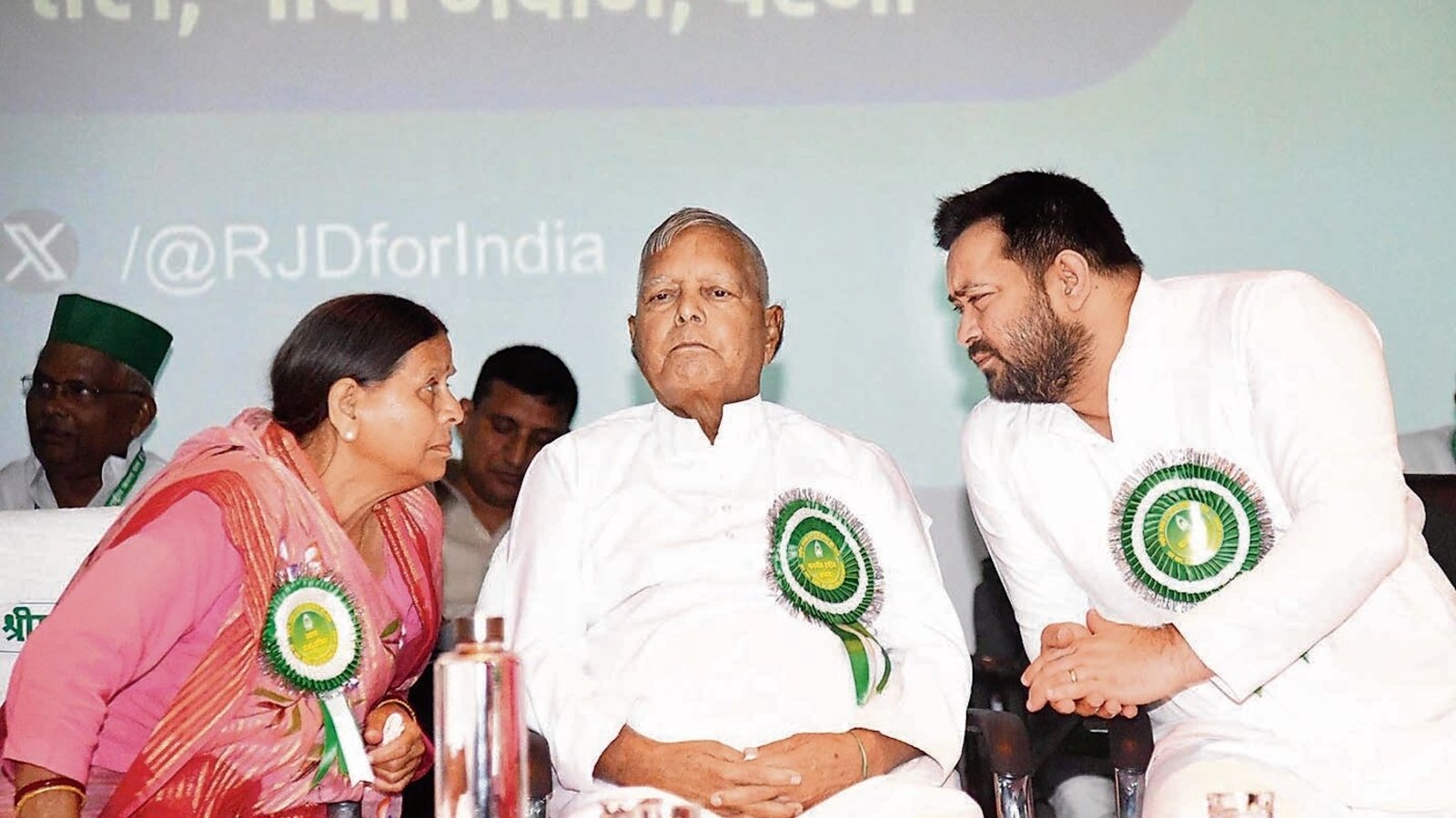
RJD chief Lalu Prasad (Centre), former Bihar CM Rabri Devi (L), Leader of Opposition and RJD leader Tejashwi Yadav (L). (HT file photo) The order was passed by Special Judge Vishal Gogne.
The court orally observed that there was “strong suspicion of abuse of office and proceeds of crime” in the hands of Rabri Devi and Tejashwi Yadav, who continue to enjoy a “tainted land” in Patna that was transferred to them at the behest of Lalu Prasad Yadav between 2005 and 2014, when he was the Union railways minister.
The directors of the hotels subsequently transferred a plot of land in Patna to Sarla Gupta, a close associate of Lalu Prasad Yadav, who then transferred the shares to Rabri Devi for a nominal amount.
The court framed money laundering charges against nine people, including Lalu Prasad Yadav, Rabri Devi and Tejashwi Yadav.
Seven others were discharged.
Formal charges will be framed on October 3.
Operating round the clock, the desk brings together experienced editors, reporters and correspondents to deliver fast, accurate and contextual reporting across subjects that influence public policy, governance, business, society and international affairs.
The HT News Desk covers politics, elections, government policies, the economy, business and markets, science and technology, the environment, law and order, infrastructure, education, climate issues and geopolitics, while closely tracking developments across states, institutions and global capitals.
The team also leads coverage of major breaking news events, policy announcements, court proceedings, natural disasters, public emergencies and significant international developments.
Reports published by the newsdesk are based on information gathered from reporters on the ground, official statements, government agencies, court records, regulatory filings, recognised institutions and other authoritative sources.
Stories undergo editorial scrutiny and verification processes to ensure accuracy, fairness and relevance, and are updated as events evolve and additional information becomes available.