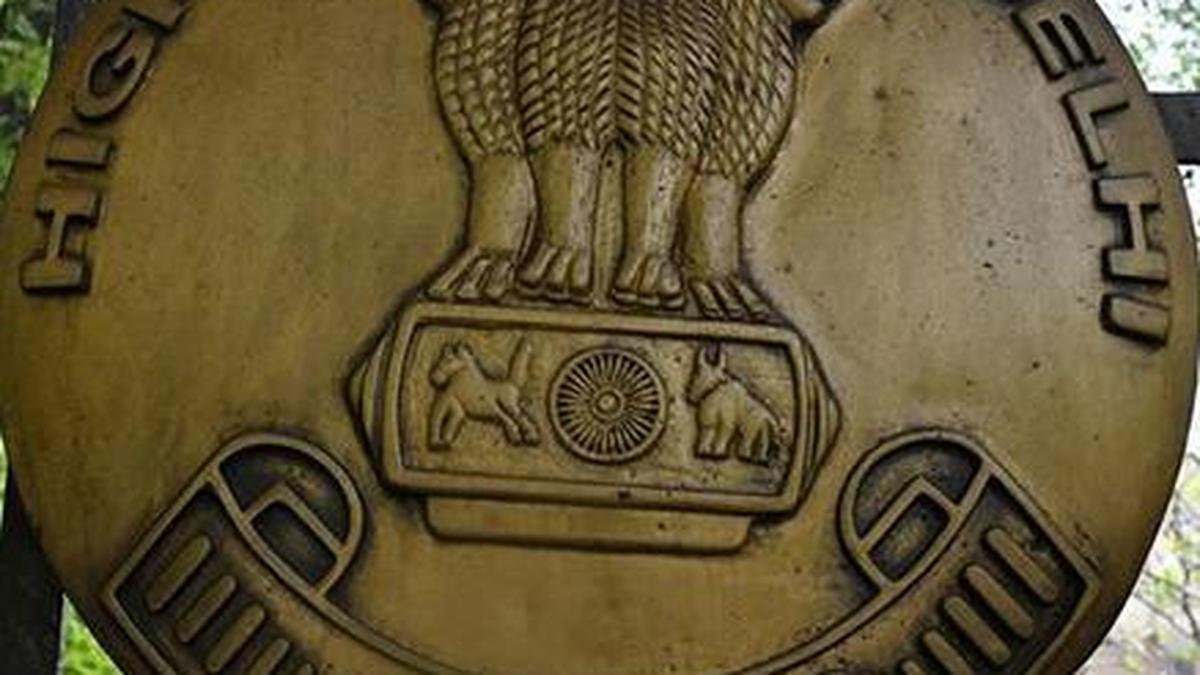
The Delhi High Court on Friday (July 24, 2026) dealt with a series of public interest litigations (PILs) arising out of the ongoing student protests at Jantar Mantar over the alleged NEET paper leak and examination irregularities, hearing pleas ranging from demands for an NIA probe into the July 20 “Chalo Sansad” march to allegations of excessive police surveillance of protesters.
A Bench of Chief Justice D.K.
Upadhyaya and Justice Tejas Karia, however, took different approaches in the two sets of petitions.
While it refused to entertain pleas seeking a National Investigation Agency (NIA) probe into the July 20 protest, it deferred consideration on a separate challenge to the alleged videography and surveillance of demonstrators after hearing extensive submissions from both sides.
Delhi High Court agrees to hear PIL seeking probe into Cockroach Janta Party protest The court refused to entertain the PIL seeking an investigation by the NIA or any other specialised agency into the July 20 protest march organised by the Cockroach Janta Party (CJP), observing that it was for the Central government, not the court, to decide whether a case should be referred to the NIA.
The petition, filed by former Akhil Bharat Hindu Mahasabha vice-president Satish Kumar Aggarwal, alleged that the protest had resulted in violence, vandalism and damage to public property, and sought directions for registration of FIRs against those allegedly responsible.
During the hearing, the Bench remarked, “There has to be an FIR, thereafter the police officer will forward it to State government and State will send it to Centre.
If the Centre finds it fit then it can refer the investigation of FIR to the NIA.
You are asking us to form an opinion that this is a fit case.
This job has been entrusted to the Central government”.
When the petitioner’s counsel argued that the gravity of the alleged offences warranted a probe by either the NIA or the CBI, the court responded that transfer of an investigation to the CBI could only be considered after examining the progress of the existing investigation.
The cockroach dilemma facing India’s political parties The petitioner’s counsel argued that the fundamental rights of people are getting affected as roads are blocked and Metro stations are closed for last three days.
He submitted photos and videos to supplement his claim.
But the Bench made it clear that it would not go into all those things.
“We are only on legal issues.
That is a matter of fact that needs an inquiry to be conducted under direction and supervision of the competent authority.
We can’t reflect on anything merely by going through videos and photographs.” The court observed that the alleged incidents were already within the knowledge of the authorities, who were expected to act in accordance with law.
Additional Solicitor-General Chetan Sharma urged the court to at least seek a status report from the authorities on the incidents.
But the court said, “We are not curtailing your powers Mr.
Sharma, if you think appropriate the matter is to be referred to NIA you can do that.
There are judgments.
Every authority is available to you, please deal with it as efficiently as you should.
Follow the Supreme Court’s judgments, you are under mandate.” As Solicitor-General Tushar Mehta said, “I am not saying the petitioners who came yesterday (against the excessive use of police force on protesters) were right.
Not saying these petitioners are right.
They have counter-claims.” “Consider it [representation].
We are asking them to approach you,” the Bench said.
Following the court’s observations, Mr.
Mehta suggested that the petitioner consider withdrawing the plea.
The petition was subsequently dismissed as withdrawn.
The court similarly disposed of another petition filed by Save India Foundation, granting liberty to approach the competent authorities with its grievances regarding alleged destruction of public property and attacks on police personnel.
The court reminded that the Supreme Court had already laid down principles governing cases involving mob violence and destruction of public property.
Police surveillance of protesters In a separate PIL, the Bench heard arguments on the legality of continuous police videography and alleged facial recognition-based surveillance of protesters assembled at Jantar Mantar.
Appearing for the petitioner, Senior Advocate Nandita Rao argued that the right to privacy recognised by the Supreme Court extends even to citizens participating in public protests.
While acknowledging that the right could be restricted, she contended that any restriction must satisfy the constitutional tests of legality, and legitimate state purpose.
Cockroach Janta Party protests | Collection of The Hindu’s ground reports Ms.
Rao submitted that the petition was filed before the police action of July 20 and specifically challenged the alleged surveillance of young protesters, including girl students aged between 16 and 20.
“Police officers without uniform are roaming around without uniform video graphing these children at close range,” Ms Rao said.
Referring to media reports, she alleged that live facial recognition technology was being deployed at the protest site.
Mr.
Mehta, appearing for the Centre, opposed the plea, arguing that videography of protests is a “an accepted” measure followed at all public demonstrations and not confined to the present agitation.
“When you are holding protest in an open space, claim of privacy is ironical,” Mr.
Mehta argued adding that protesters at the site were themselves making hundreds of reels and videos.
Mehta further argued that privacy is a fundamental right, but not in a public place where there is “a legitimate state interest”.
He said, “Suppose some unwarranted incidents takes place.
Suppose some strangers comes in and does something...the government must have some mechanism”.
However, Ms.
Rao said there is a difference between an individual recording events and the state video graphing it.
“Can a citizen arrest someone on the basis of a video.
Can a citizen influence college not to take admission.
You (Centre) are at a much higher footing than us,” she said.
The court then listed the matter for Monday hearing.