Updated on: Jul 28, 2026, 18:44:58 IST By Shishir Gupta Prefer HTon Google Share via Copy link India on Tuesday strongly rejected Pakistan's attempts to invoke the shared legacy of the Indus Valley Civilization (IVC).
In a press briefing by the Ministry of External Affairs, spokesperson Randhir Jaiswal stated that a country that has promoted cross-border terrorism, religious fundamentalism and violence for decades, particularly against minorities, cannot lay claim to a pluralistic cultural heritage.
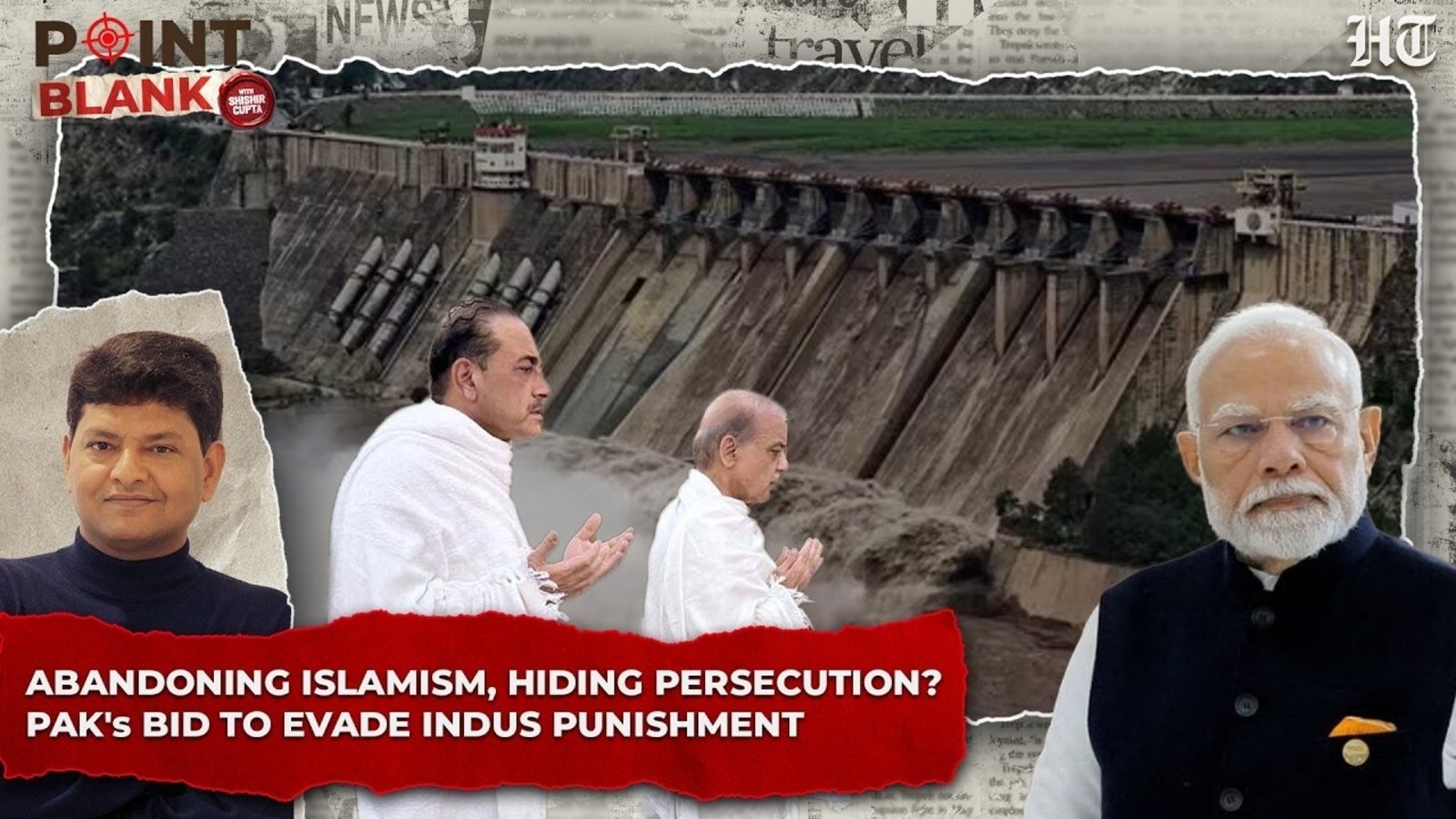
Faced with harsh punishment after the Pahalgam attack, Islamabad appears to be using Harappa, Mohenjo‑Daro and Gandhara as a rebranding stunt in the Indus Waters Treaty fight with India and the Modi government.
"Let me put this straight - a country which has been promoting cross-border terrorism, which has been promoting religious fundamentalism and violence for decades, cannot have any claim to any pluralistic cultural legacy.
Their abysmal track record on the protection of minorities and their cultural rights makes such desperate attempts look even more phoney," Jaiswal said.
Pak claims IVS central to national identity Pakistani Information and Broadcasting Minister Attaullah Tarar recently described the Indus Valley Civilization as central to Pakistan's national identity.
And if you go back into history, the Indus Water Civilization defines us as a people.
Whenever I go abroad, I often tell my counterparts that we are the people of the Indus Valley Civilization.
Our identification is that we are people based on the banks and tributaries of the mighty River Indus," Tarar was quoted as saying by news agency ANI.
These remarks came as an attempt to claim the waters of the Indus river system under the Indus Water Treaty, which was suspended in 2025 after the Pahalgam terror attack in Jammu and Kashmir.
ABOUT THE AUTHOR Shishir Gupta Shishir Gupta is Executive Editor at Hindustan Times and one of India's top journalists covering national security, strategic affairs, foreign policy and geopolitics.
Over the past three decades, he has extensively reported on India's military, diplomatic and security landscape, covering every major conflict and national security challenge, from the 1999 Kargil War and the 2020 East Ladakh standoff to Operation Sindoor in 2025.
He has also covered major terror attacks, including the IC-814 hijacking, the 26/11 Mumbai attacks and the 2025 Pahalgam terror strike, along with numerous Pakistan-backed terrorist incidents in the Kashmir Valley and across India.
He has reported on national and state elections for more than three decades.
A recognised authority on strategic affairs, Gupta has covered India's nuclear programme since the Pokhran-II (Shakti series) tests in May 1998 and has written extensively on global nuclear issues, Indian diplomacy and the country's expanding global outreach.
He has also reported widely on international conflicts and terrorism, with a special focus on the Indian subcontinent.
Gupta has interviewed Prime Minister Narendra Modi more than four times, including Modi's first interview with the print media after becoming Prime Minister in May 2014.
His other interviews include three with the Dalai Lama, as well as conversations with Benjamin Netanyahu, Amit Shah, Yogi Adityanath, S.
Jaishankar, Nirmala Sitharaman and Piyush Goyal.
He is the author of Indian Mujahideen: The Enemy Within (Hachette, 2011) and Himalayan Face-off: Chinese Assertion and Indian Riposte (Hachette, 2014).
He was awarded the Chevening-Wolfson Joint Scholarship at Wolfson College, University of Cambridge, UK, in 1998 and participated in the International Visitor Leadership Program (IVLP) of the US State Department in 2006.
He received the Ben Gurion Prize from Israel in 2011 and the K.
Subrahmanyam Prize for Strategic Studies in 2015 from the Manohar Parrikar Institute for Defence Studies and Analyses (MP-IDSA).