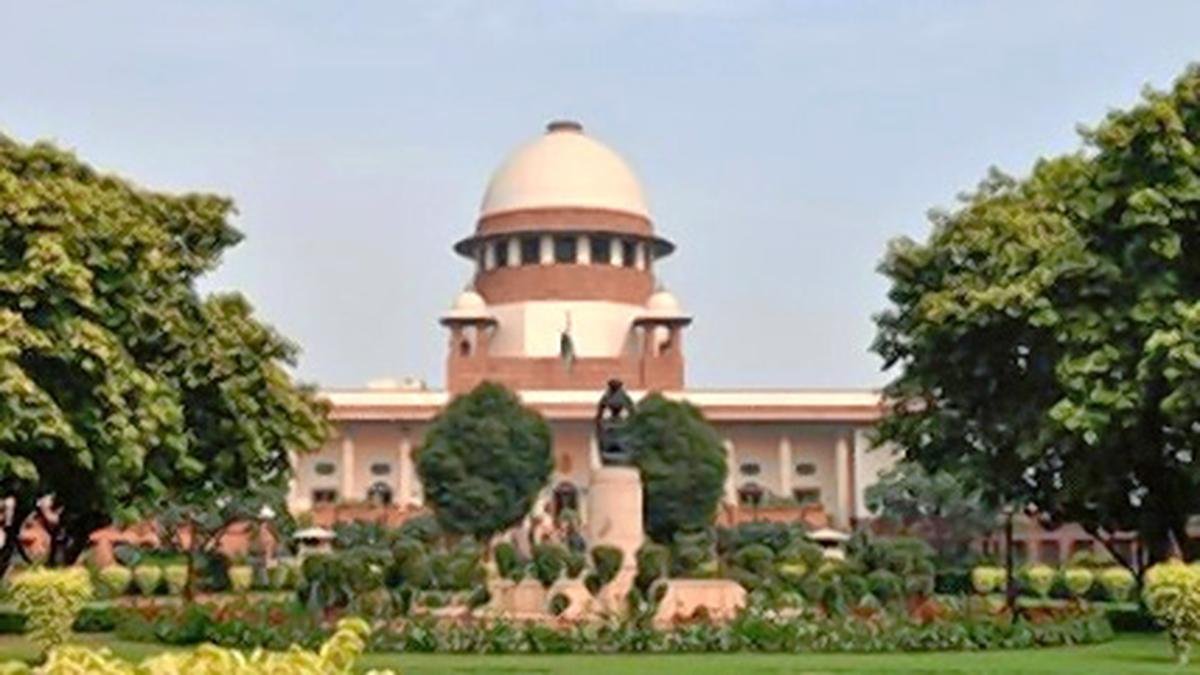
The story so far: The Supreme Court recently in Paliniswamy Veeraraja & Ors. v The State of Karnataka & Anr. reiterated that the investigating authorities were required to obtain permission from the Magistrate to initiate further investigation after filing the closure report.
In this case, the Court quashed the First Information Report (FIR) and subsequent charge-sheet noting that such permission had not been obtained.
Supreme Court orders immediate FIRs in missing person cases, activation of anti-trafficking units within 4 weeks Although an application seeking further investigation had been filed before the concerned magistrate for a third time, no order granting permission was placed on record, the Court said.
The investigating agency had earlier filed closure reports twice, stating that the dispute appeared to be entirely civil in nature.
The Court also relied on the principles laid down in State of Haryana v.
Bhajan Lal (1992), holding that the civil nature of the dispute was an additional ground for quashing the FIR and subsequent proceedings.
What does the statute say on further investigation after filing a closure report/ charge-sheet with the Magistrate?
Sub-section (8) of Section 173 of the Criminal Procedure Code (CrPC) provides for further investigation after sending a report to the magistrate on completing investigation.
It says that ‘further investigation in respect of an offence after a report under sub-section (2) had been forwarded to the Magistrate and, where upon such investigation, the officer in-charge of the police station obtains further evidence, oral or documentary, he shall forward to the Magistrate a further report or reports regarding such evidence in the form prescribed …’.
The sub-section (2) of Section 173 CrPC provides for forwarding a report to the magistrate after completing investigation in the prescribed form.
Also Read : Without warrant: On police action and journalists in Chennai In other words, Section 173(8) CrPC says that in case the in-charge of a police station finds some additional evidence after sending final report to the magistrate, he may send supplementary report to the magistrate.
It is silent on obtaining permission from a magistrate for filing supplementary report under sub-section (8).
Section 193(9) of the BNSS is pari materia (dealing with the same subject matter) to Section 173(8) of the CrPC.
What has been held by the Supreme Court with regard to further investigation after filing a final report?
The Supreme Court in Vinay Tyagi versus Irshad Ali (2013) held that “though there is no specific requirement in the provisions of Section 173(8) of the Code to conduct further investigation or file supplementary report with the leave of the court, the investigating agencies have not only understood but also adopted it as a legal practice to seek permission of the courts to conduct further investigation and file supplementary report with the leave of the court”.
Victims have long been ‘pushed into a corner’, says Supreme Court The Court held that the requirement of seeking prior leave of the court to conduct further investigation will have to read into, and is necessary implication of the provisions of Section 173(8) of the Code.
The doctrine of contemporanea expositio will fully come to the aid of such an interpretation as the matters which are understood and implemented for a long time, and such practice that is supported by the law should be accepted as part of the interpretative process, the Court held.
This proposition has been approved by the Supreme Court in subsequent cases also.
RTI activism has become new business, says SC; refuses anticipatory bail to activist While the newly added proviso to Section 193(9) of the BNSS (which is pari materia to Section 173(8) of the CrPC) mandates that the permission of the court is necessary if the trial has begun, the Supreme Court, in Rama Chaudhary v State of Bihar (2024) reiterated that even though the statute does not require express permission, the law has developed and seeking permission from the concerned magistrate is essential.
The Supreme Court again recently in Robert Lalchungnunga Chongthu v State of Bihar (2025) upheld the ratio of the Vinay Tyagi (supra) case saying that the leave of the court to file a supplementary charge-sheet is a part of the law.
State must not prosecute citizens without reasonable prospect of conviction: Supreme Court judgment Therefore, despite the new provision of the BNSS, once a charge-sheet or closure report has been filed, further investigation based on new evidence may be undertaken only with the permission of the court.
RK Vij is a former IPS officer.