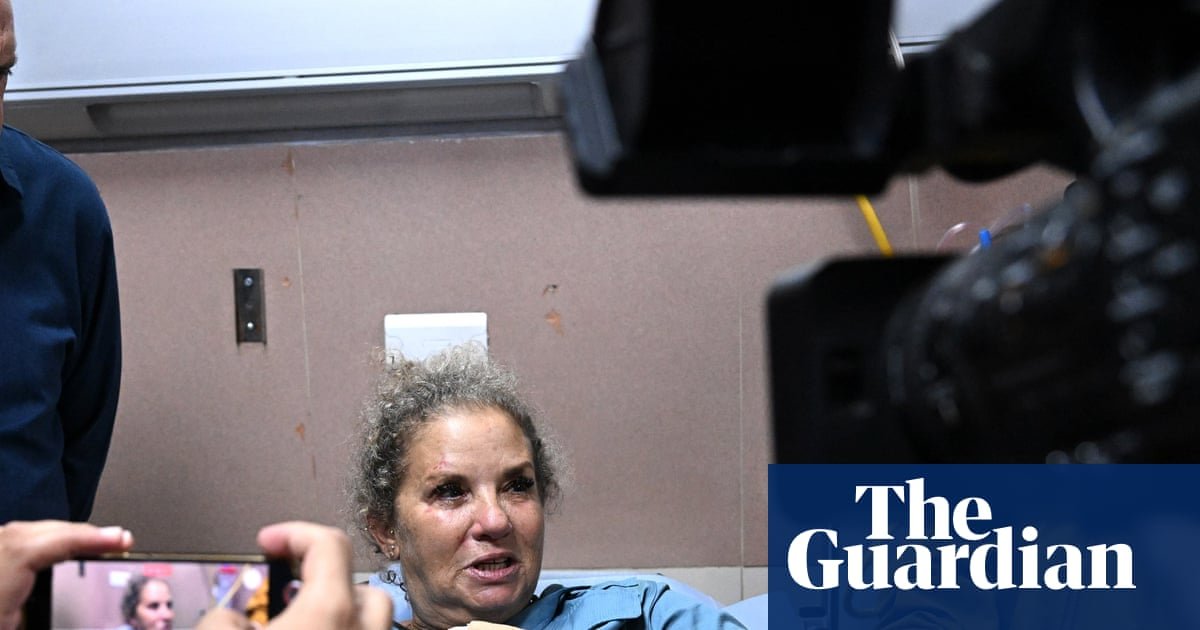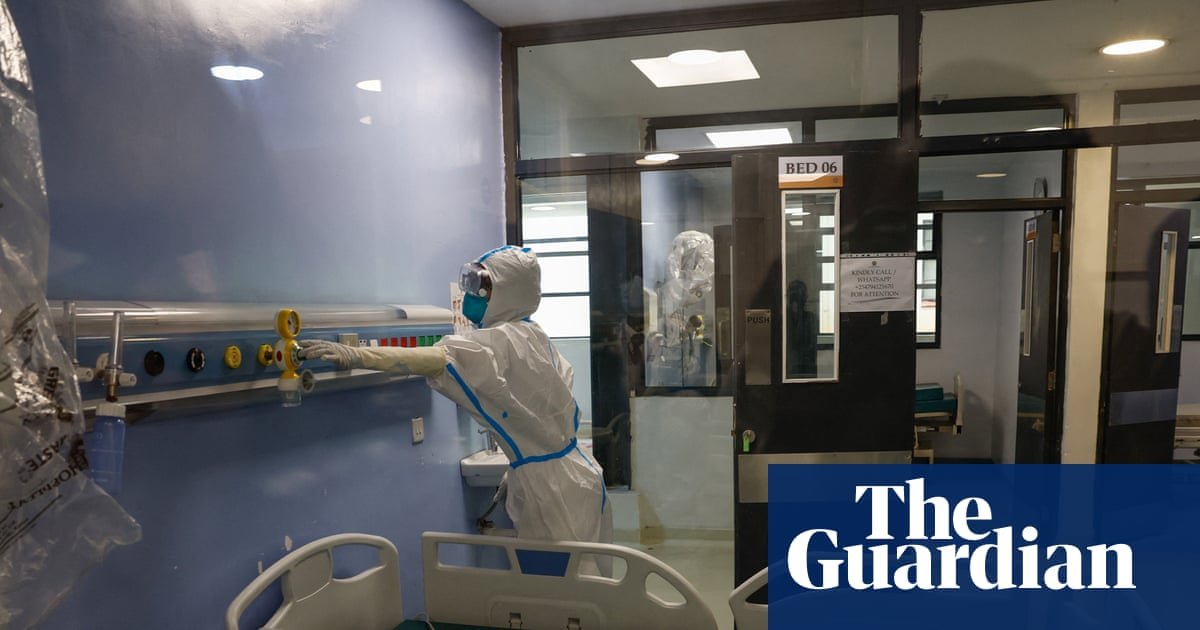
A nurse works at Nairobi hospital.
A Kenyan man fell ill in DR Congo before returning to Nairobi, where he later died.
Opposition to US-led quarantine center in Kenya follows sweeping funding cuts and withdrawal from WHO An eighth person in Kenya has tested positive for the Bundibugyo strain of Ebola in the country’s first-ever cluster of cases of the virus, as the second-largest outbreak in history has killed more than 4,300 and sickened more than 9,000 people in the region.
It highlights the diminished role the US has played in the worsening Ebola outbreak by building a controversial quarantine center in Kenya, pulling back health support globally, and banning travelers from certain countries.
All of this has also reduced the ability to identify and respond to the outbreak and exacerbated mistrust.
The US created a controversial quarantine center at Kenya’s Laikipia airbase, where Americans returning from the Democratic Republic of the Congo would be required to quarantine.
The center, opposed by locals, has stirred distrust in the Kenyan government, leading to protests and a Kenyan court ordering a halt to the center.
“Many Kenyans were concerned about the fact that there was no information and people did not know why the quarantine place was being set up, who was actually going to use it, and what had informed that,” said Allan Maleche, executive director of the Kenya Legal & Ethical Issues Network on HIV and Aids (Kelin).
The litigation will be decided in November, he said.
In the meantime, Kenyans were “very cautious around any information that is being given by the government around Ebola”, Maleche said.
Americans who questioned whether the US has the legal authority to quarantine Americans on foreign soil and prevent them from returning home are pushing back against the quarantine center as Kenya faces its first Ebola cases.
“Is this still a viable solution for the US?” asked Jennifer Nuzzo, director of the pandemic center at Brown University school of public health.
“Are we posing not only an undue burden on the Kenyan government to be able to handle this, but also is this the safest place to be bringing Americans?” The US already has “world-class” Ebola treatment units, Nuzzo pointed out.
“American taxpayers built these units for precisely this purpose, and it’s mind-boggling to me that we’re going to leave them empty,” she said.
In previous outbreaks, actively ill patients have been evacuated safely to these centers, where they have recovered without further spread of the virus.
The unease follows sweeping cuts to US health support across the world, with the demolition of the US Agency for International Development (USAID) and cuts to funding and staff at health agencies like the US Centers for Disease Control and Prevention (CDC).
On 1 October, the CDC closed HIV prevention offices in Angola and South Sudan, with plans to close offices in Zimbabwe.
The US has slashed programs across the world – including DR Congo, where the Ebola outbreak is centered, and other countries, like Kenya, bracing for cases as the outbreak widens.
“We have had a lot of concerns after the US first cut funding for HIV promptly without any direction,” Maleche said.
“It led to clinics closing.
It led to a lot of anxiety among people.” The US is now negotiating bilateral agreements with each country, including Kenya – a process that has been mired in secrecy, Maleche said.
“It’s not very clear what’s the plan, who’s rolling it out, and what will be involved.” Cuts to decades-long programs mean the affected countries and the US have less insight into what’s happening, in addition to a lessened ability to prevent and stop outbreaks.
“When you pull back on those, not only do you leave those countries less prepared to deal with that day-to-day threat, but it also means that they’re less prepared to deal with future emergencies,” Nuzzo said.
The US officially left the World Health Organization (WHO) in January, making it much harder to collaborate on the response to crises like these.
When the US left the WHO, it also “pulled out a substantial amount of funding”, said Maleche.
That means the WHO’s response had also been “weakened”, he said.
A Kenyan man fell ill in DRC before traveling by road to Uganda and then flying to Nairobi on 3 October, where he died in a hospital two days later.
Since then, seven close contacts have tested positive.
Patrick Amoth, the director-general for health, confirmed on Sunday the total number of infections in the country was eight.
Kenya’s ministry of health pointed to the success of contact tracing and quarantine.
About 108 people have been quarantined in Nairobi.
“The general feeling is that the contact tracing systems are working,” Maleche said.
But Kenyans are also wondering why there were “many lapses” that resulted in a sick person traveling across countries.
The border between DR Congo and Uganda has been closed since May.
Uganda was declared Ebola-free in August after earlier reporting 20 cases and two deaths.
A French doctor who returned from DR Congo in June tested positive, and several Americans have been evacuated from DR Congo to Europe for Ebola treatment or monitoring.
In Kenya, “the biggest fear is around how will other countries react” to the outbreak, with travel bans a particular worry, Maleche said.
The US put travel bans in place from DR Congo and neighboring Uganda and South Sudan once the outbreak was detected in May, but it would be “very ironic” if the US instituted travel bans, given its quarantine center in Kenya, Maleche said.
Raphael Warnock, a Democratic senator from Georgia, and Bill Cassidy, a Republican senator from Louisiana, penned a letter in June to the Senate appropriations committee opposing the Trump administration’s plans to cut back on HIV prevention and monitoring.
Dismantling of USAID, withdrawing from the WHO, and abruptly cutting foreign aid cuts was “degrading our outbreak preparedness” and had “seriously weakened our ability to keep Americans safe from infectious disease”, Warnock said in a statement.
“These cuts to global health funding have led to the erosion of international disease-monitoring infrastructure that helps us catch threats like Ebola before they reach our shores, at a time when the world needs American leadership most.” The US should be strengthening these systems, not abandoning them, he said.
Nuzzo agreed.
“It’s about having an understanding of the systems and the conditions in other countries, and eyes and ears in those countries to detect when something out of the ordinary happens, and to get that information as early as possible,” she said.
That benefits the US and the countries themselves, she said.
Work such as HIV prevention “can be repurposed”, she added.
“You have connections with clinical care, the ability to move medicines, the ability to conduct laboratory tests, the ability to move specimens around – all of those capacities are things that you would use in other disease emergencies.” Explore more on these topicsEbola Trump administration US politics Kenya Africa news Share Reuse this content