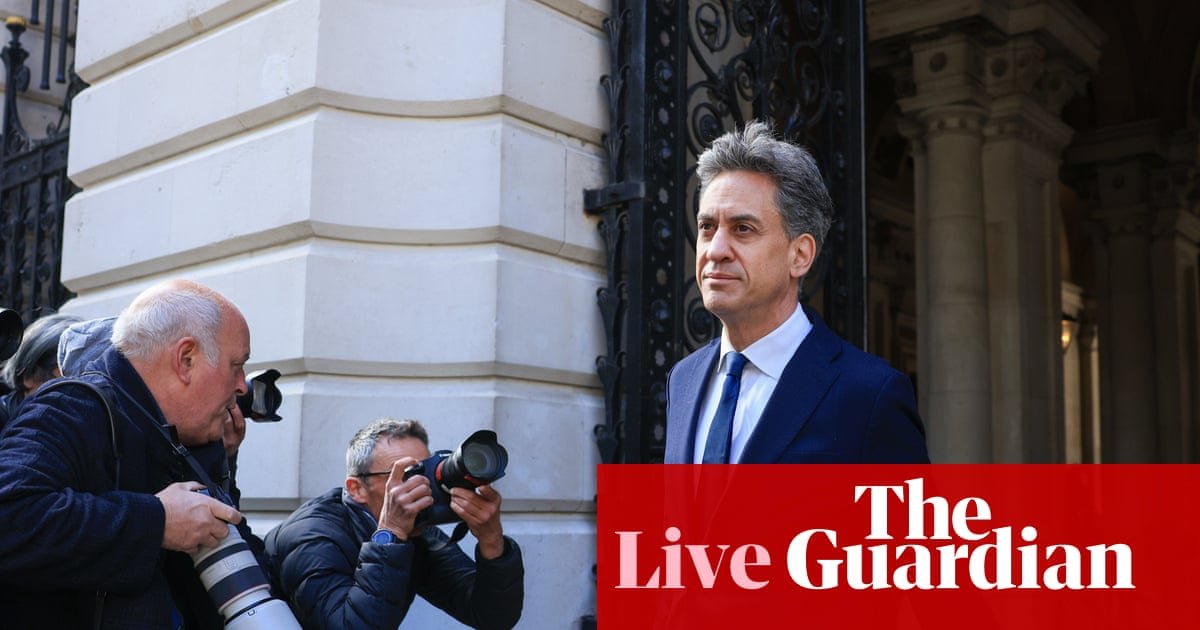
Good morning. There are two issues that will dominate the political news this week – the EU reset, and the Alan Milburn report on youth unemployment – and this morning there are new lines on both of these issues.
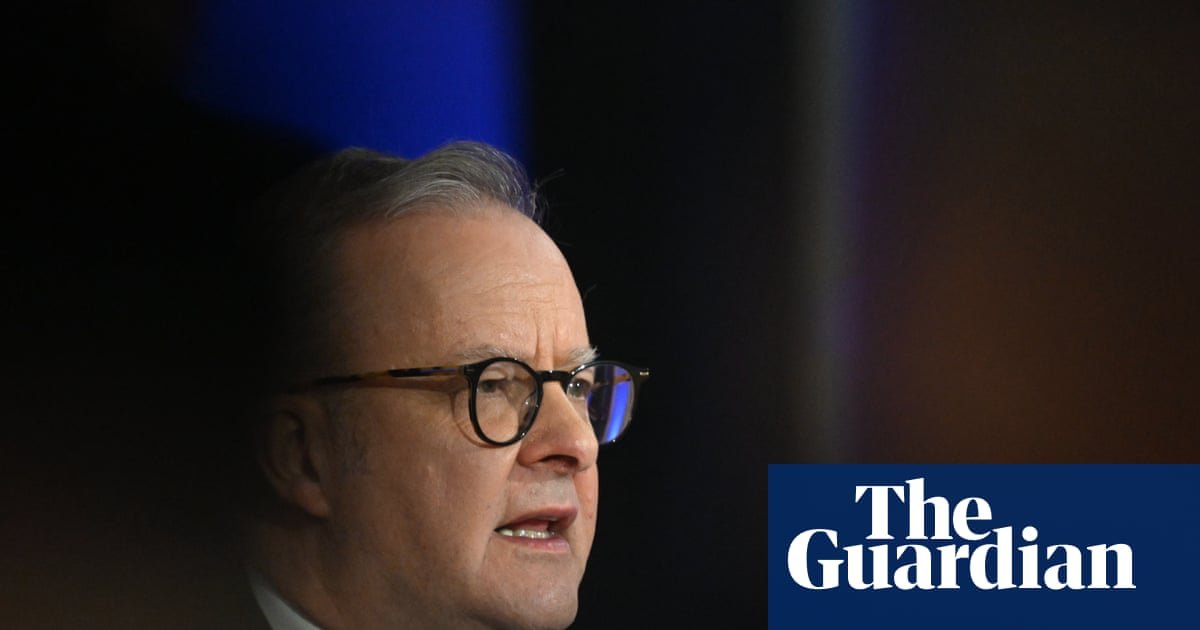
Andy Burnham has set out “three tests” for the deal that he is due to agree with the EU at a summit on Friday. Tonight he is giving the traditional prime ministerial speech to the lord mayor’s banquet in London, which by convention focuses on foreign policy, and, according to the overnight briefing from Downing Street, he will announce three tests. No 10 says:
Ahead of this week’s UK-EU Summit, the prime minister will set out three tests for any agreement: -First, it must be consistent with the manifesto and the government’s red lines. -Second, it must improve the Brexit deal and bring it closer to what people thought they were voting for in 2016, rather than the hard Brexit that no one ever seriously argued for in the referendum. -Third, it must pass the Makerfield test by delivering real, tangible improvements in people’s everyday lives, particularly in communities that have felt neglected for too long. That means cutting costs for businesses, easing pressure on prices for consumers and creating more opportunities for young people. If the agreement delivers against these tests, the prime minister will sign it, demonstrating a new approach based on cooperation rather than confrontation.
Ahead of this week’s UK-EU Summit, the prime minister will set out three tests for any agreement:
-First, it must be consistent with the manifesto and the government’s red lines.
-Second, it must improve the Brexit deal and bring it closer to what people thought they were voting for in 2016, rather than the hard Brexit that no one ever seriously argued for in the referendum.
-Third, it must pass the Makerfield test by delivering real, tangible improvements in people’s everyday lives, particularly in communities that have felt neglected for too long.
That means cutting costs for businesses, easing pressure on prices for consumers and creating more opportunities for young people.
If the agreement delivers against these tests, the prime minister will sign it, demonstrating a new approach based on cooperation rather than confrontation.
There is no real doubt about whether the Friday agreement – which will largely focus on food export rules, but which will also cover energy policy (emissions trading rules) and a youth mobility scheme – will pass these tests. Much of it was already agreed when Keir Starmer was PM, and it is more or less a done deal. But Burnham’s “three tests” are interesting because they provide some clues as to how he will approach his plan to have a wider debate about a closer relationship with the EU.
In his speech, Burnham will also restate his view that Brexit has not worked – using a new simile. He will say:
It’s like the Emperor’s new clothes – where no one is prepared to say the obvious truth. Well, I say it as I see it. And to be frank, the Emperor has nothing on. The Brexit we were given has not worked. We have lost more than we gained.
Charlie Moloney has more on the Burnham speech here.
Alan Milburn is expected to say that employer national insurance for workers under the age of 25 should be cut in his report published tomorrow, the BBC is reporting. Many of Milburn’s recommendations have already been made public, but this is new, and it is likely to be welcomed by Kemi Badenoch, who is holding a press conference later, because the Tories have repeatedly been saying that Rachel Reeves’s decision to raise employer national insurance has been bad for jobs.
As Alexandra Topping reports, in an article for the Guardian, Burnham has pledged in a Guardian article to intervene as early as childhood to tackle youth unemployment.
The Burnham Guardian article is here.
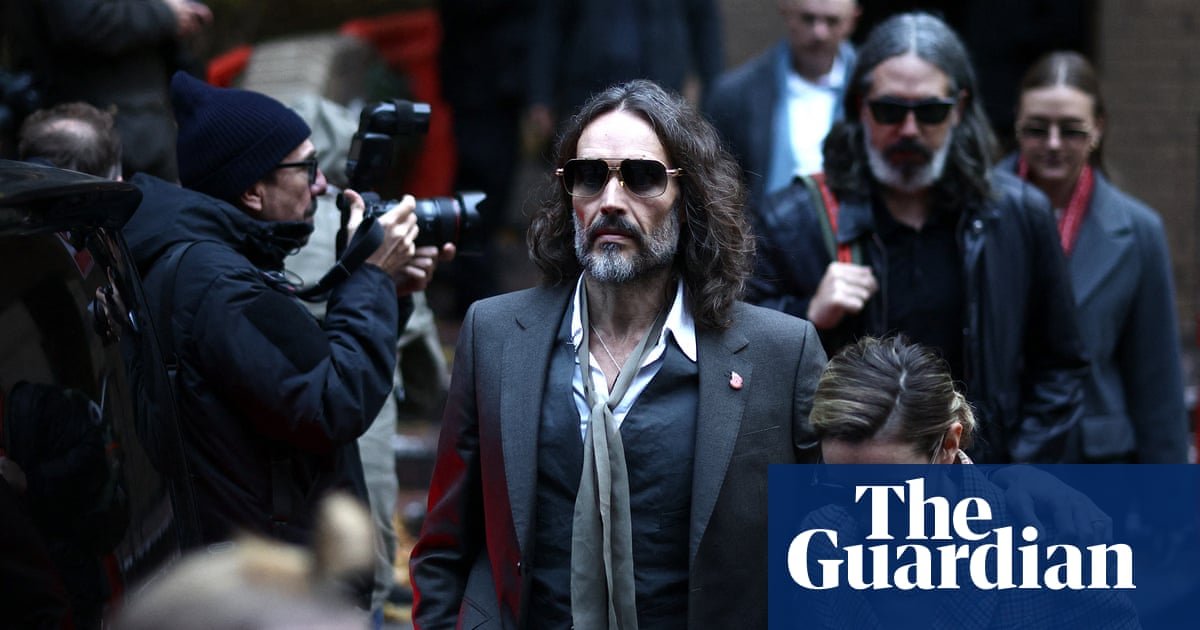
Ed Miliband, the foreign secretary, has been giving interviews this morning. It is relatively unusual for Miliband to be put up for a full interview round and, on Europe and the Milburn report, his remarks were not especially newsworthy. But, on the Today programme, Nick Robinson did get a good line out of him when he asked him about Russell Brand, and Miliband’s decision to do a high-profile interview with Brand during the 2015 election campaign – when Brand had not yet been accused of rape, but when he was already widely viewed as disreputable.
Last week Ed Balls, who was shadow chancellor at the time, twisted the knife by telling his podcast that he had warned Miliband not to go ahead with the “ridiculous” interview. Balls is now a presenter on GB News and this morning he was interviewing his old boss and colleague. Sadly, though, he did not ask about Brand.
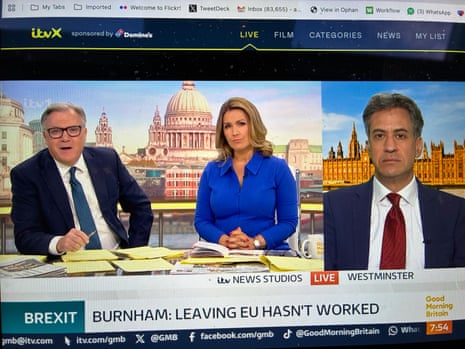
On the Today programme, when Robinson asked about Balls’s comments last week and put it to Miliband that in 2015 he should have listened to his shadow chancellor, Miliband replied:
Let me first say, Russell Brand’s crimes are heinous and appalling, and all of my sympathies are with the victims of Russell Brand, who have shown incredible bravery. On the question of that interview, I’ve said … that if I had known of these allegations against Russell Brand, the allegations which he’s now being convicted [of], I would never have done that interview, and I deeply regret it.
Let me first say, Russell Brand’s crimes are heinous and appalling, and all of my sympathies are with the victims of Russell Brand, who have shown incredible bravery.
On the question of that interview, I’ve said … that if I had known of these allegations against Russell Brand, the allegations which he’s now being convicted [of], I would never have done that interview, and I deeply regret it.
Miliband claimed that he did not know at the time about Balls’s reservations about the interview going ahead, but he said Balls was “obviously right” about Brand being weird and untrustworthy.
But Miliband went on to defend doing the interview. He said:
Let me just say one thing, because I do want to one thing you said. Russell Brand was going around telling people not to vote in the general election. I was not endorsing Russell Brand. I was taking him on and saying he was completely wrong in saying that people shouldn’t vote, that democracy didn’t matter and all those things. But as I say, I deeply regret doing that interview.
Let me just say one thing, because I do want to one thing you said.
Russell Brand was going around telling people not to vote in the general election.
I was not endorsing Russell Brand. I was taking him on and saying he was completely wrong in saying that people shouldn’t vote, that democracy didn’t matter and all those things. But as I say, I deeply regret doing that interview.
Here is the agenda for the day.
10am: Kemi Badenoch and Laura Trott, the shadow education secretary, hold a press conference.
11.30am: Downing Street holds a lobby briefing.
2.30pm: Lucy Powell, the education secretary, takes questions in the Commons.
I’m afraid we are no longer able to have comments open below the line every day on this blog. If you want to contact me, please email politics.live@theguardian.com. You can use this email to flag up corrections, comments for publication, questions or complaints.