Democrats won seats on anti-datacentre tickets and Musk wasted nearly half a billion dollars. Big tech may be losing its grip, but it won’t go quietly
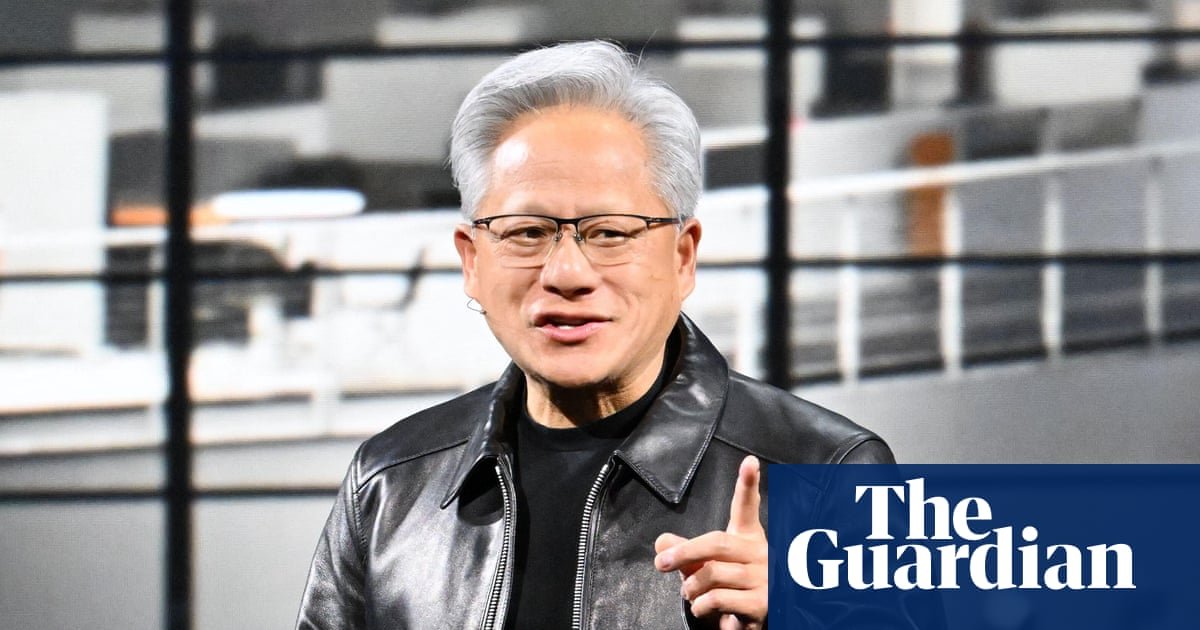
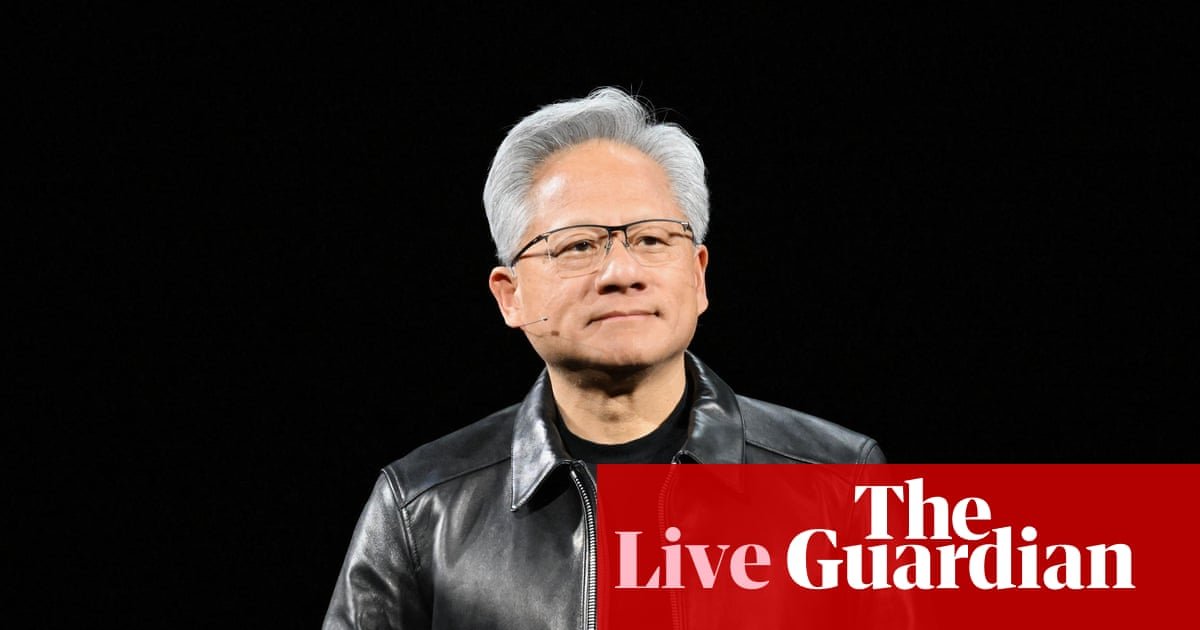
Photos That Precede Unfortunate Events: a couple of months back, Donald Trump hosted some of the world’s most powerful tech executives at the White House for a “Super Intelligence luncheon”, which by coincidence is also how my mum described her tuna sandwiches in a forlorn attempt to get me to eat them. Sitting either side of the president were Elon Musk, making a rare offline appearance in daylight hours, and Jensen Huang, the Nvidia chief executive carving out a precious slot in what we now know was an extremely busy schedule.
Over a delicious meal of microchips and rare-earth metals, the billionaires sketched out a utopian future of an AI industry unencumbered by regulation or safeguards, powered by their heroic strongman leader, a political genius effortlessly able to impose his will upon an entire nation. And perhaps it should have been apparent even at the time that these (mostly) men were putting their faith in a guy who had recently been defeated by pond algae. But as the drinks and the good times flowed, it was still possible to believe that the sun would never set on the thousand-year American superintelligence empire.
And so, while we’re all learning lessons from the resounding defeat delivered to Trumpism last week, might we start with a modest and sober reassessment of the Silicon Valley oligarch class? For years, we have been told that these are some of humanity’s greatest seers and visionaries, the Leonardos and Einsteins of the 21st century, the people best placed to plot a course for our species, despite for the most part not being able to smile without looking as though they were undergoing a juice enema.
As it turned out, this small band of brilliant clairvoyants somehow failed to anticipate the possibility that the deeply unpopular man they were clasping in a tender embrace would be subjected to an absolute democracy-mogging in just a few weeks, throwing their altruistic wet dreams into chaos. After all, last week’s midterms were not simply a rebuke to one man or one party, but to an entire ideology. Across the US, voters took their revenge not just on big tech, but on the politicians who had enabled it.
In Texas, Gina Hinojosa beat the Republican incumbent, Greg Abbott, by promising an immediate moratorium on datacentre development, and despite being outspent almost eight to one, in large part by big tech donors desperate to preserve their tax breaks. In Ohio, the Democratic challenger Sherrod Brown described his opponent, Jon Husted, as “the face of datacentres”, a visually horrifying concept. In total, 46 of the 47 ballot measures relating to datacentres were defeated. By Thursday morning, the markets had responded with a devastating sell-off of tech stocks, the repercussions of which are still shaking out as you read this.
Should we read anything into the fact that the biggest progressive landslide in 52 years, catalysed by a concerted mobilisation of Black, Latino and young voters, was sufficient to send the financial markets into existential panic? Anyone able to join the dots for us there? Is it relevant that the São Paulo stock exchange plunged about 14% after Lula da Silva’s shock election victory in Brazil last month? Just what is it about the popular repudiation of hard-right autocrats that appears to spook the pillars of capitalism so much?
For the time being, big tech does not appear to be as politically polarising in Britain as it is in the US. This is largely because much of the recent acceleration has occurred under a Labour administration, in particular under the late lamented Keir Starmer, a prime minister who in retrospect may actually have been a semi-sentient chatbot all along. “We will test and understand AI before we regulate it,” Starmer once said, which he appears to have done by plugging it directly into his own mouth for two years. But this is an issue that will continue to rise in democratic salience, in part because it relies on the undemocratic manufacture of consent, an inexorable march deliberately designed to circumvent scrutiny.
Take the UK government’s AI growth zones, designed to supercharge datacentre development by taking decisions on nationally significant infrastructure projects (NSIP) away from local councils. A recent report by Spotlight on Corruption found that over two years, ministers met only two community groups and no environmental organisations while developing the policy, while at the same time ministers and senior civil servants were hired to 38 roles at AI companies. Naturally, you are likely to hear very little opposition to any of this, either from the billionaire-owned press or the official opposition; indeed, Kemi Badenoch is perhaps the only major party leader you can imagine typing “what do I think of AI” into an AI prompt.
You will occasionally hear the assumption, made on both sides of the Atlantic and often on the flimsiest of evidence, that voters are increasingly fed up with democracy. But what if we’re getting this the wrong way round? What if, in fact, it is those who are supposed to be upholding democracy – the politicians and media and captains of industry, all slowly stewing in X-brained algorithmic talking points – who are beginning to tire of it? While Musk spends enormous chunks of his fortune trying (and failing) to tip the electoral scales in favour of the hard right, Reform UK rakes in £72m in donations from two cryptocurrency billionaires. Bonus question: do we think the brave men and women out there on the tech frontier will respond to democratic setbacks by demanding more democratic accountability, or less?
And, of course, in these febrile and fragile times you have to take your wins wherever you get them. But as any ChatGPT user will tell you, making bold claims on the basis of a bare minimum of data is always an exercise fraught with risk. Saying no once will never be enough. In a note to investors last week, Goldman Sachs wrote: “We expect the datacentre issue to somewhat fade in importance and any moratoria on datacentre development to be short-lived.” You can decide for yourself what it means by that.
Jonathan Liew is a Guardian columnist
The Guardian’s year in review 2026. On Tuesday 1 December 2026, join your favourite Guardian writers for an evening of candid conversations, witty remarks and surprises as we look back on the year-defining stories of 2026. With Zoe Williams, Lucy Mangan, Jonathan Liew, Heather Stewart, Pippa Crerar, John Crace and host, multi-award-winning comedian Suzi Ruffell. Book tickets here or at guardian.live