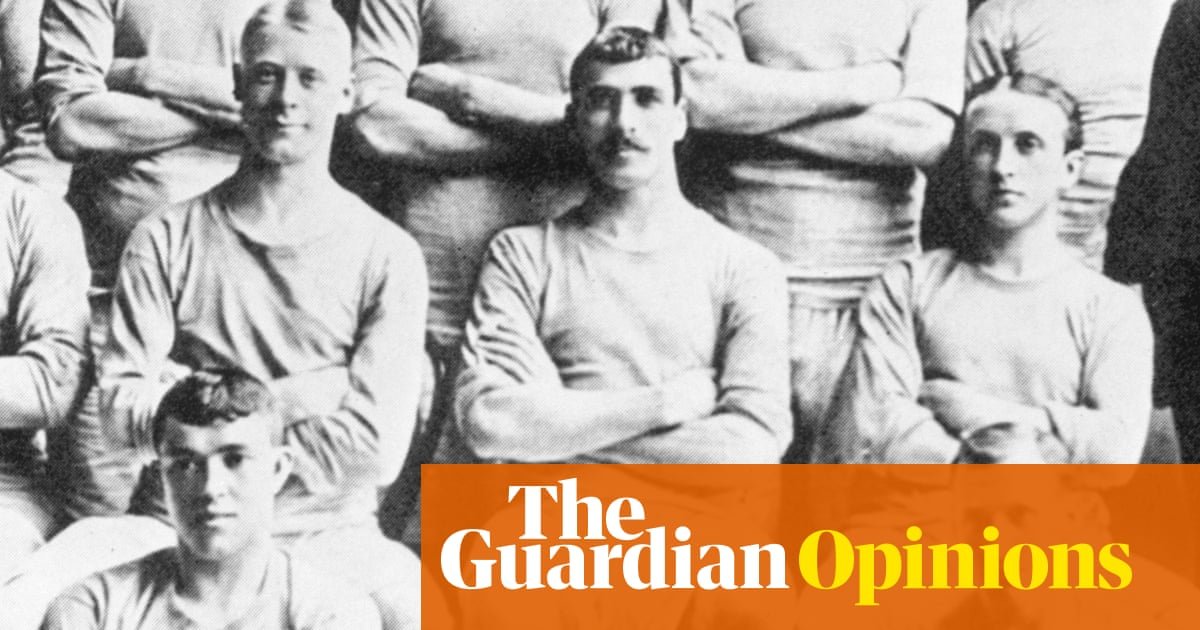
Billy Meredith helped win City their first major honours more than a hundred years ago, was banned by the FA – then went and repeated the trick on the red side of Manchester
When the Manchester City decision finally dropped, the Guardian’s verdict was damning. “FOOTBALL SENSATION – MANCHESTER CITY’S GRAVE OFFENCES – HEAVY PUNISHMENTS”, the headline read. “It is now proved that the club had for years systematically broken the rules of the Football Association by very unscrupulous means.”
But these words weren’t written last Friday. Instead they were penned more than 120 years ago, at the culmination of English football’s first big illicit payments scandal.
Back then City were a club rapidly on the up, with money and attitude to burn – which might sound familiar. Yet having won the FA Cup in 1904, everything began to unravel.
It started on the final day of the 1905 season, when City were on the verge of winning the title only to lose against Aston Villa in a match that involved punches and literal mud-slinging. Far more seriously, City’s star player, Billy Meredith, was also heard offering a £10 bribe to the Villa captain, Alec Leake, to throw the game.
Some say it was not serious. To this day no one knows the mysterious spectator who reported it. But it created a butterfly effect that led to Meredith being suspended for a season, and ramifications that lasted for decades.
Soon after, when Meredith was seen still hanging around City despite his ban, the FA launched a fresh investigation into the club’s finances. It found that not only was City’s gate money being funnelled into the private accounts of club directors, it was being used to give off-the-books payments to players.
Meredith, for instance, was on £6 a week when the maximum wage was £4. And he was far from the only one being given a little extra on the side. It led to the FA banning 17 players from playing for City again, while two of the club’s directors were banned for life.

History doesn’t repeat itself, but it does rhyme. So is what happened to City all those years ago relevant to modern times? Yes, absolutely.
First off, the 1906 case proves that strong punishments work. While City were hardly the only club to be making similar illicit payments, the FA’s sanctions led to the club slipping down the table, being relegated three years later, and not winning the title until 1937.
That City team also offered an early example of one of football’s immutable laws of gravity. The faster a club rises, the more its foundations may be shaky or unsustainable, and the more it is likely to plummet back to earth.
The other interesting thing in all this? While City had the book thrown at them, Meredith enjoyed a redemption arc that continues to this day.
It helped that some felt he had been unfairly targeted for trying to set up a players’ union and campaigning for the abolition of the maximum wage. The wiry winger could certainly play too, which certainly didn’t hurt either.
Indeed no less a judge than David Lacey, the Guardian’s legendary football correspondent, described Meredith as ranking “with that of Stanley Matthews in the history of the British game”.
And when Manchester United fans voted Eric Cantona as their greatest ever player in 2001, Lacey suggested that a couple of decades earlier they would have gone for George Best, and before that Meredith himself.
The fact that Meredith, who turned out for City from 1894 to 1905 and again from 1921 to 1924, is also in United’s hall of fame marks him out as a unique and substantial force.
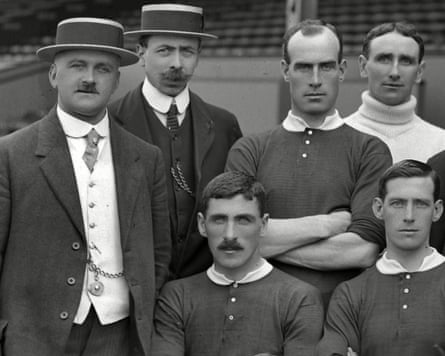
Intriguingly, those switches across Manchester don’t appear to have attracted much condemnation. Indeed, when Meredith played in the Manchester derby in 1910, the Guardian’s man on the ground was left unimpressed by the lack of fire and venom.
“Both sides tried hard, no doubt; there was no shirking to speak of,” he wrote. “But the game differed in no way that one could see from a hundred other games in which local rivalry has had no place whatsoever. The teams might have represented Penzance and Berwick-on-Tweed respectively for all the evidence the play gave to the contrary.”
In echoes of more modern times, the Guardian’s man also questioned whether modern players cared enough about the shirt on their backs.
“Is it reasonable to expect local or even club fervour in professional football as it exists today?” he wrote after United had won 2-1. “Can local patriotism thrive under a red jersey this year, a blue one the next, and perhaps a white one after that? It does not seem likely.”
Incredibly, Meredith kept playing until he was 49, helped, as the Guardian noted in his obituary, by being a details man whose “mind persistently dwelt on the problems of the game”.
Meredith, who was affectionately known as “old skin” and played with a toothpick in his mouth to help him concentrate, eventually called it a day four months before his 50th birthday when he took over a pub.
Not that it was a quiet retirement. During the Manchester blitz, for instance, a bomb exploded at the back of the pub and a shower of Welsh international caps scattered across the local neighbourhood. It took some time to collect them all given he played 51 times for his country.
Meredith was certainly a smart cookie too. When he was asked about the secret of City’s success, he openly admitted it was because the “club put aside the rule that no player should receive more than £4 a week”.
“Clubs are not punished for breaking the law – they are punished for being found out,” he also admitted. Which applies as much to 2026 as it did all more than a century ago.