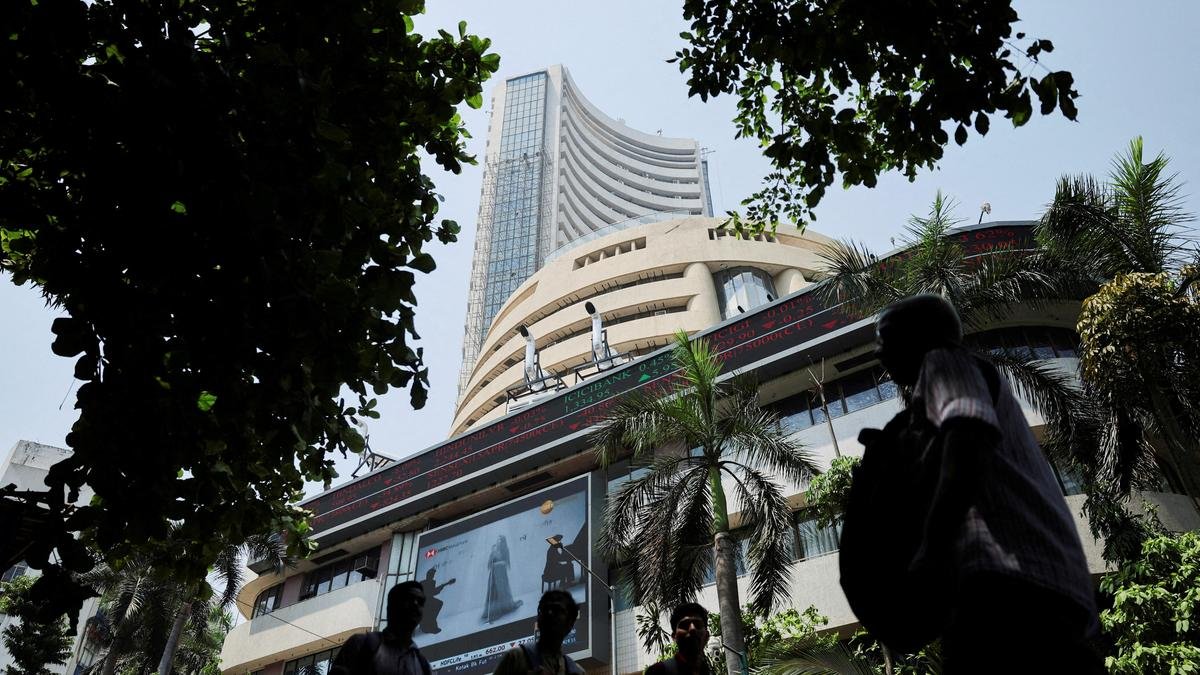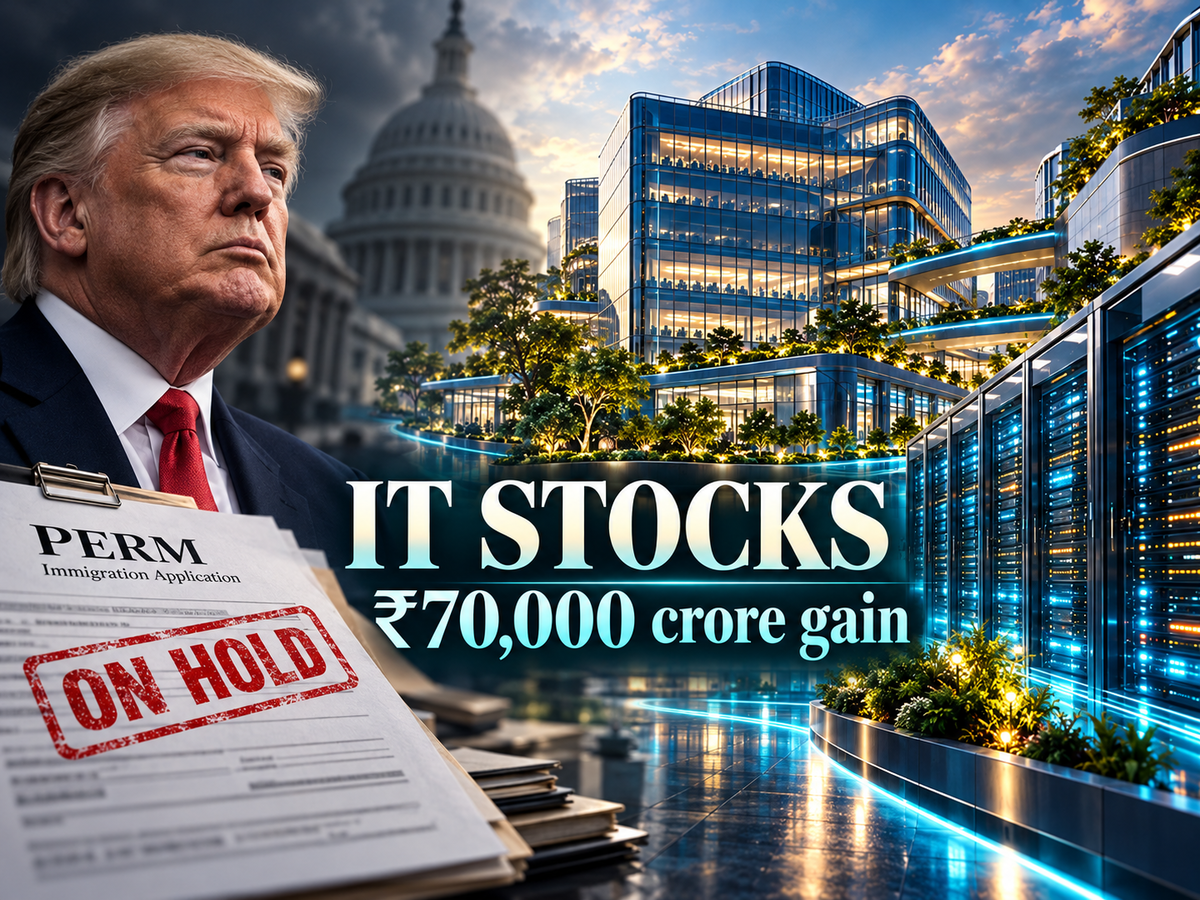
Information technology (IT) stocks emerged as the biggest gainers on Friday, with the Nifty IT index surging over 4% to lead market gains and add Rs 70,000 crore to its total market capitalisation, shrugging off US President Donald Trump’s suspension of the Permanent Labor Certification Program.
The US Department of Labor also said it would stop accepting or processing new applications from Cognizant, Infosys, Capgemini, Wipro, TCS and HCLTech. Labor Secretary Keith Sonderling said these companies had sought nearly three million foreign workers since 2009, securing more than 230,000 H-1B visa approvals and over 100,000 permanent labor certifications.
In Friday’s session, Wipro gained nearly 3% to hit a day’s high of Rs 163, while TCS jumped over 6% to a day’s high of Rs 2,204 following its Q2 results. HCLTech and Tech Mahindra shares gained 3% each, while midcap stocks such as Coforge and Persistent Systems rallied 3% and 4%, respectively.
Why did IT stocks jump despite this blow?
OpenAI missed its revenue run-rate forecast. The company told investors that its annualised revenue for September was nearly $50 billion, lower than the figure it had indicated earlier, according to Reuters. OpenAI had previously told investors at a separate event that its revenue run rate for September was approaching $70 billion.
The discrepancy largely stemmed from an effort to make a direct comparison with revenue figures from rival Anthropic, the Reuters report added.
OpenAI’s revenue disclosure could benefit Indian IT firms by highlighting the growing demand for AI services, implementation and enterprise integration. As global AI companies expand, Indian IT players could secure more contracts to help businesses deploy AI tools, modernise systems and manage costs. However, the opportunity will depend on how effectively they adapt their offerings and convert AI demand into sustainable revenue growth. OpenAI’s lower-than-previously-indicated revenue run rate could also ease concerns that AI companies are growing fast enough to disrupt traditional IT services.
India’s largest IT services company reported 15% year-on-year (YoY) growth in consolidated net profit to Rs 13,884 crore for the second quarter, compared with Rs 12,075 crore a year earlier. The board declared a second interim dividend of Rs 12 per share for FY27. The stock rose as much as 6% to Rs 2,204 per share.
In constant-currency terms, revenue rose 0.5% quarter-on-quarter (QoQ). Operating margin came in at 24%, while net margin stood at 19%.
Nomura maintained its Buy rating on TCS with a price target of Rs 2,630, implying an upside of 27%. The brokerage noted that the company’s trailing 12-month deal wins remained flat YoY, while near-term demand conditions were largely unchanged as clients continued to scrutinise discretionary spending that did not offer immediate benefits.
Nomura expects margins to remain subdued in the near term as TCS continues to reinvest in growth. The company’s EBIT margin stood at 24% in Q2FY27, unchanged sequentially. Investments in AI partnerships and ecosystems, along with a 90-basis-point QoQ increase in subcontractor expenses, were partly offset by currency tailwinds and ongoing cost optimisation.
TCS also indicated that the integration of the Porsche project would weigh on margins by 50 basis points in the quarter in which it closes, either Q3 or Q4FY27. The company plans to offset this impact through further cost optimisation and lower subcontractor expenses. Nomura expects EBIT margins of 24.1%-24.8% in FY27-FY28, compared with 25% in FY26 on an adjusted basis.
CEO and MD K Krithivasan said the company saw broad-based growth across international markets and most industry segments. He added that the Porsche and Best Buy deals represented a new category of transformation partnerships, with TCS building repeatable platforms with clients to industrialise AI at scale.
The Sensex and Nifty gained over 1%, putting them on course to snap an eight-week losing streak, as oil prices and bond yields eased after Trump said he would not attack Iran until the midterm elections in November.
“Stock market history tells us that crises are great opportunities to buy. The ongoing corrective phase of the market has opened up opportunities for patient, long-term value investors to accumulate high-quality stocks. The risk-reward structure of the market now is highly favourable for medium- to long-term investment,” said V K Vijayakumar, chief investment strategist at Geojit.