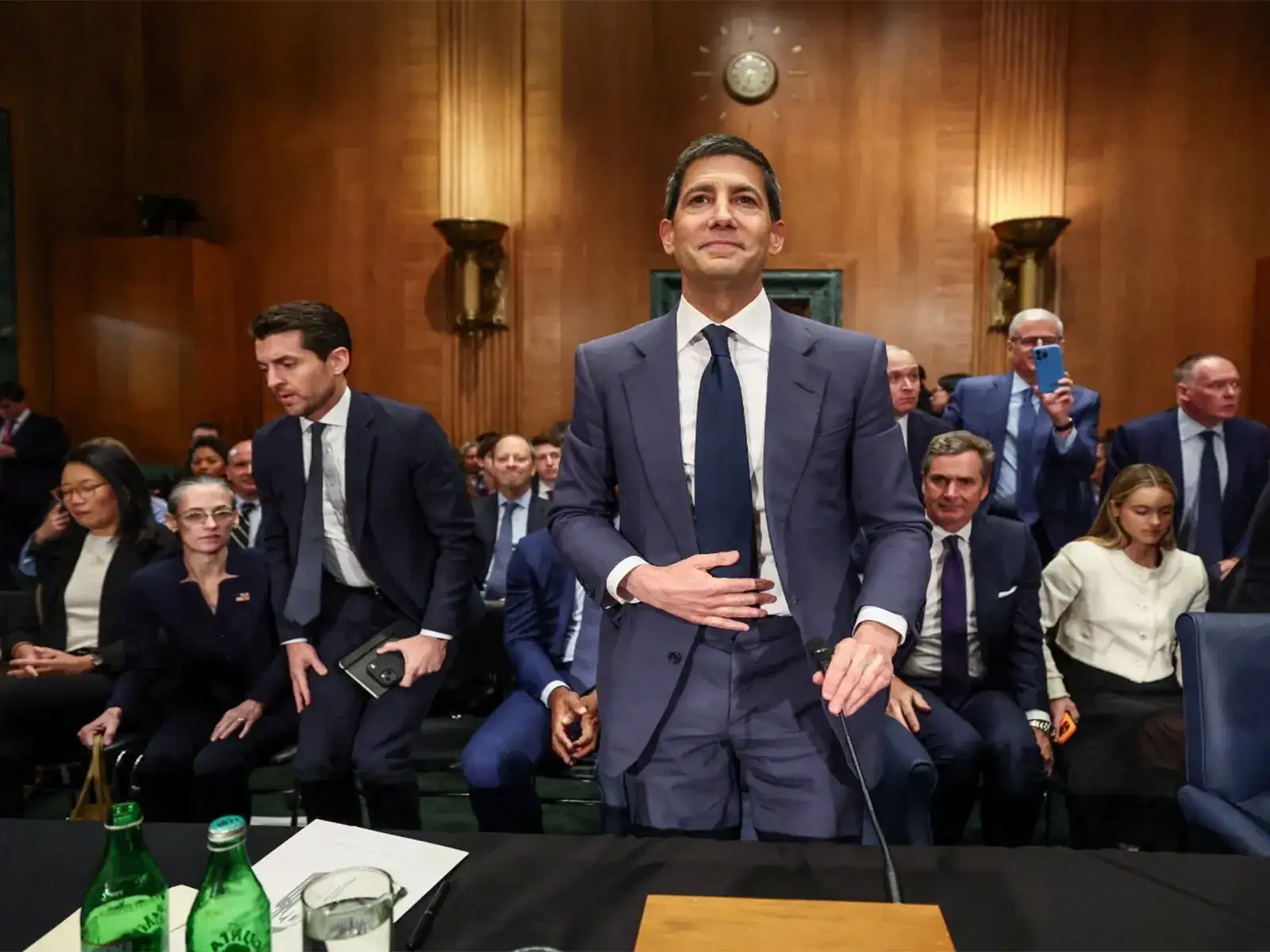
U.S. Federal Reserve Chairman Kevin Warsh on Tuesday vowed to "do my job" if challenged by President Donald Trump, his most direct comment so far about how he would handle the sort of pressure his predecessor did for much of his tenure.
Asked how he would react if Trump continues targeting the U.S. central bank through efforts that included the attempted firing of Fed Governor Lisa Cook, Warsh told the House of Representatives Financial Services Committee that the U.S. Supreme Court had recently reaffirmed the Fed's independence in setting monetary policy.
If targeted personally, "I could continue to do my job," Warsh told lawmakers. "Outside the four walls of the Federal Reserve there’s no doubt a lot of politics. My goal inside the central bank is for there to be no politics. To the extent there’s politics there, we’re going to get rid of it."
Warsh’s relationship with Trump, who was effusive about his pick to lead the Fed at a swearing-in ceremony in May, formed the backdrop of the first of the Fed chief’s two days of testimony in Congress this week, with Democrats warning him not to rely solely on the recent Supreme Court ruling to defend the central bank’s independence.
The new Fed chief will be managing both the economy and Trump through a difficult-to-read moment, with inflation currently running above the Fed’s 2% target and uncertainty around whether renewed conflict in the Middle East could reverse recent progress.
Data released earlier on Tuesday showed that U.S. consumer inflation slowed more than expected to 3.5% year-on-year in June on lower energy prices. Traders see only about a 12% chance of a quarter-percentage-point rate increase at the Fed’s July 28–29 meeting, versus about 42% on Monday, according to CME Group’s FedWatch tool. They see a hike at the September 15–16 meeting at about a 53% likelihood, down from roughly 75% the prior day.
In his testimony, Warsh reiterated that his main thrust right now is to bring inflation back to target, a goal that may require him to disappoint Trump’s repeated calls for lower interest rates.
"If we get policy right, and we will, the inflation surge of the last five years will be a thing of the past," Warsh said.
He will appear before the Senate Banking Committee on Wednesday, a panel that in late April recommended his confirmation as Fed chief on a party-line vote, with Democrats raising concerns about his independence following Trump’s indication that he would nominate someone supportive of rate cuts.
Warsh’s initial steps are seen as showing some distance from Trump, with his appointments to task forces noted for their technical expertise and lack of overt ideological bias. Analysts say these moves reinforce perceptions of an independent policy approach.
He has shown no signs that a rate cut is imminent, maintaining a stance similar to that of his predecessor Jerome Powell, who faced sustained criticism from Trump. Economists say Warsh now has the scope to take a longer-term, data-driven view on policy.
Warsh has also adopted a more cautious tone on artificial intelligence, noting that while it may boost productivity, it is currently contributing to higher costs in areas such as software and infrastructure. The timing and scale of its economic benefits remain uncertain.
His position contrasts with that of former Fed Governor Stephen Miran, who consistently advocated rate cuts during his tenure. Warsh, however, has avoided offering forward guidance and did not submit rate projections at the Fed’s June meeting.
His relationship with Trump could face tests in the coming months, particularly if inflation remains elevated or if political pressure on the Fed intensifies. The administration’s stance on Fed leadership and policy decisions may also influence that dynamic.
For now, Warsh appears to be taking Trump at his word when the president said he should act independently.
"The president says he wants Kevin to do what he thinks is best. I don’t know how long that will last," said former Cleveland Fed President Loretta Mester, adding that the composition of the new Fed task forces appears promising.