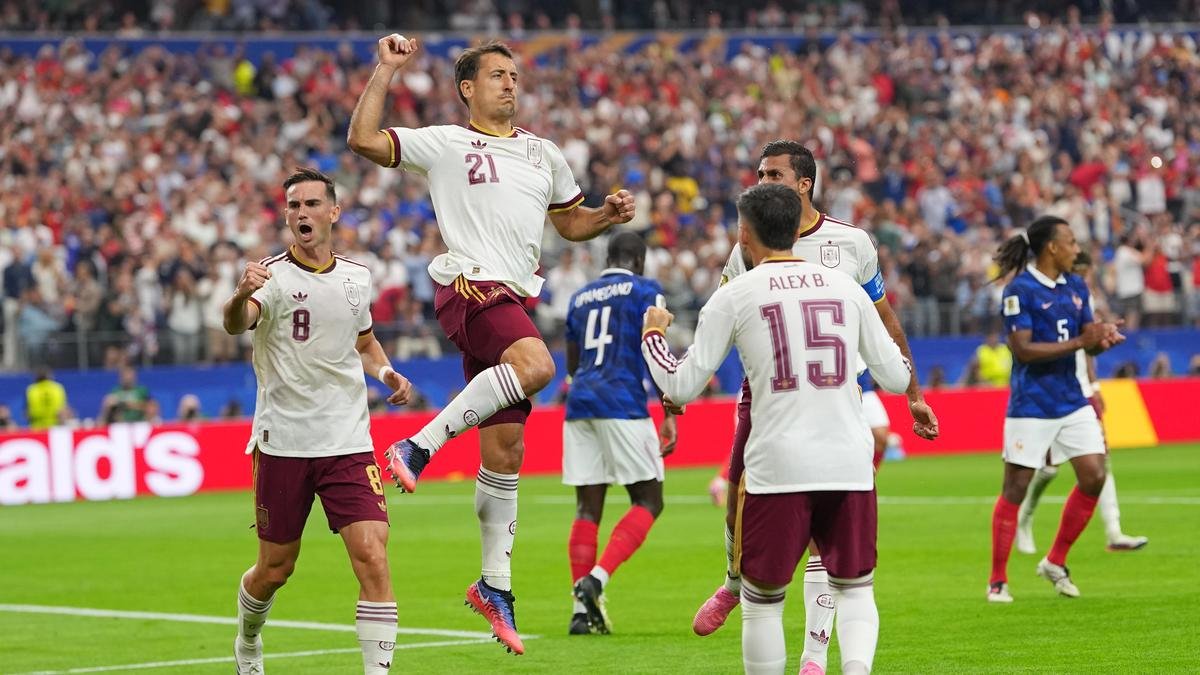
France had arrived in Dallas carrying the tournament’s most feared attack. Kylian Mbappe, Ousmane Dembele and Michael Olise had combined for 13 goals and 10 assists in six matches as opponents struggled to contain them. By the end of the semifinal, Spain had made that frightening front three look almost anonymous.
The scoreline read 2-0, but the performance was even more emphatic.
Spain reached its first World Cup final since lifting the trophy in Johannesburg 16 years ago by producing perhaps the tournament’s most complete display, suffocating Didier Deschamps’ side through relentless pressing, immaculate possession and defensive organisation.
France managed only three shots on target and rarely looked capable of disturbing a Spanish side that controlled both the ball and the rhythm of the evening.
“They defended extremely well,” Deschamps admitted afterwards. “They left us very little space. Because we made technical mistakes, it became difficult to create problems for them.”
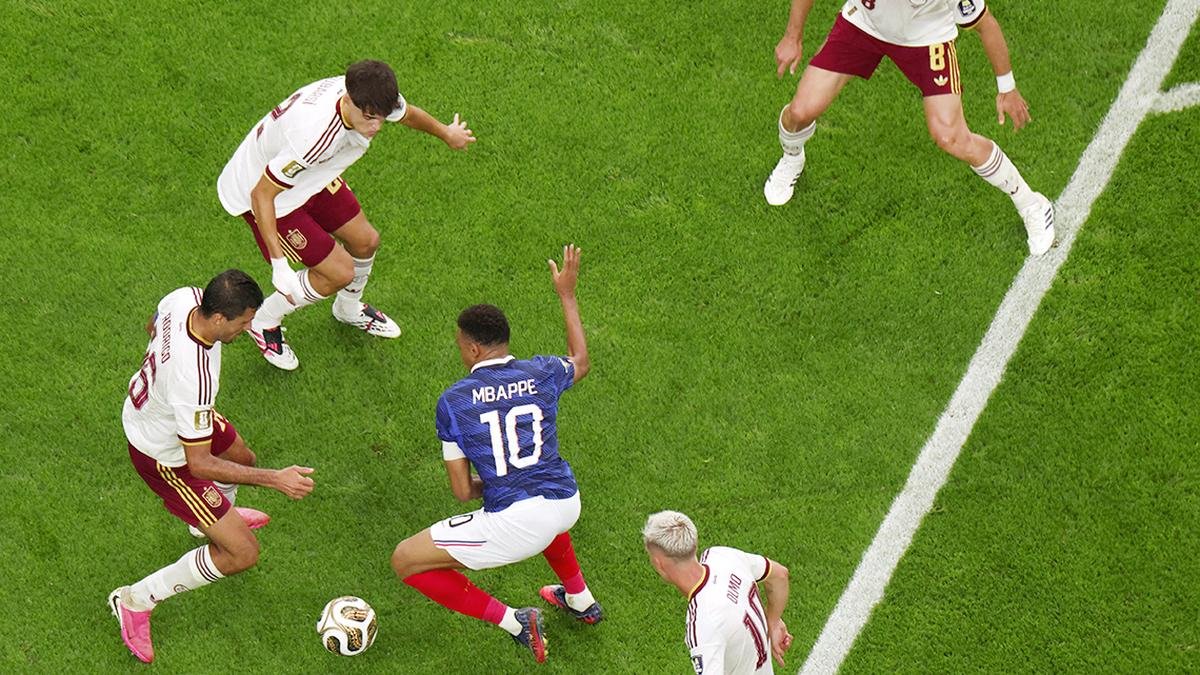
Rodri and Fabian Ruiz controlled the midfield while Pau Cubarsi and Aymeric Laporte stepped forward to nullify the threat of Mbappe, who failed to register a single shot on target for the first time in his last nine World Cup appearances.
Luis de la Fuente’s side has reached the final having conceded just one goal in seven matches, becoming the first team in World Cup history to record six clean-sheet victories in a single tournament.
It has now gone 37 matches unbeaten in all competitions and stands one win away from becoming only the third reigning European champion to follow it up with the World Cup.
Spain reduced Les Bleus to just 0.30 expected goals — France’s lowest attacking output at a World Cup in six decades. France attempted only 10 shots, with just one coming from inside 13 metres of the Spanish goal.
Spain’s defending begins long before opponents reach its centre-backs. Rodri and Ruiz monopolise possession, the press forces hurried decisions, passing lanes disappear and attacks are extinguished before they gather momentum.
“We couldn’t find solutions,” Deschamps admitted. “Compared with them, in our passing combinations and sequences, they’re also excellent at reading the game and intercepting passes. That’s normally one of our strengths. There was also a lot of merit on the opponent’s side.”
That collective understanding has become Spain’s greatest strength.
Lamine Yamal dazzles, Rodri dictates, Cubarsi defends with the assurance of a veteran, while Mikel Oyarzabal continues his habit of deciding the biggest matches.
Pedro Porro, whose first responsibility is usually to stop elite forwards, scored the second goal that put this contest to bed. The stars change from game to game because the system remains.
Spain has the most forced turnovers (303) in the tournament, has tried the most passes (4592) with a 91 percent success rate and also had the most defensive line breaks attempted (175) with a 65 percent success rate, while topping the charts in almost all movement metrics.
“We started almost four years ago with an idea, and we’ve been faithful to that idea and it’s brought us here,” De la Fuente said.
“Today we faced one of the best national teams in the world, but in front of them they had the best team in the world. That is the difference. These players deserve everything. Day after day they’ve shown their commitment, solidarity, generosity and talent. They make the difficult look easy.”
For years, Spain was admired for its possession but questioned for lacking the cutting edge.
This generation has found the balance. It monopolises the ball without becoming sterile, attacks without losing structure and defends without retreating.
Only one team has found a way past Unai Simon in seven World Cup matches.
With one game remaining, that may be the statistic that defines Spain’s tournament.