South Australian authorities say case discovered on Kangaroo Island is first for species of which less than 12,000 animals remain
Get our breaking news email, free app or daily news podcast
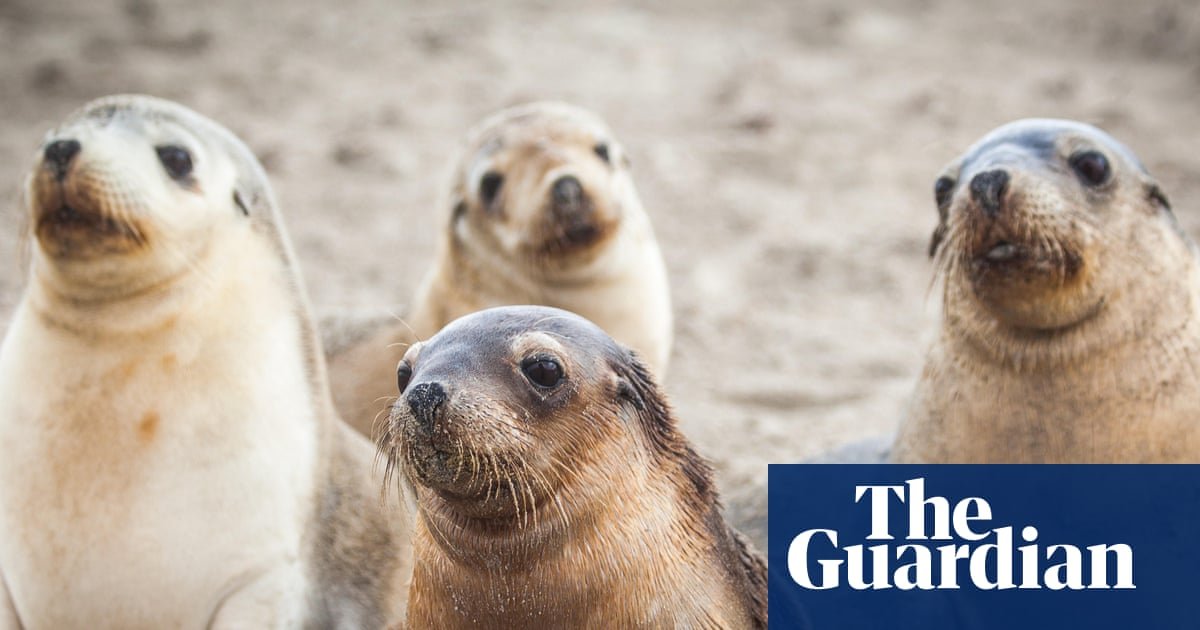
South Australia has recorded the first death of an endangered Australian sea lion from H5 bird flu.
Experts say about 12,000 Australian sea lions remain – though a more recent estimate put the figure at less than 10,000. Most of the population are found in South Australia, with the remainder in Western Australia.
On Sunday, the state’s environment minister, Emily Bourke, said the sea lion was found dead at Seal Bay on Kangaroo Island, the third-largest single colony.
“We’ve seen quite a number of mammal cases, but the Australian sea lion is the rarest seal found in our Australian waters,” Bourke said.
“85% of the population is found here in South Australia. It’s an endangered species.”
She said the sea lion had been recovering from a shark attack, but that bird flu had caused its death.
“We found that it was actually not the shark attack that killed the sea lion. It was the bird flu … we might find that this particular case was more susceptible because it was recovering.”
The government said there had been no other known endangered sea lion deaths at Seal Bay, but it was monitoring the population closely.
Bourke said there was “no real” mammal vaccine that “you could get off the shelf at the moment”.
“It was used in cattle in the US and they did an experimental trial in Hawaii on their monk seals, which they have seen that has been successful,” Bourke said.
“We have been working very closely with the federal government to highlight that we are willing and able to participate in a trial here in South Australia.”
Seal Bay has an estimated 800 Australian sea lions.
Bourke said the population was already diminishing by 2% every year, even before the arrival of bird flu, which will have a “devastating impact” on population levels if no vaccine can be administered.
“We’ve seen Heard Island [that there has been] a reduction in the population there for our seal pups by 75%. They were impacted by bird flu,” she said.
“And we’ve seen other experiences around the world where they were impacted by 95%. We know that this is going to be not the first and only case of [the virus] going into our sea lions.”
Last month, John Woinarski, a leading mammal scientist at Charles Darwin University, told Guardian Australia that he feared the virus would quickly start affecting more seals and sea lions.
“The carnage may be substantial and represent a serious conservation impact,” he said.
“I fear for Australian sea lions in particular because of their small population size.