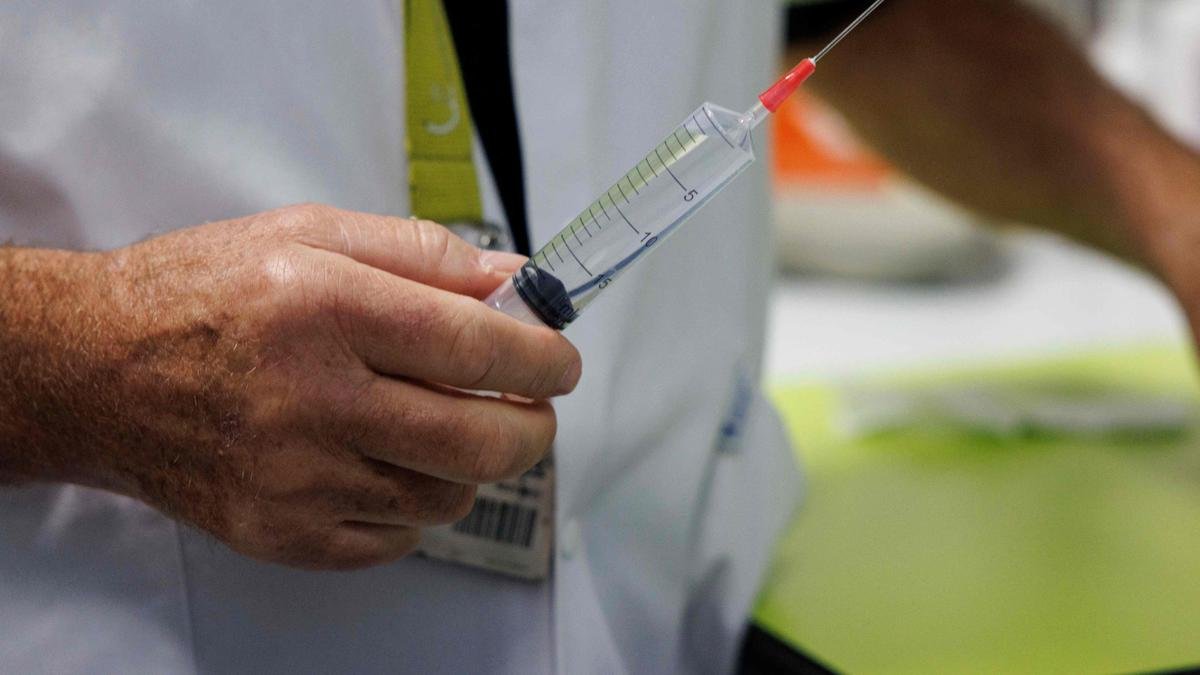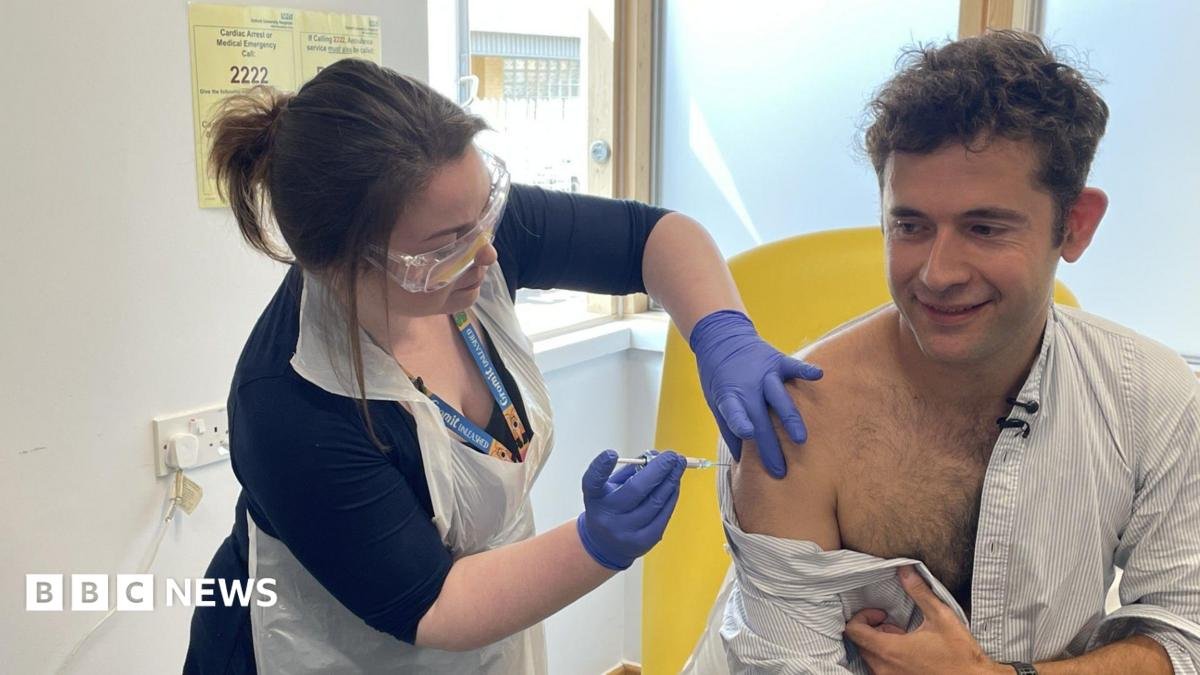
Image caption, Ed Hunt receiving the Ebola vaccine in Oxford ByFergus Walsh Medical editor Published 6 minutes ago The first volunteer in the world - a 37-year-old UK man called Ed Hunt - has received an experimental vaccine against the Ebola virus.
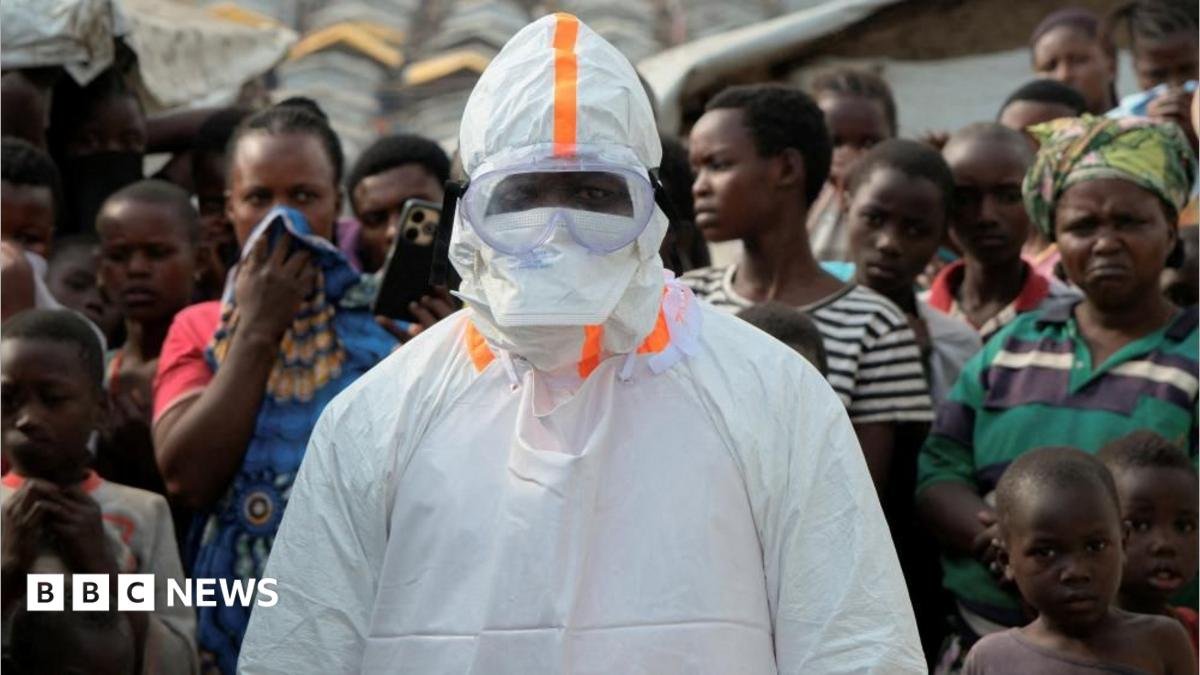
Hunt said he wanted to help after seeing news reports of the deadly Ebola outbreak in Democratic Republic of Congo.
The vaccine, designed using the same technology as one of the UK's Covid vaccines, was given in Oxford where scientists developed it in just eight weeks.
Hunt is the first of 50 healthy volunteers aged 18-55 being recruited for the trial.
He told the BBC what motivated him to take part: "I had wanted to volunteer for the Covid vaccine trial but was unable to because of work commitments.
After seeing news from DR Congo I thought I'd like to do my bit." The vaccine uses the same technology as the Oxford AstraZeneca Covid jab which was given to hundreds of millions of people during the pandemic.
Prof Teresa Lamb, who led the Ebola vaccine team at the University of Oxford, said they had been able to create it so quickly because of the background of decades of research.
She explained how they would confirm that the vaccine was effective at protecting people.
It cannot give anyone Ebola.
"We will not be giving anybody Ebola in this trial or any trial.
"The aim of the phase one clinical study is to look for the safety of the vaccine, and also to see if we're getting a strong immune response that could be protective against the Bundibugyo species of Ebola." There are four vaccines in development against the Bundibugyo species which has triggered the outbreak, but this is the first to enter human trials.
There is a licensed vaccine against the Zaire species of Ebola, but it does not work against Bundibugyo.
The Oxford team say a second small Ebola vaccine trial is due to begin soon in Uganda, followed by a bigger study, looking at efficacy, in DR Congo.
The Serum Institute in India has already manufactured 600,000 doses of the Oxford Ebola vaccine, ready to be used if the trials are successful.
To date there have been more than 2,500 confirmed cases of Ebola in DR Congo, including just over 1,000 deaths.