Record inundations wrecked homes and took seven lives but Trump has not approved emergency aid and the state has cut funds for environmental agencies
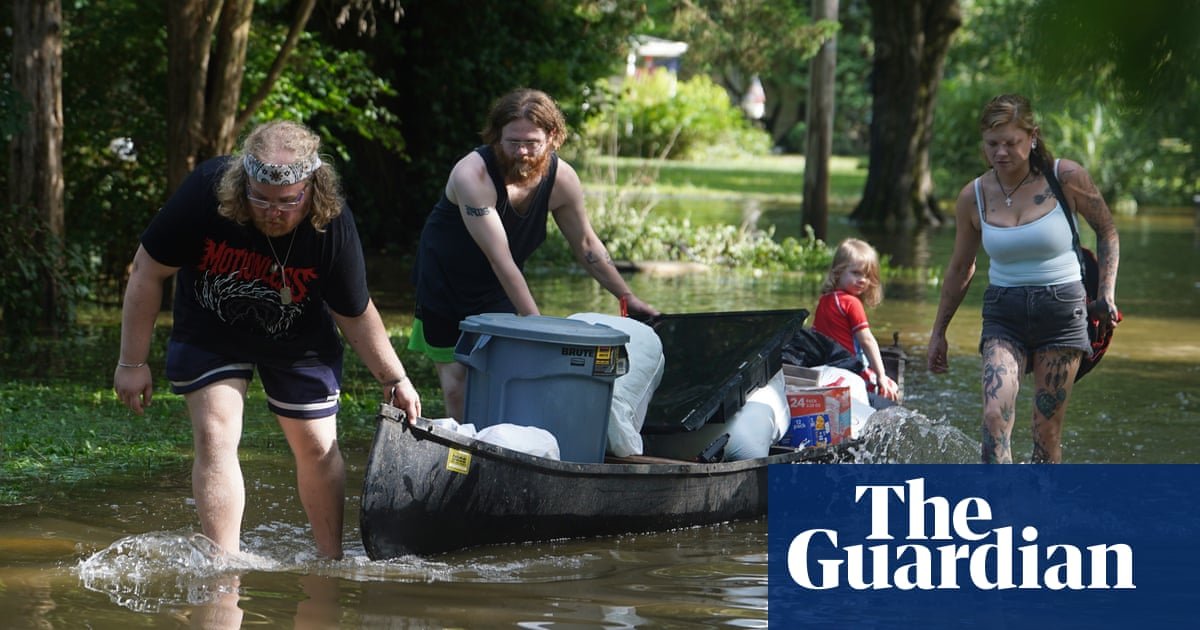
It’s been 10 days since the floodwater receded from Cambridge City’s main street and yet signs of disaster are all around.
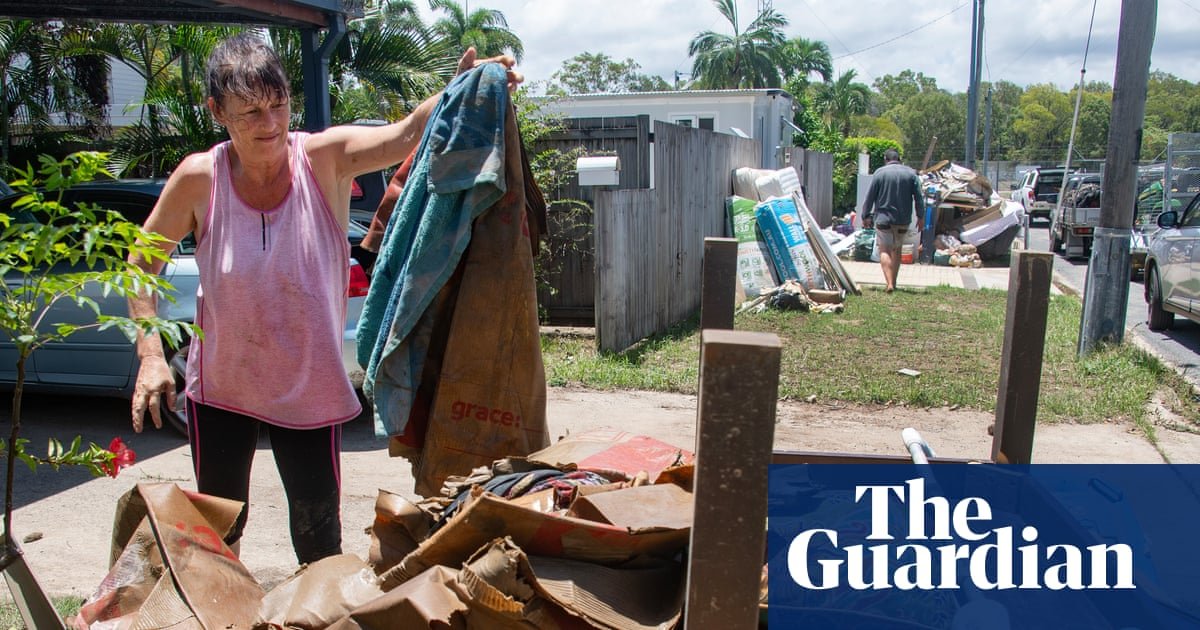
Abandoned cars, toilets and bathtubs are strewn across parks and side streets on a recent visit to the city. Garages have been lifted from their foundations and moved by the rushing water. Dumpsters up and down the street are overflowing with people’s belongings, with red paint sprayed on homes indicating which houses have been cleared by water rescue teams.
Flooding from the Creitz Creek, a tributary of the Whitewater River, has damaged one-third, or about 250, of all houses in this quiet town of 1,700 people in south-east Indiana. About 175 of those homes have experienced significant damage.
“At first, earlier in the morning the water was coming into the basement from the west, and we were fighting it with a pump. We were good. But then, as the river swelled, it started to come back up the opposite direction,” recalls Rick Keasling of what happened on the morning of 12 August.
By the time about 10 inches of rain had fallen by mid-morning – three times the average amount for the entire month of August for the town – the flood waters had risen almost five feet inside his home. He, his wife and dog fled shortly before.
“The dog had to swim to the truck. We’ve lost everything on the first floor and in the basement. All the big appliances,” he says. “We’ve had some water in the basement [in the past] but nothing like this; not even close.”
Record flooding across swathes of central and eastern Indiana have destroyed critical infrastructure, made more than 1,000 people homeless and taken seven lives. In the north-west part of Indiana, hundreds of thousands of people in Gary, the only majority-Black city in the state, were left without electricity for more than two weeks following a derecho storm that pummeled the region on 11 August.
A section of Interstate-70, one of the most important regional highways connecting the populated eastern US with the midwest, was washed away a few miles north of Cambridge City.
All the while, Indiana’s state legislature, where Republicans hold a supermajority, have repeatedly refused to fund climate-related initiatives in the state. While Indiana cut state funding for state environmental agencies by 19% between 2010 and 2024, neighboring Ohio and Michigan increased resources in their states by 19% and 78% respectively.
Twice in recent years Indiana’s senate environmental affairs committee has refused to consider legislation for a climate solutions taskforce for the state. The state’s disaster relief fund stood at just $2m before the flooding (it has since been raised to $5m) and, according to the Center for Climate and Energy Solutions, Indiana is one of 18 states with no climate action plan.
“Climate change played a role in the intensity of the event since the warmer atmosphere would have allowed for more vapor to ultimately condense and fall as rain,” says Beth Hall, director of the Indiana state climate office.
“Additionally, the warmer temperatures may have caused the heat dome to be the large size it was and to stick around longer than normal.”
Donald Trump has approved Federal Emergency Management Agency disaster aid for more than 50 counties around Indiana, but with that capped at just $5m, many say it doesn’t go far enough: the cost of this month’s storms and flooding is estimated by state leaders at about $5bn.
Fema, too, has come in for criticism. Indiana’s governor, Mike Braun, submitted a disaster declaration to the federal agency on 21 August, which would allow for the release of millions of dollars in federal support to flood victims, but no response has been received. Fema under the current Trump administration has turned down more than 30 disaster declarations and is taking longer to approve requests when it grants approval.
Meanwhile, Cambridge City has only a moderate risk from flooding, according to First Street, a flood risk non-profit.
But nearly all the properties affected by flooding in the town are located in a Fema flood zone AE, which signifies a high-risk flood area where there is a 1% or greater chance of flooding in a particular year. According to Fema mapping, many buildings, including a former elementary school, are located in a “regulatory floodway”.
In a town where the median household income is about 60% of the national level, many residents have been forced to go without flood insurance due to prohibitively high premiums and deductible charges.
In the aftermath of the flooding, while small businesses can apply for a county grant of up to $5,000, the few that have been able to open their doors are struggling.
“We’ve had some people [come in] but it’s not normal,” says Tami Hall, who runs Vinton House Antiques on Cambridge City’s main street, and which lost most of its basement equipment, including its HVAC system in the flooding.
“I think people think that everything’s closed.”
Sitting on a bench inside the antiques store, Tom Saunders, who serves on the town board in the neighboring community of Lewisville, which was also hit by flooding, says that smaller villages in particular are struggling in the flood’s aftermath.
“I have a gentleman, he’s 69 years old, he lost his mobile home, his four cars, everything. He’s living with me right now. We’re past a week of this and we still don’t know anything,” he says.
“There’s nobody to help.”
Ten days since disaster struck Cambridge City, volunteers are staffing a food truck that serves hotdogs, chips and drinks to about 70 people each day.
Residents have had to deal with looting and Keasling says that while he had some flood insurance coverage, it won’t come close to covering the damage incurred.
“There’s so many people displaced,” he says, as the sound of industrial dehumidifiers whirl through the ground floor of his home, where nothing but the wooden structural studs and floor are left.
“Down in Connersville, they’re tearing down houses today.”