Ahmed Abed (a pseudonym due to ongoing threats of arrest) still feels like a prisoner despite being released from an Israeli jail to the occupied West Bank nearly two years ago.
Despite being technically “free”, Abed, 43, is still often rearrested by Israeli forces or summoned by intelligence for interrogation.
Recommended Stories
list 1 of 3President Herzog faces key choice as Israel struggles to form government
list 2 of 3Palestinian citizens of Israel put to ‘loyalty test’ after election wins
list 3 of 3Israel’s president picks Eisenkot over Netanyahu to form next government
Hundreds of other Palestinians in the occupied West Bank face similar ordeals after being released from Israeli prisons. Their homes are sometimes raided twice a week; they can be detained, assaulted and interrogated on the spot before being released.
Every day, organisations dedicated to prisoners’ affairs document the arrests of dozens of Palestinians across the West Bank as part of large-scale operations that frequently target former detainees. Most of those detained are released after hours of interrogation, in what appears to be a campaign of intimidation by Israel against former Palestinian prisoners.
Frequent detentions
Abed was released as part of a prisoner exchange deal between Hamas and Israel in January 2025, having served 22 years of a life sentence. Since his release, he has faced persistent harassment by the Israeli military.
Just days after Abed’s release, he was summoned by Israeli intelligence for questioning. They informed him that they were unhappy with the political decision to carry out the exchange deal and warned they would rearrest him if he made the “slightest mistake”.
Since his release, he has been arrested six times and summoned for interrogation five times. Each time, his home has been raided and his family terrorised by Israeli soldiers. His father was once arrested simply because Abed happened to be outside his house at night.

“Whenever there are reports of Israeli military activity in the city, my family goes into a state of high alert; no one sleeps all night,” he told Al Jazeera. “Some neighbours even leave their homes, fearing they might be raided as part of the collective intimidation campaign imposed because of me.”
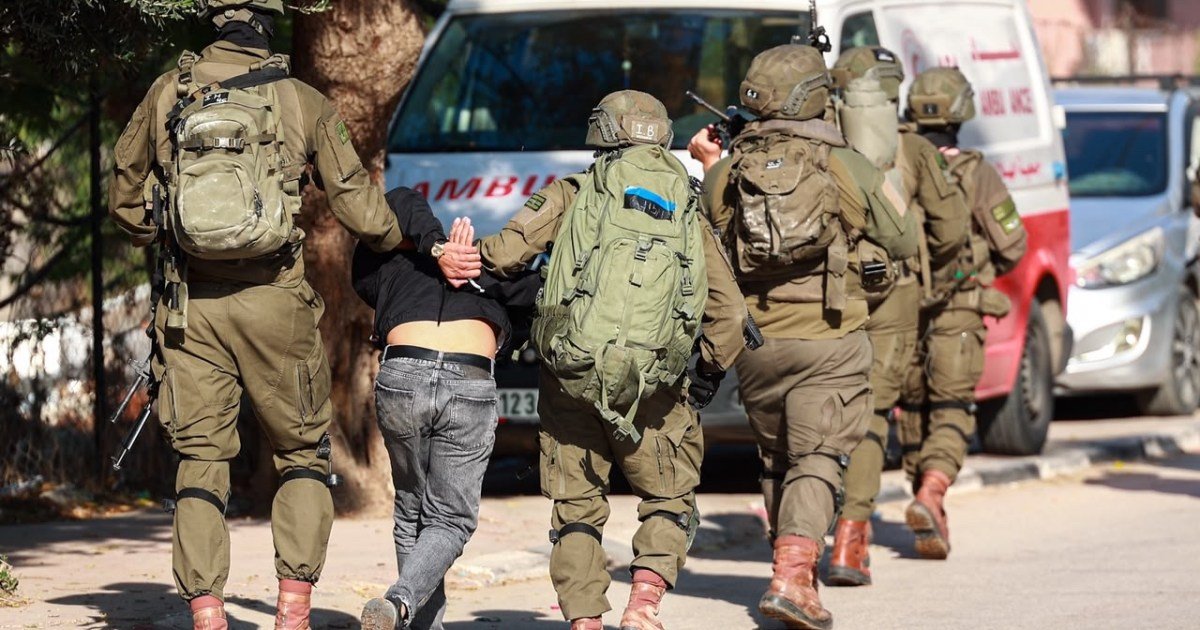
When Abed is arrested, he is often forced to walk for several kilometres handcuffed and blindfolded, accompanied by soldiers. He is then placed in a detention centre under dire conditions, deprived of food and water, subjected to beatings and verbal abuse, and then the threats begin.
“Every time, they threaten to send me back to prison to the point where I feel as though two-thirds of my body are still in captivity, with only one-third outside,” he said. “The threats vary, but the underlying message is always the same: I am not permitted to do anything ordinary or live a normal life like everyone else.”
Abed avoids family gatherings, fearing his presence may bring them harm, and so limits his interactions to his immediate family. An Israeli officer warned him that if he were to go to the mosque to pray, he would be arrested.
“The Israeli officer told me, ‘We have zero patience for you. Any behaviour we deem inappropriate, or any movement we find suspicious, we will rearrest you immediately,’” Abed added.
Although he managed to earn both a bachelor’s degree and a doctorate during his time in prison, he has been unable to secure a job. When employers learn about his repeated arrests, they refuse to hire him. Instead, he has to rely on day-labour work to cover his basic costs.
Loss of livelihood
A former prisoner from Qalqilya says he is arrested on average twice a week during the frequent Israeli military sweeps of the city, where former detainees are targeted. He was recently warned during one interrogation that if he ever set foot on a football pitch, he would be arrested. This puts his job as a referee in jeopardy.
Abdullah, another former prisoner from the city who also requested not to use his real name, told Al Jazeera that he has been arrested so many times since his release in 2000 that he has lost count. But he says he has spent a total of 17 years in custody since his “release”.
He was recently held under “administrative detention”, lasting from November 2023 to February 2025, during which he was subject to physical and psychological torture. By the time he was released, he had lost 60kg (132 pounds).
Abdullah, who supports a family of seven, is repeatedly arrested and released after a few hours, but only after his children have been terrorised and his home ransacked.
His employer grew frustrated with his repeated detentions and found a replacement for him.
“After losing my job, I began working on a piece of land I inherited from my father. However, due to arrests and threats, I can never find the right time to tend to it,” he said. “I often fall behind in irrigating, applying pesticides, or tilling the soil, all of which have taken a toll on my seasonal yields, leaving me with more losses than profits.”
‘Normalising fear’
Since the outbreak of the war on the Gaza Strip in October 2023, the occupied West Bank has witnessed a wave of Israeli arrest campaigns and pogroms. Israeli troops now make regular incursions into towns, refugee camps, and homes, as well as arrests at military checkpoints to detain former prisoners.
Palestinian prisoner advocacy organisations have documented approximately 26,000 arrests in the occupied West Bank, including East Jerusalem, between October 2023, when the genocidal war on Gaza began, and early October 2026. This figure includes more than 800 women and nearly 2,000 minors. The total encompasses individuals who were subsequently released, not just those who remain in custody.
Amani Sarahneh, a spokesperson for the Palestinian Prisoner’s Society, told Al Jazeera that Israeli operations in the West Bank have evolved into a continuous, round-the-clock wave of detentions. On average, between 10 and 15 Palestinians are arrested and remain in Israeli custody every day.
These arrests not only take place at night, as they did before, but also during daylight hours, at military checkpoints, and through field interrogations.
“The persistence of these campaigns has led to a ‘normalisation of fear’ among the citizens, which has significantly impacted social relations, particularly in villages where residents live in a state of constant anxiety, fearing that occupation forces might storm their towns or public spaces and arrest groups of people at any moment,” she told Al Jazeera.
These arrests are frequently accompanied by physical assaults and abuse, with detainees held for long hours while handcuffed and blindfolded. The victims’ family homes are frequently ransacked and possessions taken away during the Israeli raids.
“These policies also include using family members of those targeted, such as wives and sisters, as hostages to exert pressure,” Sarahneh said.
“The impact of these campaigns has extended beyond the detainees and their families, deepening a sense of fear and apprehension among the general public, who now worry that the arrests could reach a much wider segment of the population,” Sarahneh said.