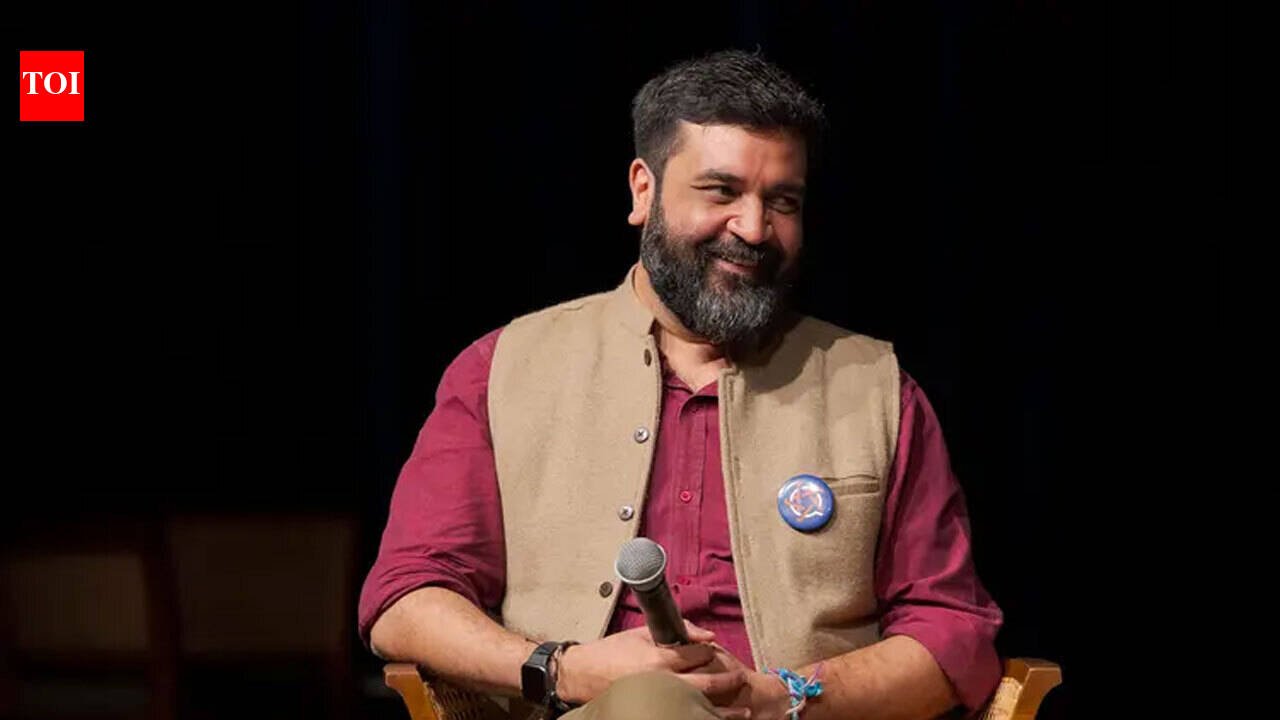
From Microsoft to transforming India's classrooms: How Quest Alliance founder Aakash Sethi earned a place on TIME100 Next India 2026. (Photo: time.com) Aakash Sethi, founder and CEO of Quest Alliance, has been named to the inaugural TIME100 Next India 2026 list for his work on school-to-work pathways and vocational training in India.
Sethi, an economics graduate of St.
Xavier’s College, Ahmedabad, founded the organisation in 2005.Quest Alliance works in government schools and Industrial Training Institutes (ITIs), where it builds self-learning and Artificial Intelligence (AI) readiness into what students do.Two problems, one gap TIME’s profile describes two hurdles for India’s young workforce: there are not enough jobs, and what classrooms teach does not match what workplaces need.
Many young people lack the skills employers want, or find that the jobs on offer do not fit their aspirations, interests or values, TIME says.What Quest does differently According to TIME, Sethi is moving the focus from academic knowledge and job-specific training to curiosity, self-directed learning and problem-solving, which he calls “21st century skills.”The approach combines digital learning with classroom discussions.
Students also take up community projects, conduct field research and learn from role models, TIME reports.
A profile on the website of the International Youth Foundation (IYF) adds that the idea is to enable teachers to become advocates for these skills.Quest says it works across 12 states and has reached nearly 900,000 learners.
TIME attributes the figure to the group.What young people want from work Now, most debates on skilling begin with what employers want.
Sethi’s writing begins with the young person.
In 2021, TIME notes, he wrote that young people “want to know if there is dignity attached to the job.” He added that they also ask about working conditions and whether they will have a supportive peer network.That is a practical point for any training programme.
A job that pays but fails on those counts may not be one a trained candidate stays in.A career outside the classroom Sethi did not come up through teaching.
After his economics degree, he worked at Microsoft’s regional office in Istanbul, where he oversaw digital inclusion programs across the Middle East and Africa, according to IYF.
He was part of the Regional Community Affairs and Citizenship team and led work on information technology skills for employment, contributing to a three-year regional plan.He later became country director of IYF in India and worked with the United States Agency for International Development (USAID) to establish Quest Alliance, IYF says.
Before that, he spent more than four years in AIESEC, a youth organisation, holding leadership roles and running youth leadership programs in over 10 countries.Join conversation Share your thoughts in the comments Be respectful · TOI community guidelines IYF also lists him as an Ashoka fellow and an Asia 21 leader, and as a board member of the Children’s Movement for Civic Awareness (CMCA).What the listing does and does not show Of course, a list recognises a model but does not test it.
The numbers in TIME’s profile cover reach, which is 12 states and nearly 900,000 learners.
They do not say what happens to those learners after school or an ITI, and that is where Sethi’s own question about dignity, conditions and peers will be answered.Still, the listing shows that a route into education work through economics, corporate citizenship and youth organisations can end up inside government schools and ITIs, and be noticed there.