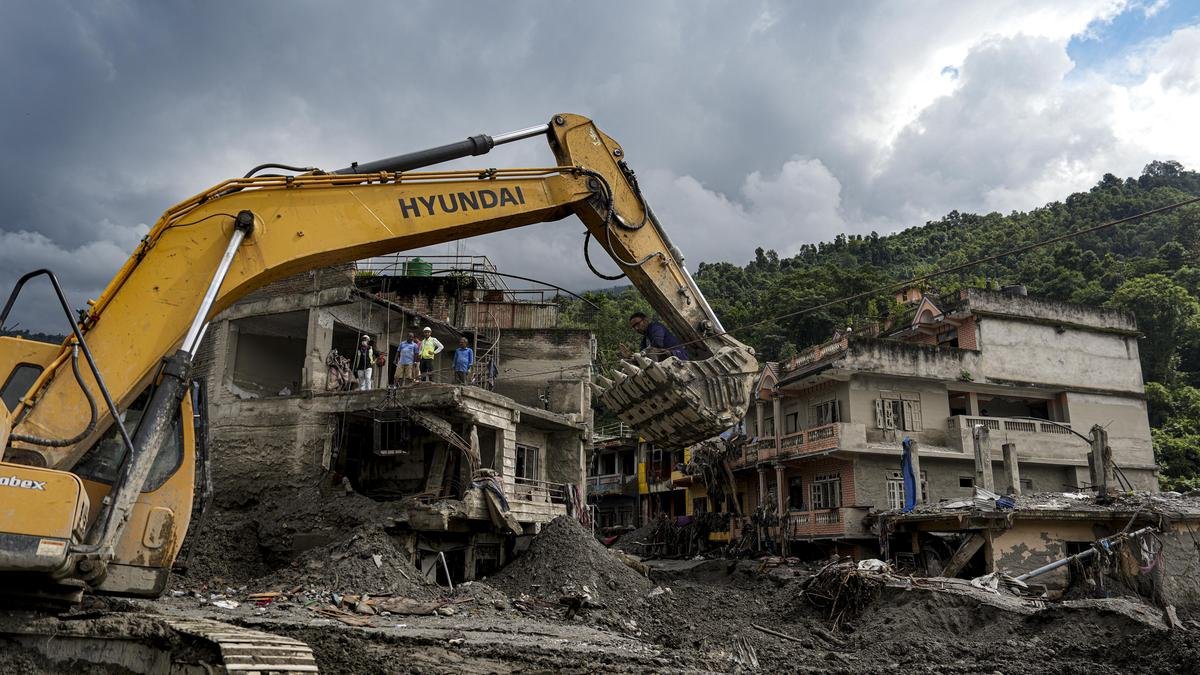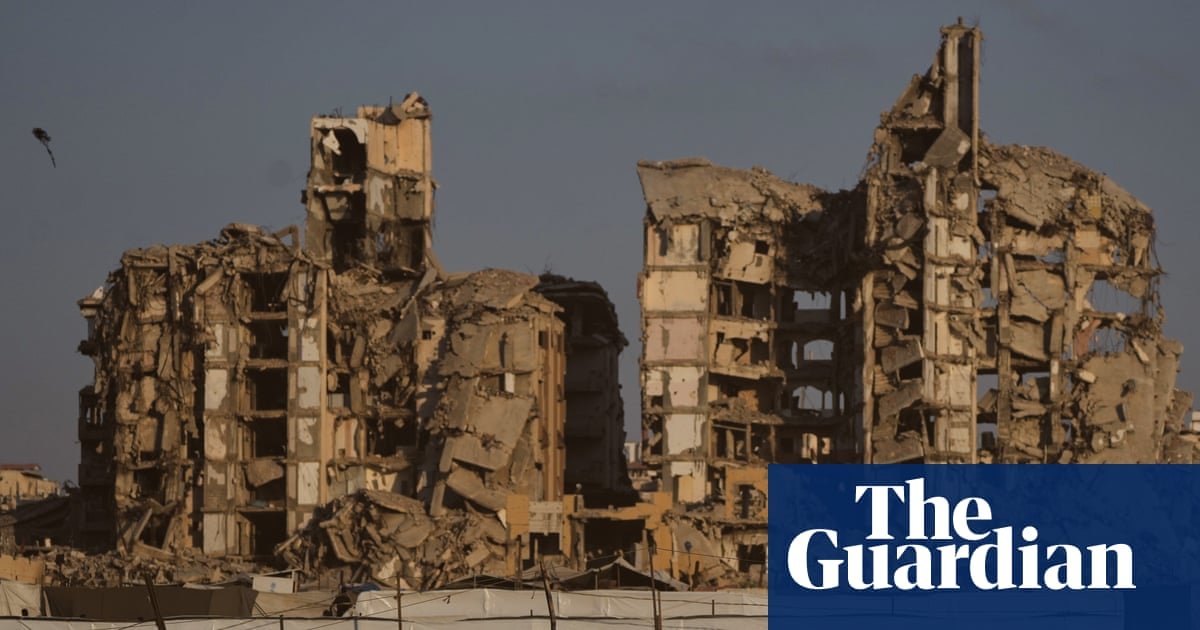
Tents sheltering displaced Palestinians amid the ruins of Gaza City.
Maryam and her family were sleeping in tents while she had cancer without any medical facilities to treat her.
Anwar, who lives in Glasgow, says Home Office refused visa application despite Maryam having cancer A man living in the UK has said he believes his sister-in-law who died from cancer in Gaza would still be alive today if the Home Office had agreed to bring her and her family to Britain.
Anwar, who lives in Glasgow, fled Gaza in 2020 and was granted refugee status in the UK in 2021.
After the destruction of large areas of Gaza by Israeli forces following the Hamas attacks on Israel in October 2023, he applied to bring his brother Hassan, Hassan’s wife, Maryam, their two young children and other family members to the UK in October 2025.
He said the Home Office rejected their application.
The process required them to travel to a visa application centre (VAC) for biometric checks, but there was not, and still is not, a VAC in Gaza.
It is difficult for Palestinians to leave the territory to access a VAC elsewhere.
In April this year the family asked the Home Office to waive this requirement and grant permission for “predetermination” of their application and “biometric excusal”.
The Home Office is understood to have rejected this request, so the family launched a legal challenge.
The Home Office agreed to reconsider its decision but issued a new refusal in July.
Prior to the second Home Office refusal, and shortly after Maryam gave birth to Ismail, who is now seven months old, she was diagnosed with renal cell carcinoma, which had spread to her lungs.
Doctors in Gaza said they did not have the facilities to treat her.
The family provided the Home Office with medical evidence concerning Maryam’s condition, including cancer test results and medical referral reports.
They also provided evidence of their living conditions in Gaza, which involved sleeping in tents and shortages of food, medicine and clean water.
Anwar said the Home Office again refused the family’s request for predetermination and biometric excusal but that it accepted the evidence of Maryam’s cancer.
In the Home Office’s letter refusing the visa application on 31 July, seen by the Guardian, officials stated: “Given the current situation in Gaza, reliable healthcare may not be accessible.” They accepted that Maryam was facing a significant risk of harm because she was in a conflict zone and could not travel to a VAC.
Although the Home Office officials found the circumstances relating to travel to a VAC “somewhat compelling”, they concluded that owing to the difficulty in travelling to the VAC, it was “in the best interests of the children to stay with their parents and delay travel to the UK” for the time being.
They concluded the family’s situation did not meet the threshold for “compelling circumstances” and said that pre-entry checks needed to be carried out because the family came from “a territory where terrorists operate”.
In the legal challenge, the family’s lawyers stated: “It is difficult to understand what circumstances would ever qualify as compelling if the present circumstances do not.” Maryam died from cancer on 28 August.
Gordon McKee, the Labour MP for Glasgow South, raised the family’s case with ministers in June.
He warned about Maryam’s deteriorating health and the consequences of the collapse of reliable healthcare in Gaza.
In his letter to Mike Tapp, then a Home Office minister, McKee said the case involved “exceptional humanitarian circumstances”.
He asked Tapp to consider reviewing the case personally.
Anwar said: “We believe Maryam’s case raises serious questions about how the UK government deals with Palestinian families in Gaza who are trying to reunite with their families in Britain, particularly when a family member becomes seriously ill while trapped in a conflict zone and unable to safely reach a VAC.
“I believe that if the Home Office had agreed to bring Maryam and her family from Gaza to the UK when we first applied last October, Maryam would still be alive today.
“Maryam is now gone, but her family remains in Gaza.
We are now urgently asking the UK government to intervene to protect Maryam’s surviving family members and to find a way to bring them to safety and reunite them with their family in the UK.” Speaking from Gaza, Maryam’s husband, Hassan, said: “I am struggling to come to terms with losing my wife while I remain trapped in Gaza with our children, including our seven-month-old baby.
“Throughout Maryam’s illness, we were trying to find a way for our family to overcome the biometric requirement and move forward with our applications.
The Home Office accepted that Maryam had cancer and acknowledged the evidence, but decided that our circumstances were still not compelling enough to justify biometric deferral or predetermination.
“Now I have lost my wife, and I am left trying to protect our children and find a way to get them out of Gaza and to safety.” Home Office sources said they did not routinely comment on individual cases.
Explore more on these topicsImmigration and asylum Home Office Gaza Palestine Refugees Middle East and north Africa news Share Reuse this content