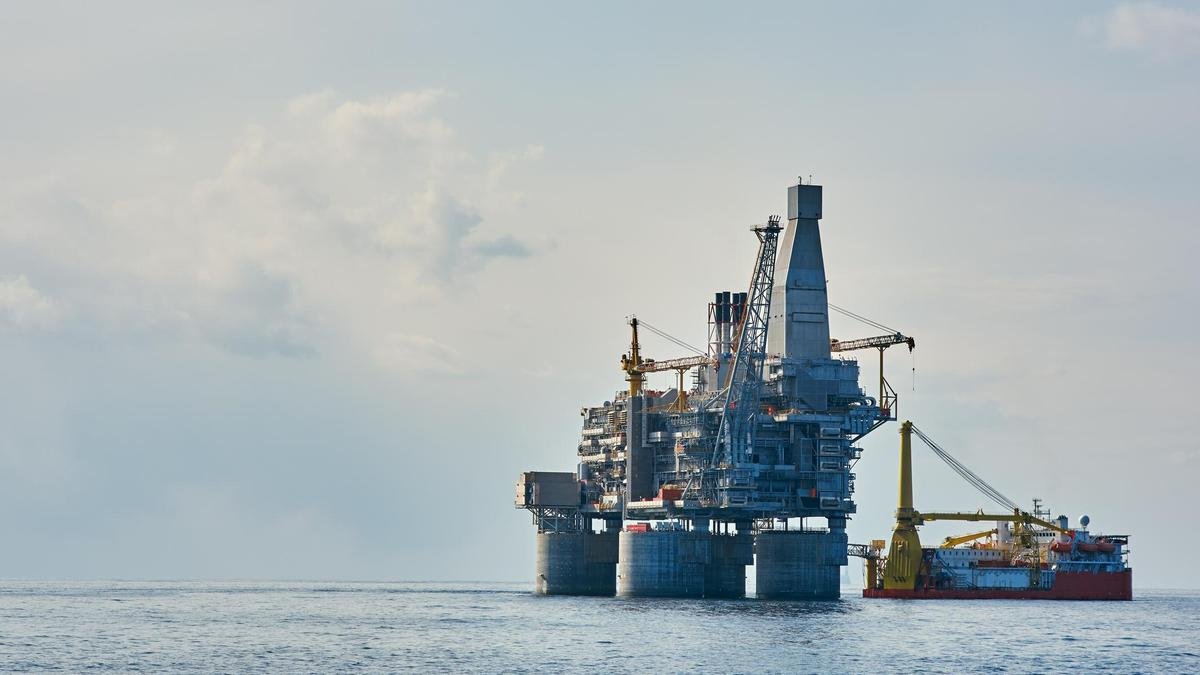
The government has raised the ceiling price for natural gas produced from difficult fields, such as the KG-D6 block of Reliance Industries and BP, to $9.89 per million British thermal units (MMBtu) for the six months beginning October 1, 2026, from $8.90 previously, while keeping the ceiling for gas produced from the legacy fields of state-run Oil and Natural Gas Corporation (ONGC) and Oil India Limited (OIL) at $7 per MMBtu.
The new ceiling for gas from deepwater, ultra-deepwater and high-pressure, high-temperature discoveries is applicable for the period from October 1, 2026, to March 31, 2027, according to a notification by the Petroleum Planning and Analysis Cell (PPAC) of the oil ministry.
Gas produced from such difficult areas enjoys marketing and pricing freedom under the government's policy, but is subject to a government-notified ceiling.
Commercial LPG cylinder price increased by ₹65 The higher ceiling could provide some relief to producers developing India's more technically challenging offshore gas resources, where production costs are generally higher than those from mature onshore and legacy fields.
For gas produced by ONGC and OIL from their nomination fields, the government has notified an Administered Price Mechanism (APM) price of $11.22 per MMBtu for October, but the actual price remains capped at $7 per MMBtu, according to PPAC.
The APM gas price applies to gas produced from the legacy fields of the two state-owned companies and is used by priority sectors including city gas distribution, fertiliser and power.
Nayara Energy hikes petrol by ₹5, diesel by ₹3 For gas produced from new wells of ONGC and OIL in their nomination blocks, the government allows a 10% premium over the prevailing APM gas price, subject to the applicable ceiling.
With the APM price for October capped at $7 per MMBtu, the effective price for new-well gas would accordingly be up to $7.70 per MMBtu.
The higher price for new-well gas is aimed at incentivising ONGC and OIL to invest in developing additional reserves and bringing new production on stream, while maintaining the existing ceiling for gas from their older, legacy fields.
India follows separate pricing mechanisms for gas from legacy fields of national oil companies and newer discoveries in difficult areas.
In April 2023, the government shifted pricing of gas from legacy fields to a formula linked to 10% of the monthly average crude oil import price, subject to a floor and ceiling.
The ceiling was initially fixed at $6.50 per MMBtu and was subsequently raised by $0.25 annually after a two-year freeze.
The APM ceiling was raised to $6.75 per MMBtu from April 2025 and moved to $7 in April 2026.
Stock markets tumble in early trade dragged by elevated crude oil prices, foreign fund outflows Before the 2023 reform, APM gas prices were revised every six months based on international gas benchmarks and had fluctuated sharply, ranging from $1.79 per MMBtu in 2021 to $8.57 in the six months ended March 2023.
The separate regime for deepwater and other difficult fields was introduced to encourage investment in India's technically challenging hydrocarbon resources by allowing producers greater pricing and marketing flexibility.
Reliance Industries and its partner BP produce gas from the KG-D6 block in the Krishna-Godavari basin, one of India's key deepwater gas-producing areas.
Natural gas is a key feedstock for fertiliser production and is also used in power generation and by city gas distributors to supply compressed natural gas (CNG) and piped natural gas (PNG).
Changes in domestic gas prices can therefore affect input costs across these sectors.